Showing posts with label STORIES. Show all posts

Thursday, 22 March 2018

Fake news factory fooled fake intellectual with fake office

There's a rich vein of social comedy in the Cambridge Analytica affair. Here's how wily old Etonian cad, Alexander James Ashburner Nix, conned that gullible American pseudo-intellectual, Steve Bannon, by appealing to his philosopher king fantasies of dreaming spires and elite institutions:
So keen was the firm to impress Mr Bannon it opened a satellite office near the University of Cambridge after Mr Bannon expressed an interest in visiting the city.

"We created this fake office in Cambridge and brought a bunch of people to set up this office beside the university to make it look like 'This is our Cambridge site. Our Potemkin Cambridge office," Mr Wylie said.

"And later, when the Mercers bought in and they appointed Steve to set up the company, he decided he should call it Cambridge Analytica... as a tip of the hat to our deep links to the University of Cambridge. And so a false reality was infused into the name Cambridge Analytica."
It's not being fooled that hurts. It's being fooled by fools like this.

Afterthought - maybe Hobo Trump got fired because, for all Bannon's intellectual pretensions, his boss already knew more than he did about this kind of bullshit:
Donald Trump's The Art of the Deal describes a stunt in which he lured Holiday Inn executives into investing in an Atlantic City casino by directing his construction manager to rent dozens of pieces of heavy equipment, in advance of a visit by the executives, to move dirt around on the proposed casino site, creating the illusion that construction was underway.

Sunday, 8 May 2016

Foxy gentleman hosts dinner party


In Beatrix Potter's classic childrens' story, the naive Jemima Puddle-duck was befriended by an elegantly-dressed gentleman with sandy whiskers, who kindly agreed to provide her with a safe place to hatch her eggs. Jemima laid nine eggs in her benefactor's house and "The foxy gentleman admired them immensely." Then, the fox invited the duck to dinner - what could possibly go wrong?
"I intend to give you a treat." [said the foxy gentleman] "Let us have a dinner-party all to ourselves!

"May I ask you to bring up some herbs from the farm-garden to make a savoury omlette? Sage and thyme, and mint and two onions, and some parsley. I will provide lard for the stuff - lard for the omlette," said the hospitable gentleman with the sandy whiskers.

Jemima Puddle-duck was a simpleton: not even the mention of sage and onions made her suspicious.

She went round the farm-garden, nibbling off snippets of all the different sorts of herb that are used for stuffing roast duck.
Next week, another well-dressed, hospitable gentleman will be playing the host. "Prime Minister David Cameron has said he wants to put tackling corruption at the "top of the international agenda" ahead of a London summit on the issue."

Presumably he's counting on the rest of us having the duck-sized brains needed to trust a man whose family fortune has been squirrelled away in an offshore tax haven, whose party is largely funded by City firms which operate by hiding their own wealth in tax havens and advising their well-heeled clients how to do the same and whose country lies at the epicentre of a multi-trillion dollar globe-spanning tax avoidance scam. As a helpful article entitled "The world's 15 biggest tax havens" puts it :
Aaaaand the real #1?
Clue: It’s not Switzerland.

If the UK and its satellite secrecy jurisdictions were counted together, it would be number one on this list by an absolute mile. So while you might hear politicians in London crying foul about how other countries are acting as tax havens, the lion’s share of them sit under the British Crown. 
Or, to use another poultry-based analogy, Mr Fox is hosting a summit on how to make hen houses more secure. For every Jemima Puddle-duck must have a well turned-out, plausible-looking benefactor.

Tuesday, 29 March 2016

Oh my ears and whiskers


An idle thought that occurred to me over Easter - it's easier to imagine how Lewis Carroll was inspired to come up with the surreal fantasy world of the Alice books when you fully appreciate the everyday weirdness of the Victorian ephemera which surrounded him.

Idle thought prompted by this collection of Victorian Easter cards posted on the BBC website. Looking at these, it's not hard to believe that the Victorians used tincture of laudanum like we use paracetamol, and frequently OD'd.

Thursday, 11 February 2016

Horror in Middle England

I saw this and it reminded me of something:
Reassuring...
Specifically, it reminded  me of The Archers. If the connection between this diabolical image and Middle England's cherished "everyday story of country folk" escapes you, you clearly haven't tuned into the radio soap for a while. Because the green welly brigade's favourite Aga saga has taken a darkly compelling turn lately, with the horrific emotional car crash that is Helen Archer's Titchener's suffocating marriage to the superficially charming psychopath, Rob Titchener.

It's a grippingly disturbing portrait of emotional abuse, as Rob methodically undermines his pregnant wife, takes away her independence, bit by agonising bit and slowly turns her friends and young son against her, against an even darker background of implied physical and sexual abuse. A tornado of psychological horror has carried us away from the familiar landscape of crop rotation and village produce shows. Toto, I've a feeling we're not in Borsetshire anymore.

And last night, after effectively pushing Helen out of her job in her own whole food shop, thus severing just about her last link with the outside world, Rob turned to her and told her that if she ever needed to talk about anything that was worrying her, she could always turn to him (and, by implication, only him). And a million genteel middle-class people shouted "you bastard!" at the radio.

It shouldn't come as any surprise to see these things in the relations between a prosperous, landed farming family and their eligible, privately-educated son-in-law, but somehow this intrusion of cold, focused cruelty into the wholesome, cosy, complacent world of Ambridge's long-established dynasty throws it into sharper relief.

Likewise, it shouldn't come as any surprise when unpleasant reality starts to happen right under the noses of real comfortably privileged folk but, of course, it does:
David Cameron's aunt has told ITV News that the prime minister's own local council is making a "great, great error" by closing children's centres, as she pleaded with her nephew to provide the funds to keep the services open.
Clare Currie and her sister, the prime minister's mother, Mary Cameron, have signed a petition calling on the Conservative-led Oxfordshire County Council to abandon plans to close 44 centres in the county. 
It's easy to ignore the consequences of cruelty when they're happening to somebody else, safely out of sight. But it starts to gets really scary when the abuse comes home and it turns out that the abuser is family.

I'm pretty sure that in Soap-Opera Land, Rob Titchener will eventually be found out by his nearest and dearest and have to face the consequences of his actions, although you can be sure that he'll try to shift the blame onto somebody else. In deepest Oxfordshire, the scriptwriter of reality seems to have already reached that point in the drama.

Wednesday, 15 July 2015

Ashes to ashes, stardust to stardust

Yesterday, I pretended, for rhetorical purposes, that the New Horizons probe had a passenger on its voyage to Pluto and beyond. I was making a point about a delusional lack of any sense of proportion or empathy centred around a petty, vindictive power struggle that's causing pointless misery on our planet to no purpose that I can see, other than to save face for people who have the power to change course away from an ever-deepening human-engineered catastrophe, but seemingly lack the will or wit to do so.

Looking up from the gutter and back at the stars, New Horizons really does have a passenger - although he's no longer among the living. The probe carries an aluminium capsule, no longer than a typical USB memory stick, bearing the following inscription:
Interned herein are remains of American Clyde W. Tombaugh, discoverer of Pluto and the solar system’s ‘third zone.’ Adelle and Muron’s boy, Patricia’s husband, Annette and Alden’s father, astronomer, teacher, punster, and friend: Clyde Tombaugh (1906-1997).
Not only ('only??') a fantastic scientific and technical achievement, then, but the most awesome resting place in all of human history. Ever.

Humans have devised some impressive - and sometimes appalling - ways to honour their dead, at least those deemed by their society to merit special recognition. Ancient rulers buried among piles of glittering possessions and the bodies of servants and spouses sacrificed to signal the deceased's power and authority, sky burial on the towers of silence, being set adrift on a burning longboat, the tombs of generals, thronged with winged victories, angels intended to watch over a tomb stolen by a monarch, monuments to tyrants, built by slaves, the inscription on Sir Christopher Wren's tomb, which asks the reader who seeks his memorial to 'look around you' at the awe-inspiring cathedral he designed, the Taj Mahal, the pyramids...

But nobody, until now, could say of a real, once-living human being, 'we placed him among the stars.' Quite literally.

It's what the ancients did with mythic heroes, legendary queens and - bizarrely - with the hair of a real queen. It's only according to an extravagantly poetic legend that the golden locks of Queen Berenice II, (daughter of Magas of Cyrene and Queen Apama II, wife of King Ptolemy III Euergetes, third ruler of the Ptolemaic dynasty of Egypt), were placed among the stars by the goddess Aphrodite. But the remains of Clyde Tombaugh, from Streator, Illinois, are really on their way to the stars, where they'll still be drifting more than five billion or so years hence, when nothing's left of the pyramids but dust, being blown around the charred remains of Earth, if any winds still blow there.

You'd have to be already dead inside for that thought not to send a little shiver down your spine.

We are stardust. Now, for the first time in human history a human is returning , not only to dust, but also to the stars.

Sunday, 26 April 2015

Thomas the Tank Engine meets Doctor Strangelove

Mr. President, I'm not saying we wouldn't get our hair mussed. But I do say no more than ten to twenty million killed, tops. Uh, depending on the breaks. 
General "Buck" Turgidson, from Doctor Strangelove, conceding that an all-out nuclear war might involve a 'modest and acceptable' level of civilian casualties. But, hey, every dark cloud has a silver lining. The survivors might be subsisting in a scorched, radioactive wasteland, but we'd still have steam trains and who doesn't love steam trains?

Yes, steam trains. During the Cold War, several countries, including the Soviet Union and Sweden apparently kept a Strategic Steam Reserve (SSR), to be used in the event of a catastrophic war or overwhelming natural disaster disabling electrified railways and cutting off the oil supplies needed to run diesel trains.

There were even rumours that Britain kept its own secret SSR, although this seems to have been an urban legend, based on the wishful thinking of a few steam enthusiasts who wanted to believe in a secret cache of pristine steam locos just waiting to be discovered. A myth, but a strangely resonant one.

Here's Roy Bainton writing about our imaginative modern myths of what lies beneath, including those 'mighty iron beasts, waiting there in the subterranean darkness' to emerge in their country's hour of need, like King Arthur* from under his hill:
The aftermath of the 1963 Beeching Report, which decimated Britain’s rail network, coincided with the dark days of the Cold War and the growing paranoia around the possibility of nuclear Armageddon. As a long-serving steam locomotive driver, the hapless Sheffield railwayman was among many who were designated the sad task of seeing their faithful engines, which were to be replaced by diesel units, off onto their final trip to the breaker’s yards at Barry Island in South Wales. He’d already heard strange stories of footplate crews being sent home early from work only to return to find ‘their’ engine had vanished during the night. Then, one night in 1967, he’d been approached by ‘a man from the MoD’ and was asked, along with a selected few other drivers, to become part of a special crew taking selected locomotives on a journey not to the scrap yard, but to a secret location, where they would be mothballed for future use. However, every driver, fireman or Fat Controller employed in this scheme was required to sign the Official Secrets Act and never reveal the whereabouts of their slumbering Thomas Tank Engines. Urban Myth - or Conspiracy nuttery?

The facts are thin on the ground, but there were selective records kept of all locomotives decommissioned and scrapped. Members of the train spotting fraternity are noted for their meticulous thoroughness, and those with a keen eye soon spotted the absence in the records of approximately 70 engines. It is known that at one time the Royal Engineers ran courses for the Sappers in steam loco driving . With the closure of the Longmoor Military Railway in 1969, which ran 70 miles between Liss and Bordon in Hampshire, the MoD lost its own in-house training facility. All this could be cited as circumstantial evidence, although it doesn’t prove locos were ‘spirited away’. However, if they have been hidden, then their location remains the Holy Grail for romantically-minded rail fans.

This secret fleet of locos, claimed by train aficionados to be Stanier 8 and 9F models, most of which were only 10 years old, with an expected service life of between 50 and 100 years were to be kept in reserve in the event of a nuclear attack. The USSR had already done this, as had Sweden and some other Eastern European countries. It became known as the SSR (Strategic Steam Reserve). Railway fans of a more quixotic bent saw these fine machines in the role of a mechanical King Arthur, ready and waiting to answer the call in the hour of Britain’s need. Being organically propelled vehicles, and, at the time, the UK having huge coal stocks, they offered the prospect of some kind of transportation in an apocalyptic Mad Max landscape where everything electrical had been trashed due to the immense electromagnetic radiation given off by a nuclear blast.
* Sadly, the King Arthur Class locomotives don't seem to figure in the legend of Britain's Strateigic Steam Reserve...

Friday, 12 September 2014

Too gigantick to fail

Corineus and Gogmagog were two brave giants who richly valued their honour and exerted their whole strength and force in the defence of their liberty and country; so the City of London, by placing these, their representatives in their Guildhall, emblematically declare, that they will, like mighty giants defend the honour of their country and liberties of this their City; which excels all others, as much as those huge giants exceed in stature the common bulk of mankind.
Thomas Boreman - The Gigantick History of the Two Famous Giants and Other Curiosities in Guildhall, London, via Faerie Lore

That's 'liberties' in the old-fashioned sense of the word:
Libertas in Medieval Latin conveys the idea of a right to exclude others from your property, your franchise. To be free of something is to enjoy exclusive rights and privileges in relation to it. The freedom of a town is a privilege, to be inherited or bought. So is a freehold estate.
Christopher Hill - The Century of Revolution 1603-1714.

But back to the giants themselves. Faerie Lore reveals their dark, gritty origins story:
The myth states that the Roman Emperor Diocletian had 33 wicked daughters whom he married off to 33 husbands who curbed their unsettling ways. However the daughters were so wicked, led by the eldest sister Alba, they plotted to cut the throats of their husbands as they slept. As punishment for this crime, they were set adrift in a boat with a half year’s rations of food, shunned forever. They drifted ashore the isles of what later became “Albion” (named after the eldest). Fornicating and coupling with demons, they populated the wild windswept island with a race of giants... When Brutus, great-grandson of Æneas, in company of his most able-bodied warrior Corineus, fled the fall of Troy, they by fate found themselves on these islands of Giants. Brutus was impressed with these isles so much that he named the Islands after himself, which later became called “Britain”. The leader of the Giants was a detestable monster named Goëmagot (Gogmagog), who stood in stature twelve cubits, and of such prodigious strength that at one shake he pulled up an oak as if it had been a hazel wand. Brutus and Corineus faced “Gogmagog“, had combat, and hurled him from a high rock to his death... As a reward for this defeat, Corineus was given the western part of the island, which many say is how Cornwall was called after him. After this defeat, Brutus travelled to the East and founded the city of New Troy, which eventually became known as “London”. [Geoffrey of Monmouth's 12th century Historia Regum Brittaniae]...
...Another mythos to their origins tell that the 33 infamous daughters of Diocletian who were captured and chained at the gates of Guildhall as guardians had given birth to numerous sons who were deemed to be “Giants”. The last two survivors of these offspring, were “Gog” and “Magog”. This comes from the lore around the carved giants guarding the gates of Guildhall during the reign of Henry V. They were added to the Lord Mayor’s Show in 1554 which were labelled in 1605 as Corineus and Gogmagog. 
Of course, some spoilsport had to come along and let the facts ruin a good story:
The tale chucks up more questions than I can answer. When did Gogmagog switch from one creature into two separate giants? ...We know it’s mostly toss because the fall of Troy was about 2300 years before the reign of Diocletian, and the name Gogmagog is a mangled borrowing from the Old Testament. But these histories were accepted as fact for centuries.
The history may have been toss but, sadly for the common bulk of humankind, fact has caught up with ahistorical fiction. The modern City and its privileges really are guarded by scary giants with a dodgy back story:
 As the Independent Commission on Banking led by Sir John Vickers noted, the assets of UK banks were nearly five times the size of GDP in 2009. In Germany and France, the figure was around three times, whilst in the US it was one-to-one.

Wednesday, 9 July 2014

Humpty Dumpty Origins - The Fall

I know what thou thinkest, punk. Thou thinkest "doth he have any shot left?" Now to tell thee the truth I forgot myself in all this excitement. But being this is a 42-pounder Royal Cannon, the most puissant piece of ordnance in the realm and will blow thine horse clean in half, thou must ask thyself a question: "Do I feel lucky?" Well, dost thou, punk?
As any fool/movie executive knows, every iconic fantasy character must have a dark, gritty origin story. What goes for Batman, The Man of Steel and characters from the the X-Men franchise, also applies to that troubled product of violence and bloodshed, Humpty Dumpty.

The Humpty back story goes something like this. The original Humpty Dumpty was no wholesome egg, but a big, scary cannon, set up on Colchester's town wall by a Royalist garrison during the English Civil War, to outgun and intimidate the besieging Parliamentarians. The wall below Humpty Dumpty was damaged by Parliamentary artillery, resulting in Humpty Dumpty's great fall. All the King's horses and and all the King's men couldn't get Humpty back into action, leaving the Royalists as naked as Dirty Harry with no Magnum, whereupon the Parliamentary punks proceeded to kick their Royal asses.

I came across this interesting fact in The Offspring's latest school reading book (Project X: Strong Defences: Under Attack!), which just shows how much things have changed since I were a lad.

In my day, you'd learn a few historical facts in school, or from a Ladybird book, ('Pausing only to gallantly threw his cloak over a muddy puddle, thus saving Queen Elizabeth's fine clothes from the dirt, Sir Walter Raleigh journeyed Westward Ho! and brought potatoes and tobacco back to England'), which would then have lain dormant at the back of your head for thirty or forty years, until one day you'd happen to tune in to BBC 2, or Dave, and up would pop Stephen Fry to smugly announce how totally wrong everything you thought you'd learned as a child was.*

In these networked times, the lifespan of an interesting fact can often be reduced to the time it takes to google it. Wikipedia doesn't give a more convincing origin story, but it does put the Humpty Dumpty-as-Civil-War-cannon theory into context.

Short version - nobody really knows what Humpty Dumpty means.

Slightly longer version - there's no contemporary evidence for the cannon story, which became popular after being published on the Colchester tourist board's web site in 1996, but is not much better evidenced than rival theories claiming that Humpty was really King Richard III, or a drink of brandy boiled with ale, or a "tortoise" siege engine, used in a different English Civil War siege. Or maybe Humpty was always just a made-up character in a nonsense verse and any resemblance to real persons, or things, living, dead, or inanimate, is purely coincidental.

Elsewhere, there are suggestions that the cannon story predates the Colchester Tourist Board's web site by over 180 years, but that's still more than 160 years short of being a contemporary source. In the absence of any contemporary accounts, others have suggested, just as plausibly, that Humpty Dumpty might have been a satire about King Charles I and his fall from power, but I'm still happy to go with the simplest explanation, that 'Given the actual evidence at hand, it is far more likely that Humpty Dumpty was not intended to be a story, but rather just a riddle posed to children for their amusement'.


*Bonus QI-certified Walter Raleigh factoid - The wife of Sir Walter Raleigh kept his severed head in a red velvet bag for 30 years.

Thursday, 12 December 2013

Seasonal strangeness

Now that the first few chocolates in the Advent calendar have been scoffed, I guess it's time to end my annual grumble about the Christmas marketing offensive being launched some time in September and actually look for something in the season to be jolly to be jolly about. Like this handy seasonal hint for dealing with wild boar attacks:
Legend has it that a scholar was studying a book of Aristotle while walking through the forest on his way to Christmas Mass. Suddenly, he was confronted by an angry wild boar. Having no other weapon, the resourceful Oxonian rammed his metal-bound philosophy book down the throat of the charging animal, whereupon the brute choked to death. That night the boar's head, finely dressed and garnished, was borne in procession to the dining room, accompanied by carolers singing "in honor of the King of bliss."
Television not having been invented yet, nobody was able to turn the incident into a Bear Grylls-style survival documentary, so they turned the story into a carol (allegedly). I've got the Radio 4 series A Cause for Caroling to thank for the folkloric heads up.

Saturday, 6 July 2013

Kevin hearts Kevin

Readers of a certain age will remember The Undertones' acerbic take on the greatest love of all:
Girls try to attract his attention
But what a shame, it's in vain total rejection
He will never be left on the shelf
'Cause Kevin he's in love with himself
Now the Kevins* of the world can now solemnise their deep sense of self-commitment by joining themselves in matrimony. Apparently, people marrying themselves is a real thing.

Such a ceremony obviously has zero legal validity, although I don't suppose this will stop the opponents of marriage equality citing this phenomenon as proof that allowing gay people to get married would be the first step on the slippery slope towards a decadent dystopia full of depraved perverts marrying a sibling, both grandparents, all the Dagenham Girl Pipers, an iPad Mini, an egg whisk, a gerbil, or the Grand Duchy of Luxembourg as the fancy happens to take them.

I don't think we really want to dwell on the physical aspects of self-marriage, but anybody who thought that Kevin sounded like a bit of a tosser might enjoy one of the ruder bits in Joyce's Ulysses where the medical student Buck Mulligan amuses his drinking cronies with that classic of undergraduate humour, Everyman His Own Wife or A Honeymoon in the Hand.


via


*And Traceys, not to forget the Tarquins and Jocastas (you need to fast-forward from the Seventies and move up the social scale to enjoy the most hilariously inflated estimates of self-worth) 

Wednesday, 12 September 2012

Other people writing interesting things

I'm finding it hard to dredge up the energy or enthusiasm to blog about anything very much at the moment. That just means that I'm feeling a bit stale and uninspired. It doesn't mean that I think nothing interesting is happening out there, or that nobody has anything interesting to say about what's happening, as I will go on to prove:

Exhibit A - As Barbra Streisand didn't quite sing, People who hate people / Are the luckiest people in the world. Not only are self-important bigots lucky enough to enjoy the pre-emptive self-censorship of an ever-accommodating  deputy prime minister who'll bend over backwards rather than cause them a moment's discomfort, or the tiniest jot or tittle of offence, but, thanks to the European Convention on Human Rights, they're entitled to their day in court to explain exactly why they think their right to discriminate against other people is more important than other people's right not to be discriminated against.  The best of luck with that one, guys.

Exhibit B - Rather less lucky and well-respected are Britain's poor. You know they've got it bad when even the Daily Mail finds the language routinely being used to scapegoat the powerless 'vile and dehumanising'. Sadly, such compassion cuts little ice with the loose coalition of looters and free market jihadists currently dominating the ideological battlefield, whose only discernible reaction is to indignantly deny the existence of 'real' poverty in Britain. From this basic premise it is very simple to prove that the existence of desperate people relying on Britain's growing food bank sector is merely the product of a deranged imagination.

Exhibit C - Speaking of looters, our glorious new health secretary, Jeremy Hunt, has come under the scrutiny of Dr Éoin Clarke. In case you missed it: Jeremy Hunt lobbied NHS officials to hand 7 hospitals over to Richard Branson, and Jeremy Hunt to force NHS to sell 912 services this year as Virgin's 350 profit clinics stand ready to pounce. This health secretary gig has been a step up for Hunt in more ways than one. Not only does health trump culture in the inter-departmental food chain, but he gets to be seen as the bagman for the fresher, cuddlier face of the predatory plutocracy, rather than gofer for its its wrinklier, rather less appealing face.

Exhibit D - A popular historian takes a look at Islam's founding stories and concludes that the religion's origins were more nuanced, incremental and subject to revision and editing than the heroic foundation myth would suggest. He's a good-natured academic, 'almost painfully concerned to stress his respectful attitude and good intentions' and has debated politely with his critics. Cue the boringly predictable outbreak of frothing and threats from the 'look-at-me-I'm-offended-now' crowd.

All quite interesting, but also rather depressing. It might be this all-enveloping air of doom and gloom that's robbing me of the urge to blog at the moment. Perhaps the answer is to ignore the news for a bit, or to get properly angry about it (the alternative to anger being apathy, depression and disillusion), or to pan for nuggets of good news, or just to direct my attention to life's odd, less travelled byways. Alternatively, I could shut up altogether, although fortunately (or unfortunately, depending on your point of view), I've a stubborn streak that disinclines me from depriving the world (or a miniscule portion of the poulation thereof) of the benefit of my opinions.

Monday, 21 May 2012

Sources close to the Prophet


Rome, as any fule kno, was founded by Romulus and Remus, twin brothers, abandoned by their parents as babies. The infants were found and nursed by a she-wolf, until a shepherd discovered them and raised them to adulthood. When Romulus and Remus grew up, they decided to found a city on the spot where the wolf had found them.

According to Virgil, Romulus and Remus were descendants of the Trojan hero Aeneas (who was himself the offspring of a liaison between a cousin of King Priam and the goddess Venus, no less). Aeneas and his followers had to flee Troy after the Greeks overran the city. After an eventful Mediterranean cruise, including an ill-fated holiday romance between Aeneas and Queen Dido of Carthage, the Trojan refugees wound up in Italy, where, after a bit of bother with the locals, Aeneas ended up founding the city of Lavinium, a little way to the south of what would later become Rome.

The Trojan legacy didn't end in Rome. According to Fredegar's 7th-century chronicle of Frankish history, the Franks traced their ancestry back to King Priam of Troy. 'And to prove it, we've still got place names like Troyes and Paris', said people who accepted the Merovingians' Trojan pedigree, knowingly.

The Icelandic Prose Edda of Snorri Sturluson also contains this surprising claim:

... the Nordic gods themselves were human Trojan warriors who left Troy after the fall of that city ... According to the Prose Edda, these warriors settled in northern Europe, where they were accepted as divine kings because of their superior culture and technology. Remembrance ceremonies later conducted at their burial sites degenerate into heathen cults, turning them into gods.

Britain itself was, apparently, founded by a member of the Trojan diaspora, namely Brutus of Troy, the founder and first king of Britain, at least according to the medieval historians Nennius and Geoffrey of Monmouth. Sir Gawain and the Green Knight kicks off with a brief account of Brutus' nation-building exploits before getting down to the serious business of chivalry at the court of King Arthur.

It ought to go without saying that nobody now believes this load of old cobblers about the Trojans turning up everywhere, (with the possible exception of the usual Holy Grail hunters and proponents of the giant-lizards-from-outer-space-have-been-secretly-running-everything theory of history).

Our ancestors, who once believed these stories, weren't stupid - they just didn't have access to the accumulated weight of conscientiously-accumulated historical, archaeological, and even genetic, evidence, research and scholarship that now enables anybody with a vague interest in the past to study more or less plausible accounts of what probably happened and to distinguish these from wildly implausible, evidence-free, fairy tales.

Up to a point, these stories still deserve our interest and attention, not as accounts of what actually happened, but as illustrations of how tribes, cities, nations and empires have concocted stories about their origins, often involving heroic deeds and pedigrees going back to a distant semi-mythical age, in order to bolster their legitimacy, status and sense of identity.

All this stuff about the myths of national origins was prompted by reading In The Shadow of the Sword, Tom Holland's fascinating account of the rise of Islam, set against the backdrop of the waning Roman and Persian empires. Holland's book includes some interesting material on how both Imperial Rome and its rival Persian Empire manufactured suitably ancient and heroic foundation myths and pedigrees to lend authority to, and reinforce, their own power and prestige.

It's interesting to note the parallels between national myth-building and the stories that religions tell about themselves and their origins. I've got a passing familiarity with Christianity and how the historical record either coincides with the Gospel stories, contradicts them, or is silent about what happened (in short, there seems to be precious little confirmation, some contradictions over things like dates and who ruled when and quite a lot of silence), but as somebody not brought up in a Muslim household, I don't know a great deal about the Qur'an or the historical context of Muslim scripture, so Holland's book is a bit of a revelation to me.

At first sight, it seems that we know a lot more about Muhammad than we do about Jesus. Holland starts off by quoting Salman Rushdie:

The degree of authority one can give to the evangelists about the life of Christ is relatively small. Whereas for the life of Muhammad, we know everything, more or less. We know where he lived, what his economic situation was, who he fell in love with. We know a great deal about the political circumstances and the socio-economic circumstances of the time.

Impressive. Until you begin to examine where this wealth of information comes from. It turns out that the evidence about people and places in the Qur'an itself is pretty sketchy - the text is too concerned with the doings of God, and of angels, demons and the old prophets of the Abrahamic faith to fill in the background of Muhammad's life and times. The name of Muhammad itself only appears four times in the whole text, the name of Mecca once, and there are scarcely any references to independently datable historical characters and events. We might have little evidence for the historicity or otherwise of the Christian Gospels, but at least we have a few historical names like Augustus Ceasar, Quirinius, Herod and Pilate and undisputed locations, like Jerusalem, anchoring the tales to a historical time and place (as well as occasionally calling the accuracy of the Gospels into question).

We know 'everything' about Muhammad and his world, only through a disparate collection of thousands of anecdotes, stories and maxims, or hadiths, compiled from a multitude of sources at unknown times in the centuries following Muhammad's death. One famed Muslim scholar, al-Bukhari,, was said to have collected and studied 600,000 hadiths, eventually concluding that all but 7,225 were fakes. Modern scholars haven't been able to come up with any convincing evidence that those anecdotes now accepted as valid by the faithful actually date back to the time of the Prophet. Yet this multitude of proverbial sayings and Chinese whispers of unknowable provenance, collated by later clerics and scholars, has produced the widely-accepted, apparently detailed, account of Muhammad's life and times.

Mixed in with the plausible-sounding biographical details and sayings of the Prophet are hadiths relating mythical stories that make the tale of Romulus and Remus sound quite believable by comparison. Here's the one about Muhammad having his body cut open and washed, before mounting a white, donkey-like, beast called the Al-Buraq, that takes him to heaven:

The Prophet said, "While I was at the House in a state midway between sleep and wakefulness, (an angel recognized me) as the man lying between two men. A golden tray full of wisdom and belief was brought to me and my body was cut open from the throat to the lower part of the abdomen and then my abdomen was washed with Zam-zam water and (my heart was) filled with wisdom and belief. Al-Buraq, a white animal, smaller than a mule and bigger than a donkey was brought to me and I set out with Gabriel. When I reached the nearest heaven. Gabriel said to the heaven gate-keeper, 'Open the gate'. 

From al-Bukhari's collection of hadiths.

 If this was history as we now understand it, nobody would have any difficulty in identifying this as an obviously made-up story, superseded by evidence-based scholarship, rather like those stories about kids suckled by wolves, or ancient aristocrats who sired heroes after bedding goddesses.

But this isn't history, it's religion, so instead of being taken seriously by nobody but a few barmy grail-questing Indiana Jones wannabes, and David Icke, Islam's founding myths, and the authority of those preaching them, are taken terribly seriously by some one and a half billion people.

The lack of any compelling reason to suppose that religion's founding myths have any basis in literal truth as it's commonly understood, seems to be unimportant to those who proclaim those myths loudly and frequently. And it will probably continue to be so, as long as important people's authority is tied up with self-serving stories of doubtful authenticity that were put together precisely to establish and embed such people's authority.

Which isn't really a very good reason why the rest of us should defer to the faithful and grant their quaint notions the sort of free ride we wouldn't give to any other set of ideas:

We try to persuade people that their ideas about science, politics, philosophy, art, medicine, and more, are wrong: that they're harmful, ridiculous, repulsive, or simply mistaken. But when it comes to religion, trying to persuade people out of their ideas is somehow seen as horribly rude at best, invasive and bigoted and intolerant at worst. Why? Why should religion be the exception?

Why, indeed?

___________________________________

Correction and update: "Sahih Bukari" changed to "al-Bukhari" (the "Sahih Bukhari" is the name of the collection of hadiths compiled by the scholar al-Bukhari not, as I'd mistakenly thought an alternative form of the guy's name.

Also, this was written quite a while before I finished Tom Holland's book. Having finished, I can see that I've oversimplified things quite a bit here - my main point, that the whole superstructure of religious tradition and commentary is built on the sand of fantastic tales that, in any other context we'd immediately recognise as being myth rather than literal truth. I contend that religion is similar to journalism, as portrayed in The Man Who Shot Liberty Valance ('When the legend becomes fact, print the legend').

Having finished In the Shadow of the Sword, I can see that this process of dogma-creation in Islam is far more nuanced and differs in some quite interesting ways from the way Christian traditions and dogmas evolved from their millenarian roots to serve the needs of an imperially-approved, status quo-maintaining religion - but more of that in a future post.

Wednesday, 29 February 2012

Saint Augustine of Hippo - what did he know?


It is only the illiteracy of the current generation of atheists that leads them to think religious practitioners must be stupid or thoughtless. Were Augustine, Maimonides and al-Ghazali - to mention only religious thinkers in monotheist traditions - lacking in intellectual vitality? The question is absurd...

John Gray, reviewing Alain de Botton's book, Religion for Atheists, for the New Statesman

Secularists stand accused of "religious illiteracy". A bit of background here. For me, there are two separate, but linked, reasons for being irreligious.

1. Not believing that the revealed truths set out in sacred texts are, literally, true. Take the creation story in Genesis - it contradicts so much compelling and coherent evidence from the fields of cosmology, planetary science, geology, archaeology, paleontology and ancient history, that it's safe to conclude that it's not a true account of anything that ever happened in the real world. Or take the first miracle that Christ supposedly  wrought, in Cana of Galilee. According to John's Gospel, Jesus turned water into wine. This is one, rather implausible, anecdote in an ancient text. There's not enough evidence to either back up or disprove the assertion, so it seems sensible to apply the sort of rule-of-thumb test we'd apply to the sort of claims people might make today. If somebody's trying to sell you something, and you've not got much information to go on, you might apply the rough and ready rule that 'if it sounds too good to be true, it probably is'. In the absence of any compelling evidence, I'd rate the water-into-wine story as 'too good to be true'. Extraordinary claims require extraordinary evidence.

2. Disquiet over the role of religion in public life. Secularists might find certain religious practises harmful or questionable, or reject religious authority as a legitimate basis for decision-making, or disagree with the divisive effects of teaching children in "faith" schools, or oppose discrimination on the grounds of religion, or disagree with those who say that the views, or interests of religious people or institutions should be privileged above the views or interests of any other members of society. 

There's a strong link between 1. and 2. The authority and privileges enjoyed by religion are based on its claim to access to a set of unique truths and divine authority. Call the truth of scriptures into question and there's no reason to accord the views of a religious leader or committed believer any more - or any less - weight than those of any other citizen. So, I'd have thought it matters rather a lot whether what's written in holy books is, so far as anyone can tell, accurate or otherwise.

This is where the "religious illiteracy" charge comes in. The argument goes thusly:

Unbeliever: I've looked at your scriptures. A lot of the stuff that can be compared with the best available independent evidence seems to be factually wrong, and the supernatural anecdotes aren't credible. Get rid of the stuff that's unreliable and you're left with a bunch of rules and some bits of moral philosophy which we can debate on their own merits, but which are no more sacred or authoritative than anything else written about ethics, by anybody from Socrates to Jacques Derrida.

 
In other words, if I ask myself whether any of the stuff written down in a holy book actually happened, I'm asking the wrong question. It's meant to be understood on a more complex, metaphorical level and it always was. People in the past understood this, but our rationalist, literalist, reductionist modern brains just aren't highly trained enough to get it.

If I was in a cynical mood, I'd immediately dismiss this as a rhetorical trick that conveniently makes every sacred text immune from rational analysis, or sceptical questioning, but there is an interesting assertion that I'd like to follow up. Have some people always believed that certain parts of sacred texts (in this case the Bible) weren't supposed to be taken literally? Not just the parts clearly flagged up as parables or proverbs, which we can all agree were never intended to be taken literally. I'd always thought that the further back you went, and the fewer convincing, alternative sources of knowledge people had, the more likely they were to believe in the literal truth of, say, the creation story in Genesis.

It's not possible for anybody today, except a few wilfully ignorant creationists, to take Genesis literally, but how about people many centuries ago? I don't believe that people back then were all gullible or stupid, but without the benefit of modern knowledge about such things as the cosmological and geological timescale, the heliocentric solar system, evolution and so on, wouldn't this story have been as just as plausible as any other story about how the world came into being? My guess was that quite a few of them did believe Genesis to be literally true.

But, as believers keep on telling us, there is written evidence to the contrary. Saint Augustine of Hippo (354-430AD), for example, had a more subtle, nuanced view. Wikipedia's on hand for a quick citation:

It not infrequently happens that something about the earth, about the sky, about other elements of this world, about the motion and rotation or even the magnitude and distances of the stars, about definite eclipses of the sun and moon, about the passage of years and seasons, about the nature of animals, of fruits, of stones, and of other such things, may be known with the greatest certainty by reasoning or by experience, even by one who is not a Christian. It is too disgraceful and ruinous, though, and greatly to be avoided, that he [the non-Christian] should hear a Christian speaking so idiotically on these matters, and as if in accord with Christian writings, that he might say that he could scarcely keep from laughing when he saw how totally in error they are. In view of this and in keeping it in mind constantly while dealing with the book of Genesis, I have, insofar as I was able, explained in detail and set forth for consideration the meanings of obscure passages, taking care not to affirm rashly some one meaning to the prejudice of another and perhaps better explanation.

De Genesi ad literam

On first reading, it looks as if Augustine didn't believe in the historicity of the Genesis creation story and was worried that literal-minded Christians who did would expose the Church to the mockery of intelligent, educated pagans. Augustine, who didn't benefit from standing on the shoulders of Darwin, Galileo, Hubble, or the rest of The Usual Suspects, had clearly decided that the Genesis account of creation wasn't credible, but, presumably, thought that other parts of scripture were. Quite interesting? Certainly. Score one for the believers? Well let's unpick this one a little bit.

The first thing that strikes me is Augustine's acknowledgement that many things 'may be known with the greatest certainty by reasoning or by experience' (and, by implication, without reference to scriptural authority). We're used to thinking about observation scientific method and reasoning as something uniquely modern. But the ancient Greeks, among others, spent some time observing and thinking about 'the earth, the sky, about other elements of this world, the motion and rotation or even the magnitude and distances of the stars, about eclipses of the sun and moon, the passage of years and seasons, about the nature of animals, of fruits, of stones, and of other such things'. Some of this classical learning may have been superseded by more precise observations and better theories, but educated people in Augustine;s time already knew more than enough to make the Genesis story look crude and unconvincing.

For example, according to Genesis, on day one of Creation God creates light and darkness, day and night. It's not until day four that He gets round to creating the sun and moon. The idea of day and night without any sun must have sounded pretty unlikely to people sophisticated enough to have predicted eclipses and worked out what was causing them. And as if the scientific implausibility wasn't bad enough, textual inconsistencies are already creeping in by Chapter Two. In Chapter One, God creates the fowl of the air on day five of creation, then land animals and humans on day six. In Chapter Two, God forms Adam from the dust, then decides that 'It is not good that the man should be alone', so subsequently makes all the land animals and every fowl of the air specifically to keep him company. Only when it becomes clear that birds and beasts aren't enough to satisfy Adam's desire for companionship does God finally get down to whipping out a spare rib and creating Eve.

No wonder Augustine was worried that non-Christians might laugh. Putting this context round Augustine's interpretation of Genesis as metaphor makes me wonder whether this was really an example of the ancient mind being wiser, more subtle and less literal-minded than we are, or whether his position was just an early example of a tactical retreat from an indefensible position.

As Catholic Answers* helpfully points out, Genesis posed problems for other early writers. Saint Cyprian, writing in the third Century AD, seems to have found it implausible that God created the whole world in the sort of timescale it might take a gang of slaves to put in a new hypocaust, so decided that  'The first seven days in the divine arrangement contain seven thousand years'. This class of explanation comes from what you might call the Humpty Dumpty school of biblical exegesis ('When I use a word,' Humpty Dumpty said, in rather a scornful tone, 'it means just what I choose it to mean — neither more nor less').

Again what springs to mind here isn't ancient subtlety and wisdom, but a politician or bureaucrat using an idiosyncratic definition of words, in order to maintain some wiggle room and defend an exposed position (see 'I did not have sexual relations with that woman, Miss Lewinsky', 'The work experience programme is voluntary', et al.). Augustine himself could give a masterclass in not providing hostages to fortune:

Seven days by our reckoning, after the model of the days of creation, make up a week. By the passage of such weeks time rolls on, and in these weeks one day is constituted by the course of the sun from its rising to its setting; but we must bear in mind that these days indeed recall the days of creation, but without in any way being really similar to them.

 De Genesi ad literam

I think 'we must bear in mind that these days indeed recall the days of creation, but without in any way being really similar to them' is one of the most brilliantly obscure and un-disprovable statements you're ever likely to come across. You'd have to get up very early in the morning to pin down a man who could come out with something like that. 

And, talking of obscurity, does recasting the Genesis creation story as an extended metaphor make us any wiser? Take the specific example of Cyprian's theory that the first week of creation in Genesis was a metaphor for what was really a more reasonable-sounding creation period of seven thousand years. This doesn't actually make sense on either a metaphorical or literal level:

  1. If you think that the whole story is just a metaphor for some profound truth, why change the meaning of the words to make the story more historically plausible? It sounds to me as if Cyprian wasn't claiming that the whole story was just a metaphor for something deeper and more subtle, but rather that he thought that the events related in Genesis actually happened, just over a much longer timescale.
  2. Changing the timescale from a week to seven thousand years might have made the story sound a lot more plausible to Cyprian's contemporaries, who had no way of knowing about deep time and the true age of the earth and universe, but his reinterpretation hasn't stood the test of time. We could always revise his estimates upward and assume that when Genesis talks about a week, that really means 4.6 billion or 14 billion years, but once you've stretched the meaning of language that far, you might as well be re-interpreting absolutely any statement to mean literally anything that takes your fancy (see 'the Humpty Dumpty school of biblical exegesis' above).

Once you lose any sense of clarity over what's a metaphor and what's not, you can make your holy text mean whatever you want it to mean. Take this famous passage from the New Testament:

And again I say unto you, It is easier for a camel to go through the eye of a needle, than for a rich man to enter into the kingdom of God.

Matthew 19:24

Creative Bible commentators have tweaked the meaning of this passage, claiming that The Eye of the Needle was a gate leading into Jerusalem which was notorious for being almost impossible to get a camel through. Therefore, Jesus wasn't saying it was impossible for a rich man to get into heaven, just a bit tricky. Lucky old you, creaming off the rents from your hotel on Mayfair and picking a Get Out of Jail Free Card out of the Community Chest, too! Here's The Straight Dope's Cecil to unpick this one:

Next, the history and archaeology. The notion your Baptist friend has picked up apparently comes from a single ninth-century commentary asserting that in first-century Jerusalem there was a gate called the Needle's Eye which a camel could only get through on its knees. (Sort of like Indiana Jones and the Last Crusade: "only the penitent man will pass …") A cute allegory, but there's no archaeological or historical evidence for the existence of such a gate.

There's a good brief discussion in the article on "kamelos" in Kittel's Theological Dictionary of the New Testament, vol. 3, pp. 592-594 (one of the standard works on New Testament language). TDNT, and other commentators with an interest in history, point out several parallels in later rabbinic language about the impossibility of getting an elephant through the eye of a needle: it's a way of describing something so difficult it's grotesque.

So the "Gate of the Needle's Eye" notion has no firm historical basis. It looks like a way of getting around the plain (but inconvenient) meaning of the text.

Another less-than-glorious example of subtlety and metaphor not actually being any deeper or more profound than the "shallow literalism" of the "religiously illiterate". For people who routinely accuse secular sceptics of being tricky smart alecks who like to think they're being clever, some of these religious thinkers sure like to complicate things. Mind you, it is complication with a purpose. There's a lovely quote from one Dr Kevin Lewis on AskThePriest.org on "The Heresy of Literalism":


And God forbid that the faith leaders should ever be asked to prove, verify or justify their core beliefs, just like any other public figure. Dangerous heresy, indeed.


*  I love Catholic Answers' authoritative quality standard certification. 'I have concluded that the materials presented in this work are free of doctrinal or moral errors. Bernadeane Carr, STL, Censor Librorum, August 10, 2004', sounds so much more impressive than 'certified gluten-free' or 'Complies with BS5852 requirements and regulations. Not suitable for children under 3 years old'.


Thursday, 2 February 2012

Cryptid of the day...


... is the "Gloucestershire Growler", a savage mystery beast with staring green eyes that's prowling Gloucestershire, tearing livestock limb from limb, so they say. Luckily, Frank Tunbridge is on the case. Frank who? Frank was interviewed on Radio 4's Today programme this morning:

'I like to describe myself as an intrepid big cat detective'. Frank's main job is organising car boot sales...

Ace quote and a brilliant alter ego, right up there with the late Reg, (alias Merlin of Avalon).

Good on Frank and Reg. Wouldn't it be great to know that beneath your workaday Clark Kent exterior, you had a fascinating secret identity, which you assumed to live an extraordinary second life, packed with excitement, and adventure, and really wild things? I'm not quite sure what my unique alter ego would be, what with many of the best ones, like Operating Thetan VIII, International Man of Mystery, Genius, Gentleman Explorer, French Cabaret Chantoose and Small Bets Placed, being already taken, but I'm working on it.

 In the meanwhile, here's a free marketing tip for any micro-breweries down in the South West. Your actual Gloucestershire Growler might sound suspiciously like a normal-sized black cat seen, after closing time, by some bloke who thought it was a bit further away than it really was, but the name's pure branding gold. If there's not a real ale called "Gloucestershire Growler" on sale within the year, then my name's not Shadow Wolf The Adventurer (as I now like to describe myself).

Friday, 2 December 2011

Without the bare necessities

So Mowgli went away and hunted with the four cubs in the jungle from that day on. But he was not always alone, because, years afterward, he became a man and married.

But that is a story for grown-ups.

Rudyard Kipling The Jungle Book

My first introduction to the mythical archetype of children raised by wild animals was probably a showing of Disney's 1967 version of The Jungle Book at the Scarborough Odeon* but the idea goes even further back than those distant days when I were a lad.  Right back to some of civilisation's founding legends, in fact, and the tales of Enkidu, Atalanta  and Romulus and Remus.

Did these legends have any basis in reality? I find it hard to believe. Human babies at the suckling stage are so vulnerable, helpless, immobile and relatively big that I can't imagine any wolf or boar being capable of keeping them alive, even making the massive assumption that such a wild animal might be so awash with maternal hormones that it would categorise a human infant as "offspring" rather than "snack". Toddlers aren't much more self-sufficient and I'd have thought that to have the tiniest hope of survival in the wild, a human child would have to be at the very least four years old or so and remarkably self-sufficient and lucky (by which stage some humans must have been involved in keeping the child alive through infancy, so this wouldn't be a true "wild child").

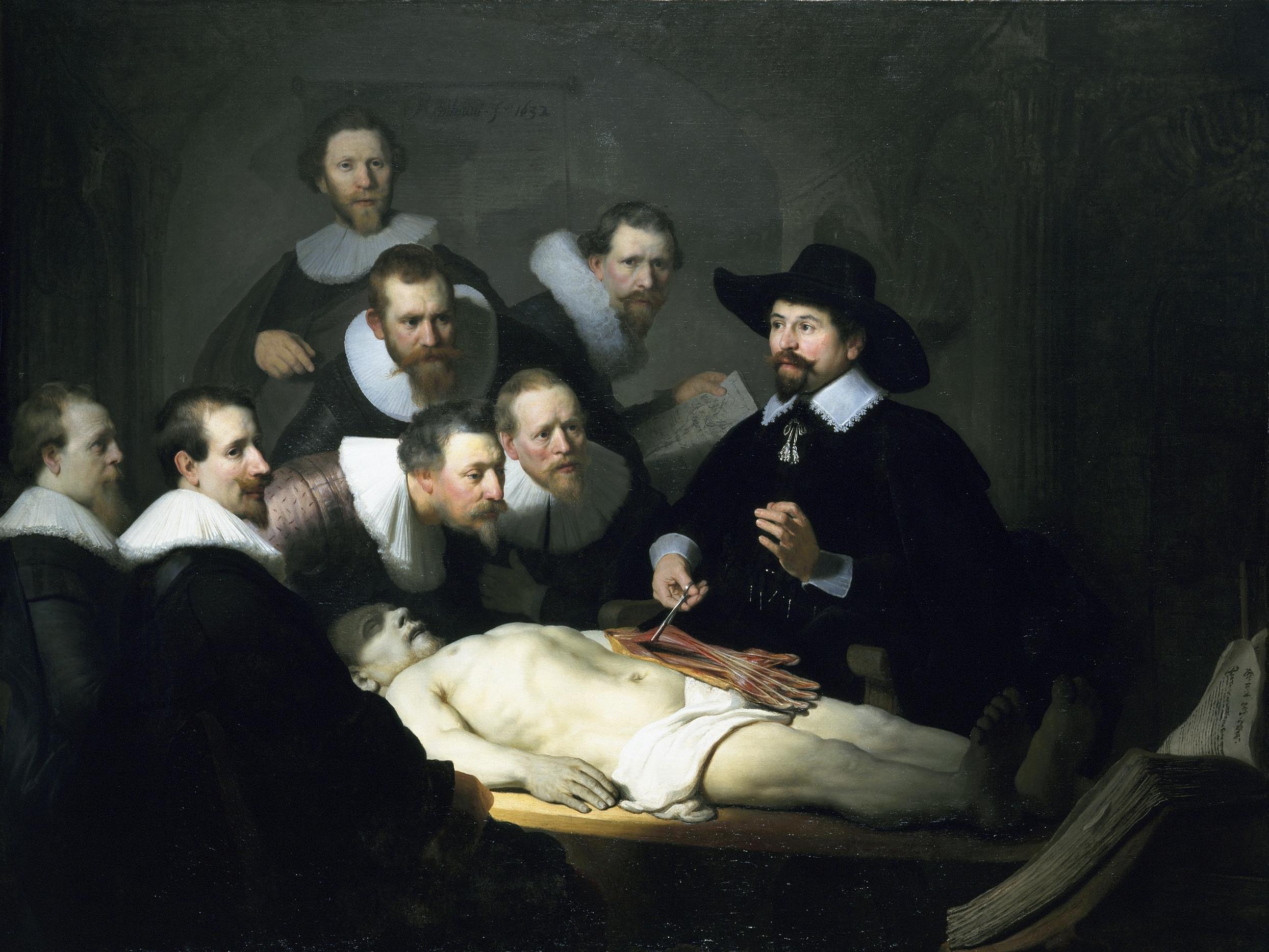
Real life-examples of children raised by animals have been claimed, from an Irish boy allegedly brought up by sheep, cited by Dr. Tulp, the star** of Rembrandt's painting The Anatomy Lesson of Dr. Nicolaes Tulp, to "Mowgli's Sisters", Amala and Kamala, two wild children allegedly raised by wolves in Midnapore, India and discovered by a missionary in the 1920s. In the absence of much surviving evidence, I'm happy to put Sheep Boy down to somebody puckering up to the Blarney Stone, whilst the more recent and better-documented tale of Amala and Kamala looks pretty dodgy under examination.

There are more credible stories of feral children who have lived wild after presumably being abandoned or losing parents or guardians at a later stage (some, but not all, of these stories involve the child allegedly being raised by animals, or living with them in the wild). Most of these children appeared to have no language; possibly because they were been abandoned before having leaned to speak, or, more probably, so early in their language development that they lost the ability to speak.

As we move from legend to better-documented facts, the story gets bleaker (although the fate of Amala and Kamala was itself pretty bleak, whatever the children's true story was):

Feral children have long fascinated scientists. Apart from the sheer pathos of their stories, they raise some gut issues: how do we become human? If we fail to learn critical skills as children, is it impossible to do so later?

Most feral children have been severely stunted and remained so all their lives, suggesting that early human contact is essential to normal development... Being a wild child may conjure up visions of some Blue Lagoon-type idyll, but the reality is unspeakably cruel.
Cecil, The Straight Dopes's über-polymath

 For obvious reasons, nobody today is prepared to perform a controlled experiment on the effect of withdrawing human contact and interaction from small children. According to Herodotus, the Egyptian Pharaoh Psammetichus had no such ethical worries and ordered two children to be raised without anybody speaking to them, in order to settle a hot debate about whether Egyptian or Phrygian was the world's most ancient language. The idea was that the first sounds the children produced without prompting would represent humankind's primordial tongue.

Herodotus wrote that the children were heard to make a sound that resembled "becos", the Phrygian word for bread, so Psammetichus' researchers concluded that Phrygian was the more ancient language.

In modern times, children aren't deliberately withdrawn from human contact in the name of academic research, but a lot of academics have spent a lot of time studying the effect of isolation on children who have been raised without human contact due to abuse or neglect, like "Genie", the pseudonymously famous victim of horrific childhood incarceration and abuse from the 1970's. A common theme is that language skills, emotional development and the capacity for independent living are stunted, usually irreversibly, by lack of human contact in the early years.

It's a tragic reversal of the archetype of the heroic child of nature, freed from the stifling, artificial straitjacket of human society, flowering into an independent, emotionally unconstrained free spirit.

Spinoza 1 - Rousseau 0


* Scarborough's Odeon closed over twenty years ago, which makes me feel very old. More happily, the 1930s art deco building escaped the usual destiny of old cinemas - demolition or a shabby afterlife as a bingo hall - and still survives as the well-maintained home of the Stephen Joseph Theatre.

** Or maybe just the impresario. The real star real of the show is the pallid cadaver of just-hanged ex-robber Aris Kindt, laid out on the slab for our instruction.


Tuesday, 14 June 2011

Why are you carrying a weasel?

Police say a man was carrying a dead weasel when he burst into a Hoquiam apartment and assaulted a man.

The victim asked, "Why are you carrying a weasel?" Police said the attacker said, "It's not a weasel, it's a martin," then punched him in the nose and fled.

The attacker was apparently looking for his girlfriend and had gone to her former boyfriend's apartment Monday night where the victim was a guest.

KXRO reports he left carcass behind.

Police later found the suspect arguing with his girlfriend at another location and arrested the 33-year-old Hoquiam man after a fight.

He said he had found the martin dead near Hoquiam, but police don't know why he carried it with him.

A martin is a member of the weasel family.

From The Seattle Times. via

Thursday, 26 May 2011

He was not turned into a fireball. We apologise for the distress...

IN an article published on The Sun website on January 27 under the headline 'Gollum joker killed in live rail horror’ we incorrectly stated that XXXXX [victim's name omitted], 23, of Brighton, was blown 15ft into the air after accidentally touching a live railway line.

His parents have asked us to make clear he was not turned into a fireball, was not obsessed with the number 23 and didn’t go drinking on that date every month.

XXXXX’s mother did not say, during or after the inquest, her son often got on all fours creeping around their house pretending to be Gollum.

Also, quotes from a witness should have been attributed to Gemma Costin not Eva Natasha. We apologise for the distress this has caused XXXXX’s family and friends.

A taste of the top-notch journalism available in Britain's best-selling newspaper, as spotted by Ben Goldacre. Makes you proud to be British...

Thursday, 7 April 2011

The gospels as infomercials

Years ago, the publisher Canongate produced a series of “Pocket Canons”; individual books from the Bible (authorised King James version) published in bite-sized separate editions. It’s a good idea; although the language of the Authorised Version is a joy to read or hear, bound into one book, it’s easy to be put off by the sheer bulk of the whole Bible (along with some of the more impenetrable proverbs, exhaustive rules and, regulations and the tedious lists of “so-and begat so-and-so; and so-and so begat so-and so, yea, even unto the nth generation…”).

I decided to take some Pocket Canons down from the bookshelf recently, in order to read the four canonical gospels in the (probable) order they were written. I wasn’t motivated by anything more than a vague curiosity about Christianity’s source material and how the story had developed and changed through four iterations.

Slipping the tiny volume into a pocket to read on a train, or taking it off the bedside table, where it takes up little more space than a drinks mat, is a curiously liberating experience. It puts you in a much more equal relationship with the text, in a way you never are when listening to a few de-contextualised passages being quoted by somebody trying to make a point, or when the rest of your hefty Bible silently sneers at you because you’ve only read about 25 pages out of 1,200-odd, you lightweight.

Each of the Pocket Canons has a short introduction from a well-known figure (some religious, some not). Some of these commentaries might be interesting, but I didn’t purposely read them, as the whole purpose of the exercise was to read the original stories without the overlay of commentary. Of course, it’s hard to deliberately not read things and my eye slipped over Nick Cave’s introduction to Mark. I don’t think it detracted very much from my reading – the gist of it was that Nick was an Anglican who’d been turned off by the namby-pamby  “gentle Jesus meek and mild” presented to him in Sunday school, but had been re-engaged when an Anglican vicar suggested he read the spare, lean, direct account of Jesus’ life in Mark. He has faith, I don’t, but his comments were quite interesting. Fair enough, I thought, and read Mark.

After Mark, Matthew. This had an intro by A N Wilson. Again, I wasn’t intending to read the intro, but I skimmed over it. This time I didn’t think ‘fair enough’ but thought the commentary was frustrating and annoying. Although I hadn’t intended to get side-tracked, Wilson’s comments are worth thinking about, because they highlight an enormous gulf of understanding between a lot of mainstream believers and non-believers. It’s possible that he was making a subtle point that I’m too dense to understand, but to me his thinking sounded confused and evasive. Whoever’s right or wrong, it’s worth examining what the problem is.

Wilson rhetorically supposes that the reader, born into a ‘post-Christian age, into a world of newspapers and investigative reporting and science’ will look at Matthew’s account of the virgin birth, the journey of the Magi, the various miracles and the resurrection and ask ‘is it true?’

He then tells the reader not to ask this question. Wilson says that although it seems reasonable to ask whether specific events in Matthew’s account are literally true, asking the question ‘can lead only to the most pointless, arid negativism.’

‘Your educated, scientific, modern mind’ says Wilson, ‘will decide that no one ever walked on water; no Virgin ever conceived; that corpses do not come to life.’ True enough. I’m no expert in hydrodynamics, obstetrics or (thankfully), death, but my experience of the world and what I’ve been taught and read suggest that such things don’t happen. But according to Wilson, if we make the mistake of ‘rejecting the Gospel’ because we think these are intelligent reasons to doubt it, we are in fact just ‘too hemmed in by our imaginative limitations to see the sort of things this book is doing’, and risk ‘rejecting one of the most extraordinary books ever written.’

Instead of applying ‘supposedly rational’ tests to the text, he suggests that we should think about Matthew in the context of Bach’s sublime setting in the St Matthew Passion or ‘old women in Stalin’s Russia … who stubbornly continued to chant the opening verses of the Sermon on the Mount in defiance of the KGB.’ He goes on to extol the power and passion of the Gospel, in all its terrible wonder, its truthfulness and its self-contradiction. He speaks of irreconcilables, ‘rather than being fudged’ being ‘held together in self-contradiction’ whatever that means. He tells us that the author did not attempt to write a realistic, post-enlightenment history, but crucially fails to say directly what the author did write.

The point I think he’s trying to make is that there is some sort of deeper truth than historical truth and forms of understanding that transcend mere facts and if we don’t appreciate this, we’re missing something important.

I agree that you don’t have to take everything in the world literally, or on face value, but I can’t for the life of me, see how the key events related in the gospels can be anything other than either true or false. There are, of course, parts of the Gospels that are neither. When Jesus told parables about vineyards, or of seed falling on good earth or stony ground, or the widow’s mite, nobody this side of the extreme end of the autistic spectrum would think of asking about the real vineyard, field or widow. They’re made up stories, intended to illustrate a point. Everybody knows that. We all get it; that’s why nobody objects that foxes and pigs don’t really talk when reading Aesop or Animal Farm. It’s fiction with a point, it doesn’t pretend to be anything else and there are few people so imaginatively limited that they don’t understand this.

In more general terms, you can learn lots of things from literature and art, even when the story being told is the figment of somebody’s imagination. Empathy, seeing the world through different eyes, dealing with difficult situations, the nature of heroism and cowardice, prejudice, honesty and deceit, that thing we call love, loss, the nature of society, they’re all in there. You can be moved, changed or enlightened by a fictional story in a book, or a film, TV, radio, the theatre without the story being literally true or the characters ever having actually existed. But here’s the important point – those works of fiction are clearly labelled and you look for them on the fiction shelves. You watch a film and words like these pop up on the screen:

All characters appearing in this work are fictitious. Any resemblance to real persons, living or dead, is purely coincidental.

The Gospels contain no such disclaimer. If we exclude parables and proverbs that are clearly not meant to be taken literally, we’re still left with a narrative. The events in it are either true or they are not. Maybe I’m imaginatively limited, but I can’t see how they can be neither, or both. Either Jesus was born of a virgin, or he wasn’t. He either walked on water or he didn’t. He died and rose again, or just died. Either there is a God or there isn’t. If there is, either Jesus was his son or he wasn’t.

There are religious people who aren’t worried by this. Fundamentalists, who believe that every word in the Bible is literally true. This position contradicts a consistent meticulously-constructed account of how the world works that’s been painstakingly pieced together over two thousand years of patient observation and discovery, but at least it’s consistent – the Bible is true and anything that says different, ain’t. Of course, even if you believe in the literal truth of the Bible, you still have to deal with the Ned Flanders problem of internal inconsistency:

Why me, Lord? Where have I gone wrong? I've always been nice to people. I don't drink or dance or swear. I've even kept Kosher just to be on the safe side. I've done everything the Bible says, even the stuff that contradicts the other stuff.
Or, as A N Wilson put it:

The irreconcilables rather than being fudged are held together in self-contradiction.

Nope, I still don’t understand. Is A N Wilson saying something really clever here, something I’m too dim to grasp, or is he just Ned Flanders gone to college?

But most religious folk aren’t Ned Flanders. They accept that not all of the Bible, or all of the Gospels can be literally true. Fair enough – every historian, every person who hears or reads a news report has to deal with distortions, errors and omissions. It doesn’t invalidate a belief in the reality of historical events or current affairs. Neither does it absolve us from having some sort of view, however provisional about what’s true and what isn’t. However powerfully written an account of some event is, however influential, it is either fact or fiction.

I just don’t get the distinction that Wilson makes between ‘a realistic narrative of the kind that we might expect of a post-enlightenment historian’ and the vaguely-defined alternative kind of narrative that he implies the gospels must be. Sure, a lot has changed in two thousand years, but it seems unlikely that the nature of events has changed, such that things could simultaneously happen and not happen at the time of Christ.

Rather than thinking about allegedly real events in the context of literature, which seems like a category error to me, perhaps it would be better to think about events in the Bible as if we were a jury, trying to decide what had probably happened. Legal systems may have changed, but then, as now, people were judging their fellows for alleged crimes and had some idea that the accused either had or hadn’t committed a certain act. There have been documented legal systems since Hammurabi drew up his code in about 1,700BC. Leviticus is famously full of laws. The Jesus of the gospels is all too aware of law.

Think not that I am come to destroy the law, or the prophets: I am not come to destroy, but to fulfil.
Matthew 5:17

Then, as now, people didn’t have perfect knowledge, but if somebody was accused of a crime they’d go through some sort of process to establish what had actually happened. Even if there is, or was, insufficient evidence to know whodunnit, people then, as now, knew that something either happened or didn't happen.

Let’s say that the body of X is found in a ditch, showing obvious signs of violent assault. Y is brought to trial for the crime. Maybe there’s enough evidence to convict Y, maybe not. But in those circumstances, people would know they had to decide whether or not Y’s guilt could be reasonably established. They would know that he must be either guilty or innocent. There might be mitigating factors, self-defence, being of unsound mind, whatever, but there’s no getting round the fact that X has been killed and Y either did do it or didn’t do it.

There might be a world of cultural difference between a judge trying to decide such a case in First Century Jerusalem and the members of a modern jury, but all would have an idea of literal truth and objective reality – Y either battered X to death or Y didn’t. Regardless of mitigating circumstances or insufficient evidence, the objective truth is out there. Maybe there’s enough evidence to pronounce judgement or maybe there isn’t, but Y either did it or didn’t do it. There’s no ever-so-subtle pre-enlightenment world where a Judge might think ‘you know what, actually, it’s wrong to even ask whether it’s true that Y killed X; it may seem like a reasonable question, but asking it would lead me into the most pointless, arid negativism.’

Yes, the gospels have inspired great literature and art, along with debates about morality, authority and the individual conscience, they’ve caused people to impose and challenge systems of government, given comfort to the afflicted and afflicted the comfortable (and sometimes vice versa), they are the basis of the most widespread religion on earth, and they contain great poetry. None of which is relevant to questioning the assertions that Jesus was the son of God, that he was born of a virgin, that he healed the sick, raised the dead, walked on water, fed 5,000 people with five loaves and two fish, was crucified and rose from the dead. These events either happened, or they didn’t and A N Wilson hasn’t made an understandable case that convinces me it’s somehow wrong to even ask whether or not these things are true.

Wilson seems all too typical of mainstream religious people. They think themselves too sophisticated and intelligent to accept the evidence-denying certainties of fundamentalists, so reject a too-literal interpretation of scripture. But when you ask them what they actually do believe, what they literally believe to be true, it’s like trying to nail jelly to a wall. Ask the direct question 'do you think X is literally true?’ and instead of a direct answer, you get a lecture on how simple-minded and limited your question is, without any coherent explanation of how an actual event can pull off the impressive trick of having both not happened, yet (in a very real sense), happened.

All of which is a bit annoying. People who ask simple, straightforward questions stand accused of being shallow and literal-minded, yet as far as I can see, the people making these accusations are fudging the issue, refusing to say what they believe and leaving the events recounted in the gospels in some sort of convenient limbo in between fact and fiction.

Once upon a time there was news, there were features and there were advertisements. News was a more or less accurate accounts of stuff that had happened. Features were more or less factual and informative articles about something or other. People trying to sell stuff wrote adverts. Simple. These days we have amphibious things called “infomercials”, things that look at first sight like informative features, but turn out to be thinly-disguised attempts to sell stuff. I don’t have a problem with adverts that come out and advertise that they are adverts. I ignore most of them, or, on the rare occasions that I see something advertising a good or service I’m interested in, I might take a look. Infomercials, though, are uniquely irritating – anodyne filler features, written in an attempt to flog something by sneakily flying in below your critical radar. I find their bland slipperiness particularly off-putting.

For all their talk of the wonder, power and majesty of the gospels, people who refuse to even engage with the question of whether specific events are likely to have been true are demoting the gospels to the status of infomercials in their fence-sitting attempt to have the best of both worlds. Is it a feature or an advertisement? Neither; it’s an informercial. The virgin birth – fact or fiction? Neither; it’s something that transcends your crude categories. To me this all smells of fudge and intellectual dishonesty.* My working theory is that the people who tell us that we’re asking the wrong question because our minds aren’t subtle enough just want to kick the question into the long grass because it’s too uncomfortable for them, or challenges their authority or preconceptions. If somebody can demonstrate in clear, understandable language that there's more to this subtle, truth-transcending, pre-enlightenment way of knowing than fudge and wooly language, I really would be interested to hear the point made clearly. Until then, I don't understand their point and I don't think it's my fault that I don't understand.

*which, coincidentally, are among the whacky ingredients that go into Heston Blumenthal’s radical re-invention of the  fairy cake, his first recipe to actually  include an abstract concept alongside the more traditional freeze-dried yew berries, bergamot oil with a hint of eau-de-cologne and tiny squares of gold leaf