Showing posts with label GOOD IDEAS. Show all posts

Friday, 19 June 2020

No logo - domestic science edition

Baking soda. I love this stuff like Donald Trump loves hydroxycholorquine.

I've used it to remove tea and coffee stains from cups and mugs for as long as I can remember, a tip I picked up from my mum. But by trial & error (mostly trial - it usually works & hasn't harmed anything yet), I've found out that it can replace a huge range of branded, specialist cleaning products around the home.

The biggie is baked or burned on food residue on pans and hobs. This stuff knocks spots off any branded specialist product I've ever used, whether mixed to a gritty paste to scrub hobs, or added to hot water to soak a pan or baking tray before scrubbing.

You can also ditch those creams they sell for cleaning stainless steel sinks and taps - baking soda will shine them up better at a fraction of the price.

Washing machine drawer getting scummy and mouldy? Baking soda is your friend.

Fridge getting a bit smelly? Baking soda again.

Pongy food waste bin? Ditto.

Limscale and other crud you'd rather not think about round the toilet rim? Marigolds, a plastic pan scrubber and a paste of good old baking soda.

Grease and oil stains? Sodium bicarbonate to the rescue!

It's also, apparently, good for getting uranium oxide or depleted uranium dust out of your workwear, although I haven't had occasion to try this one yet.

And the list goes on....

When baking soda teams up with vinegar, it gets even better.

Health warning: baking soda is a great cleaning product, but please don't inject it as a virus cure.

Saturday, 12 May 2018

The last straw?

Whoever's idea this was, it sounds like a good one:
The European Commission has hinted the EU could ban single-use plastics after Michael Gove said there was “some concern” Europe may prevent the UK from outlawing plastic straws.

Frans Timmermans, vice president of the EU’s executive cabinet, told Mr Gove on Twitter: “One step ahead of you. EU legislation on single-use plastics coming before the summer. Maybe you can align with us?”
The Devil, as always, is in the detail. For example, would the wording of any ban include these?


I see a lot of these little plastic straws littering spaces where children get together. But they're not drinking straws.
Other brands are available

Yes, the straws aren't used for drinking, but for delivering a microdose of fizzy sherbet, before being thrown away.

I can see how these pocket money novelties would appeal to kids. I can also see that they don't meet the functional definition of a straw. Unless things like this are specifically mentioned in any legislation, these might be the "straws" that survive the great cull.

Debating the essential nature of the sherbet straw could keep the lawyers and philosophers as busy as the great Jaffa cake controversy of yore.


Friday, 27 April 2018

A simple (part of) the solution

The UK population is growing by more than 500,000 people every year but only about half the homes required are built. I believe there is one key reason behind the UK housing problem: a lack of apartment living. But it’s possible to change this. I’m originally from Greece and one thing that has struck me about the UK is that British people dream of living in houses.

As the chart below shows, just 14% of British people live in apartments. This is one of the lowest percentages in Europe. In Germany the figure is 57%, in Spain it is 66%, and the Euro area average is 48%.
At first sight, this seems like a good idea. My only quibble is with the title of the piece, "The simple solution to UK’s housing problem – apartments." Simple? Really? I very much doubt whether there's just one simple solution to such a complex problem. To be fair, the article does talk about wider issues, like the need for rent controls and stronger tenants' rights as a prerequisite for turning flats in the private rented sector into proper homes.

But building more apartments does seem like a sensible part of the solution. As the article acknowledges, a shift in mindset is needed, so that flats aren't just seen as the sort of cramped, shoddy places where you'd only live if you had no alternative, so we're talking about building properly designed quality homes. Having lived in a flat in the past, these would be my top three suggestions for turning flats from those unloved boxes from which most Brits aspire to escape, into proper homes:

  • Abolish leasehold for residential properties. Even this government seems to be inching towards doing something about landowners jacking up and creaming off ground rents, but the whole leasehold system is a worse than socially useless subsidy for the rentier class, and it needs to go.
  • Decent soundproofing is a necessity, not a luxury, for people living in high-density accommodation.
  • Put balconies on flats (or patios, if ground floor). I'm no gardener, but one unanticipated thing I grew to love about moving from a flat to a house was the patio. Just having a little bit of outside space of your own really does a lot to make your home feel less claustrophobic. Of course, in a block of flats, this is the one area where decent soundproofing won't help if your neighbours are making an unholy din on their balconies but inconsiderate people is a whole other problem to which there's definitely no "one simple solution."

Monday, 11 September 2017

The Dutch are stopping accidents with this one weird trick

If you're a car driver, situational awareness shouldn't end when you turn off the ignition key. Between 2011 and 2015, carelessly-opened car doors killed eight people and reportedly injured 3,108, according to UK government figures. Fortunately, you can be part of the solution, if you just do this:
...[Cycling UK is] urging ministers to have the "Dutch reach" taught in driving tests. This manoeuvre involves the driver or passenger on the right-hand side of the car opening the door with the left hand - forcing them to turn and see if anyone's approaching.

It's a mandatory part of Dutch driving tests. 
It's simple, it works, and I can't imagine why anyone would object to making this tiny modification to their car door-opening behaviour.

Of course, there's bound to be some aggrieved motorist out there who'll go off on some mad rant about how he's* used his other hand all his life without dooring a cyclist, how it's always cyclists who are a menace to all law-abiding road users and how we wouldn't need this latest example of health and safety gone mad if all other road users except him weren't idiots.

It shouldn't need pointing out that this sort of whingeing is nonsense, but it probably does. Part of the problem is the tribal "us and them" mentality which unites some motorists in their hatred of cyclists (and vice versa). The thing is, you can always find individual examples of somebody else on the road behaving badly, including cyclists - the recent case of the wanton and furious cycle killer, Charlie Alliston, comes to mind.

The Alliston case, in turn, generated this headline in Cycling Weekly - "The media coverage of the Charlie Alliston case should be disturbing for cyclists everywhere", as if criticism of one person's selfish irresponsibility needs to be toned down, lest it reflect badly on the rest of the cycling tribe.

The thing is, like a lot of people, I'm sometimes a pedestrian, sometimes a motorist, sometimes a cyclist, sometimes a public transport user. I am large, I contain multitudes. None of these identities is a problem if I behave with care and consideration. Any of them might be if I don't.

The differences between the various forms of transport shouldn't be tribal. The only distinction which matters is an ascending hierarchy of responsibility, related to how much damage your chosen form of transport could do. An individual cyclist might be as careless as an individual motorist, but it seems beyond obvious to me that the motorist's carelessness is a bigger problem, because you can do more damage with a motor vehicle - there's a reason why there have been several terrorists attacks involving motor vehicles being deliberately driven into crowds, but none involving disaffected misfits deliberately trying to create mass carnage with a push bike.


*It might be a she, but I'll bet folding money that it will be a he.

Thursday, 8 September 2016

There'll be no green bottles...

Politics may be broken for the foreseeable, but there's still good news around for people who want to see our society wasting fewer finite resources and trashing the environment a bit less (if that group doesn't cover just about everybody, heaven help us all). Solar panels are getting cheaper and better all the time, with solar grid parity expected for 80% of the world next year. The price of energy-efficient LEDs is also plummeting and they're steadily displacing older, power-hungry lighting technologies.  People can now use biodegradable, mushroom-based materials as substitutes for everything from expanded polystyrene packaging to environmentally-unfriendly insulation materials and MDF.

Here in Britain, we're not recycling as much as we could be, but we're generally moving in the right direction. And, even better than recycling, we're re-using stuff. The plastic bag tax may not be as straightforwardly brilliant as some people think,* but at least we're opening up to the idea that there's got to be a better way than pouring irreplaceable raw materials into single-use throwaway products, then festooning our hedgerows with discarded polythene bags.

I think these new ideas range from mildly encouraging to quite exciting. But among the new ideas, there's maybe also room for a tried and tested old idea  - a thing we used to do right, but gave up on:
One of Britain's favourite childhood memories is long overdue a comeback in a bid to increase national recycling rates, says Mark Hall at York-based BusinessWaste.co.uk

Paying a deposit on a glass bottle, which is then refunded when returned to a participating retailer, effectively died out in the UK with the advent of the disposable plastic bottle, but now is the time to bring it back.

Figures from the United States - where bottle deposits are still widespread – show that the higher the deposit, the more likely a bottle is returned intact.

We often look at the past with rose-tinted glasses, but the bottle deposit was something that really did work.

In the post-war period, children could make themselves a reasonable fortune by scouring their local area for empty bottles, which they'd then take back to the shop to receive a few pence each.

It was killed off by plastic bottles, but that came with a legacy of millions of tonnes of waste in hedgerows and kerbs filled with bottles. It's time to end this epidemic of wastefulness.
Mark Hall

It worked then and it's still working, not just in the USA, but in Europe, where Germany deserves a special mention for trying to get back on track with deposits:
Observing the industry's inexorable transition to one-way containers, the government began drafting an ordinance to preserve refillable beverage containers in the early 1990s. In spite of aggressive opposition from the beverage and the packaging industries, the 1991 Packaging Ordinance became law that year. The ordinance requires the beverage industry to package at least 72 percent of the volume of its products in refillable containers [AGC, pp. 31-32]. Containers of water, carbonated soft drinks, fruit juices and other non-carbonated soft drinks, beer, and wine are subject to the beverage packaging provisions of the ordinance. If less than 72 percent of all of these beverages combined is packaged in refillable containers during a given year, then the government conducts a survey of beverage packaging over the following year. If this survey reveals that the 72 percent quota again is not met, then those types of beverages that did not meet their individual quotas are subject to a mandatory deposit. Under the deposit provision, producers of these non-complying beverages must establish deposit-return systems and thus must forfeit their option to have Duales System Deutschland or a similar recycling organization recover their one-way containers. For one-way containers whose capacity is 1.5 liters or less, the mandatory deposit is 0.25 Euro; for larger containers, the deposit is 0.50 Euro. The individual quota for each beverage is the percentage of that beverage that was packaged in refillable containers in 1991. These percentages are the following: water, 91; carbonated soft drinks, 73; juices and other non-carbonated soft drinks, 35; beer, 82; wine, 29. The Packaging Ordinance treats milk separately by requiring dairies to package 20 percent of their milk in refillable containers.**
Sounds like a no-brainer. So why aren't we doing it? An old opinion piece in the Guardian, titled "A bottle deposit scheme would be costly and counterproductive" gives us a clue. Not because the piece makes a convincing counter argument, though. This is the sort of thing which passes for an argument against bottle re-use:
Your editorial on the Campaign to Protect Rural England's call for a deposits scheme for drinks containers highlighted that "it's a simple scheme and an old one" (In praise of… deposit bottles, 17 September). However, that's exactly the point – it's old, defunct...

   ...CPRE admits that the scheme would cost as much as £700m a year to run – money that would ultimately come from consumers, either directly through unclaimed deposits or indirectly through higher prices...

...drinks containers are an income-generating part of councils' recycling collections, and vital to fund the other low- or no- value items.
That last argument, in particular, is so weak, it's almost funny. It reminds me of a documentary about litter I saw a few years back. The film makers set up a secret camera and recorded people who were dropping litter in the street. A reporter confronted the litterbugs and asked them why they were messing up everybody's environment.

Some offenders had the good grace to be a bit ashamed of being caught and conceded that dropping their rubbish wherever they happened to be had been a bit antisocial. Others got aggressive and tried to bluster it out, including one gentleman who argued that by dropping litter in a public place, he was doing a public service because people like him kept street cleaners in a job.

Arguing that by producing more waste for the council to recycle, you're public-spiritedly providing them with an income stream is almost as silly as arguing that by dropping litter you're selflessly promoting employment opportunities for street sweepers.

Jane Bickerstaffe, who produced this piece of corporate bluster was, at the time, the director of The Industry Council for Packaging and the Environment (INCPEN). And what is INCPEN? Glad you asked:
Our members are an influential group of International and British companies who have a common interest in packaging and sustainability. They include raw material suppliers, packaging manufacturers, and manufacturers and retailers of packaged products.

ONE VISION

We share a vision of the future where all production, distribution, and consumption are sustainable.

We aim to:

  • Help ensure policy on packaging makes a positive contribution to sustainability
  • Encourage industry to minimise the environmental impact of packaging and packaged products and continuously improve packaging
  • Explain the role of packaging

[see full vision statement...]
From INCPEN's own web site ("This information may be reproduced provided INCPEN is acknowledged and credited").

INCPEN's arguments may look weak, but its incentive to lobby on behalf of the influential producers and users of packaging materials it represents, and which fund INCPEN, looks quite strong.

Maybe the countries which still seem to be making a success of bottle re-use have got it all wrong. Maybe INCPEN is a disinterested organisation, more interested in what's best for the environment than it is in its members' bottom lines. But I can't help thinking that the environmental case for re-using glass bottles looks pretty sound, and that the counter arguments look a lot like PR spin and corporate lobbying.


*Moreover, they [reusable shopping bags AKA bags-for-life] require more energy to produce than common plastic shopping bags; one reusable bag requires the same amount of energy as an estimated 28 traditional plastic shopping bags or eight paper bags. "If used once per week, four or five reusable bags will replace 520 plastic bags a year", according to Nick Sterling, research director at Natural Capitalism Solutions. A study commissioned by the United Kingdom Environment Agency in 2005 but never published found that the average cotton bag is used only 51 times before being thrown away. In some cases reusable bags need to be used over 100 times before they’re better for the environment than single-use plastic bags.
** Post updated - the paragraph quoted above expains the situation in Germany better than the passage from this other article, which I'd originally used.

Saturday, 26 March 2016

Design iconoclasm

As well as praising the hexagonal cross-section pencil for being a good thing in itself, I recently wrote that another good thing about it was how it inspired the design of the iconic Bic ballpoint pen.

Having slept on it, I've woken up to the realisation that the disposable plastic biro is not a good thing. It is an abomination which deserves to die.

Think about it. How many billion disposable plastic things do we want to produce?* Even ostensibly small-government-loving governments want to discourage the commercial proliferation of toxic, landfill-hogging, wildlife-destroying, petrochemical-slurping plastic trash with things like plastic bag taxes.

It's not as if we need disposable plastic ballpoints most of the time. Most of the stuff scribbled down in biro is ephemeral: notes to self, meeting notes, course notes, revision notes, shopping lists, messages to phone people back and so on. You could do all this stuff perfectly well with an HB pencil which ends its life as a few wood shavings and a biodegradable stump.

There are a few circumstances when you can't use a pencil - those hard-copy official forms where they ask you to write in black ink and keep your signature inside the box, and it's considered bad form to sign the letter you just printed, or somebody's birth, marriage or death certificate, in pencil.

Then there are cheque books and bank deposit slips (banks are a vector of disposable pen proliferation, now they no longer have a handful of pens chained to up for customers to use in branch, but encourage you to just take the biro equivalent of an Ikea stubby pencil from their endless supply). Oh, and you might want the top copy of an one of those carbon-papered invoices to be inked in but, honestly, how many people use carbon paper these days?

For some of these things, solutions already exist - the registrar can sign off the hatches, matches and despatches with a non-disposable fountain pen or similar (would you really want stuff like that scrawled in biro, anyway?). And if you send out hard-copy official letters, save your signature as a .gif file.

I think I've already established that the majority of disposable biro use can be done away with by just switching to pencils. But what about the small, stubborn residue of hard cases where we want a cheap way of making an indelible mark?

Well, the indelible pencil has already been invented. Maybe we need something better than the existing indelible pencil, but not much better. The cheap disposable biro has always been second-best, anyway. My handwriting is pretty shonky, but if I switch from a biro to a decent fountain, cartridge or fibre-tip pen which dictates a slower, more fluid writing action, it gets better. For a person with neat handwriting the eqivalent change would be from merely neat to beautiful, calligraphy-standard script. 

So the bar for a biro replacement isn't set too high. It's a technical challenge but we've had nearly eighty years of technological innovation and materials science since László Bíró patented the ball point tip, so I reckon there's a clever somebody out there who'd be able to come up with an indelible pencil core that writes no worse than a biro. Maybe micro or nano-scale ink-filled spheres in a suitable matrix or something? After all, it's only needed for a small subset of the things we now use biros for and, in an increasingly digital world, that subset is shrinking all the time.

I wonder if the main barrier to change is psychological. After all, one place where you see a lot of people writing in biro is schools. Moving up from writing in pencil to writing in pen is an educational rite of passage, a necessary preparation for the adult world. At least it is now. But most of the stuff most kids will be writing as adults will be on keyboards, anyway, and, if grown-ups woke up, smelled the coffee and abandoned their environmentally-unfriendly disposable ballpoints in favour of greener pencils, learning to write in biro would no longer be a preparation for anything relevant.

However digital things get, we'll still need to grab a piece of paper or a Post-It and scribble something down on most days for the forseeable future. But there's no reason I can see why we need to continue manufacturing a toxic mountain of disposable plastic things to do so.


*The 100 billionth Bic Cristal Pen was produced in 2006. How many other-branded disposable plastic pens have been produced, or the up-to-date total, are figures I don't know, but they're certainly going to be big numbers.

Sunday, 18 October 2015

More seaside Gothic

The remains of Skegness Pier (a photo I took some time in the late 1980s).
The 1817 foot pier had cost £20,840 when it opened on 4th June 1881. It included a 700-seat saloon/concert hall at the 'T' shaped head. Steamboat trips began in 1882. The pier-head saloon was extended in 1898, and new refreshment rooms were built at the pier-head...

... On 11th January 1978, a severe storm washed away two large sections of the pier and left the theatre isolated at the seaward end. Plans to link the two sections by monorail, and to build a new 1200 seat theatre and a 250 foot tower all fell through later that year when an application for financial assistance was rejected.

Work began on dismantling the theatre in October 1985 but, while this work was taking place, a fire gutted the building.

Today the pier is only 129 yards (118m) long and no evidence remains of the old pierhead and shelters but what remains of the landward pier deck walkway has since undergone major refurbishment and is now once again a tourist attraction.

Even after refurbishment, what's left of the landward part of the pier looks forlorn. Somebody once defined a pier as a 'disappointed bridge' and that's exactly what it looks like today:


-- Tell me now, Stephen said, poking the boy's shoulder with the book, what is a pier.
-- A pier, sir, Armstrong said. A thing out in the waves. A kind of bridge. Kingstown pier, sir.
Some laughed again: mirthless but with meaning. Two in the back bench whispered. Yes. They knew: had never learned nor ever been innocent. All. With envy he watched their faces. Edith, Ethel, Gerty, Lily. Their likes: their breaths, too, sweetened with tea and jam, their bracelets tittering in the struggle.
-- Kingstown pier, Stephen said. Yes, a disappointed bridge.
James Joyce Ulysses

Thursday, 8 October 2015

Swimmers


Just to prove that there's more to the English coast than desolate seaside Gothic, here's another old photo to lift the mood a bit. It was high tide somewhere in Dorset. I forget exactly where, but who cares when it's summer and the water looks this inviting?

Ozymandias-on-Sea

England may not have any abandoned temples in windswept deserts, “vast and trunkless legs of stone” and the misplaced pride of Ozymandias, but it still has its epic follies: places where grand ambition had free rein, at least for a while.

Visit them today, and you can see the high-water mark, the glorious moment followed by inevitable decline. Weston is one such place: its Grand Pier is awash with wrought-iron latticework, towers, and domes. The wonders of the world were to be gathered here, for Weston to delight in them, and they in Weston. Today, it is almost empty, an abandoned palace floating above the mud.
From Seaside Gothic by Edmund Richardson.

This reminded me of an photo I took many years ago, not in Weston, but on one of Brighton's piers. Three gulls perch on top of one of the pier's slightly rusty buildings, its windows reflecting the setting sun. I've always thought that the picture captured the faded, melancholy beauty of many an English seaside town and Richardson's article brought the feeling back perfectly.

Anyway, here's the picture in question (so old it was taken on 35mm and scanned):

Monday, 14 September 2015

Not potty enough

Surprised to find out that that this wasn't a wholly accurate summary of what the man said? Thought not.
Call yourself an extremist, Corbyn? If I had my way, I wouldn't be pussyfooting around with just one of the armed services. I'd abolish the army, navy AND the air force.

Radicalised by the people of the extreme centre, that's me.


Tuesday, 17 March 2015

Good news, plain and simple

For somebody who thinks that Michael Green's Grant Shapps' extra-parliamentary income stream (web scraping) was less morally dubious than Kenneth Clarke's (tobacco), today is a good news day:
Plain packaging for cigarettes has been given the go-ahead after the plans were approved in the House of Lords. Peers backed the plans without a vote after MPs voted in favour last week.
The decision itself is good. The wider precedent it sets is even better:
That trademark registrations do not offer a right to use the sign also lends weight to the conclusion that plain packaging does not constitute a de facto expropriation of tobacco brands and does not expose the countries which adopt this measure (such as England, Australia and Ireland) to the risk of having to pay damages in compensation to tobacco producers under the European Convention on Human Rights and the EU Charter of Fundamental Rights (which protect, among other fundamental rights, the right to property).
There are good reasons to think that this measure will work, which is probably why the industry has been fighting so hard against it.

As far as I'm concerned, a simple good news story.

If we ever had a more rational drugs policy, it might get a lot more complicated than that. Policy makers would have to think a lot harder about when the level of harm is sufficient to warrant restricting the right to advertise a legal product.

As a study in the Lancet pointed out, there is good reason to think that some substances which are currently illegal (e.g. ecstasy) are less harmful than the legal duo of alcohol and tobacco. Would you still consider some substances (e.g. heroin) so harmful that they should stay banned? At what level of harm would you start to restrict advertising (you might be able to make a perfectly rational case for removing branding from, say, alcohol bottles, but letting people buy khat in branded packets, as opposed to banning the latter, as we do at the moment)?

But, for the foreseeable future, inertia and ignorance will probably see to it that's what's banned stays banned and what's legal stays legal, subject to a few tweaks. And this is a tweak in the right direction. It means fewer hearts stopping prematurely, fewer tumours needing to be cut from living flesh, fewer people struggling for breath, fewer people being orphaned, or widowed, or losing a friend, or sibling in what should be the prime of life.

The harm done makes Michael Green's Grant Shapps' profitable sideline of releasing virtual parasites into Google's advertising ecosystem sound trivial in comparison. Green Shapps might be the sort of spivvy chancer who probably ought to have "would you have bought a used car from this man?" chiseled into his tombstone as an epitaph, when his time comes, but compared with that cheery, solid, dependable old tobacco shill Ken Clarke, he's no worse than a naughty boy caught scrumping apples.

As a personality, I still quite like Kenneth Clarke. Somebody (I think it was Simon Hoggart) once said that he was the one senior Tory who gave a convincing impression of being a fully paid-up member of the human race and I know what he meant. He was clearly a rounded personality with interests outside politics (and not just the sort you had to declare). He was calm and unflappable. He seemed to say what he thought, rather than channelling the usual on-message unspeak and, if attacked, calmly told you why he thought his opponent was talking nonsense, rather than squirting the random spray of bluster, ad hominem, or outraged victimhood exuded by lesser politicians under pressure. Green Shapps comes across as a pipsqueak in comparison.

But for all that, by their fruits ye shall know them. One of Kevin Spacey's best lines in The Usual Suspects was 'The greatest trick the devil ever pulled was convincing the world he did not exist.' His second greatest trick was getting people to like him despite themselves.

Saturday, 22 February 2014

Cakes that ought to sell like hot cakes

A brief pause to stop and celebrate one of the good things in life. Newport Pagnell's high street hasn't been in the most robust health over the last few years; familiar names closing down, an excess of charity shops (there's nothing wrong with charity shops in themselves, but they're an indicator species of a degraded retail ecosystem) and all that's before the Tesco supermarket that's colonising the old Aston Martin site has opened and sucked its portion of trade out of the high street.

There is at least one superb shop that thoroughly deserves to buck the trend, though. PicNic's, at 63 High Street is an establishment of which I'm not entirely sure we're worthy. A fine selection of delicious home-made cakes, superb sausage rolls (with mustard seeds in the sausage meat) an extensive range of sandwiches and soups and the occasional, generally successful, culinary experiment (rye bread pizza with sun-dried tomatoes was a bit out there, but it worked) and all very reasonably priced.

For the record, no money, food or other consideration has changed hands in connection with this blog post - this is not an infomercial. I just think it's a cracking local business and, speaking as a man who likes his food, I wish it well.

Wednesday, 3 July 2013

Tax tourists and the Tax Avoiders’ Alliance

Health Secretary Jeremy Hunt is determined to crack down hard on "health tourists" - foreign nationals who might come over here and get free National Health Service treatment without having paid in to the system. There's little evidence that it's a significant problem, but foreign freeloaders make perfect scapegoats, so "health tourism" is officially a thing.

'According to official figures, £12m was lost treating foreign nationals - approximately 0.01 per cent of the NHS's £109bn annual budget' (Channel 4 News). British banks are estimated to control something like £1.26 trillion in various offshore tax-havens - that's a huge multiple of the annual NHS budget, rather than a tiny percentage of it (the original version of this sentence contained a careless error on my part, now amended - details of the correction are given at the end of this post). Given that Greece, where the authorities famously took their eye off the tax collection ball, is constantly held up as a cautionary example of what happens to naughty countries, you'd think that our leaders would see closing down opaque tax havens as more of a priority.

But, no, they seem strangely relaxed about tax tourists who like to rest their money in those offshore accounts provided by various British Overseas Territories, Crown Dependencies and suchlike, often beyond the inconvenient scrutiny of the tax authorities. There was a bit of tough talk about tax transparency, ahead of the recent G8 summit, but all we got was the British tax havens' voluntary, partial, conditional agreement to provide more information about the jet-setting, publicity-shy, wonga relaxing in their exclusive money hotels.

And what are these "voluntary agreements" worth? A statement from the premier of the Cayman Islands gives us a clue; 'All of us have the ability to insert reservations in whatever agreements we reach and we get to negotiate each of the individual agreements with each country.' I hear the sound of loopholes being pre-drilled. In an interview with Channel 4 News, the premier of the Turks and Caicos Islands, provided some more clarification:
Q. Can we say with certainty that Turks and Caicos and other overseas territories will have registries of companies telling us who the beneficial owners are and when will we have those?
A. That’s David Cameron’s goal … we cannot say today we will get that because there will be a lot of push-back from companies that have beneficial ownership...
 Q. But all you’ve signed up to is an action plan.
A. Yes to prepare
Q. For possible implementation of possible principles ?
A. Yes
Which brings us back to Evan Davis' excellent interview question. Why does the British government have to negotiate with territories that are under United Kingdom jurisdiction, or are self-governing possessions of the British Crown, and ask them nicely to be just a little bit more transparent, if it's not too much bother? Can't the government just tell them to make their records available for scrutiny and pass legislation to enforce its will where necessary?

Richard Murphy, director of Tax Research UK thinks that playing hardball with British tax havens might be a thing:
...there is no reason to ask the consent of these tax havens for automatic information exchange, transparency, documents on public record or anything else. We can just legislate that they will do these things and the reason why is clear:
Governors or Commissioners are appointed by Her Majesty The Queen on the advice of Her Ministers in the UK, and in general have responsibility for external affairs, defence, internal security (including the police) and the appointment, discipline and removal of public officers. Elected governments have a wide range of responsibilities.
Tax information exchange is quite clearly an issue of external affairs: the UK’s tax havens are not responsible for it; the UK is. This White Paper makes quite clear that local officials do not have authority on the issue. In that case it is time for the UK to act, now.
Unfortunately the British government* and its chums in the City of London don't seem to be pushing very hard to make it so.**

Fortunately, there's an influential right-wing think tank that should be holding the government's feet to the fire on this one. It's called the Taxpayers' Alliance.

I don't normally have much time for obscurely-funded right-wing think tanks, but I'm sure this one can't let such an important issue drop. After all, its mission statement is right there in the name. The Taxpayers' Alliance. Nominally, an alliance of, or with, those people the politicians can't speak highly enough of, those "hard-working families" who "play by the rules" and "do the right thing" (like contributing to the economy and paying their taxes). Friend to people who keep their noses clean, enemy of special-interest groups and freeloading scumbags everywhere. Surely they'll get hold of the issue of tax transparency like a terrier with a rat and won't let go?
However speaking to Channel 4 News, Matthew Sinclair, Chief Executive of the TaxPayers' Alliance said that while the agreement was a step forward, it did not fully address the issue.
He said: "International co-operation on transparency will help reduce tax evasion. But the measures are a side-show that don't address the fact that our tax system is fundamentally dysfunctional.
"We need comprehensive reform to simplify our needlessly complex tax code and reduce the punishingly high rates which drive money out of the UK, legally and illegally.
"We need a much simpler system that encourages investment into the UK and ensures that everyone pays their fair share of tax, no more and no less."
Is that it? The CEO of the Taxpayers' Alliance thinks that tax transparency is some sort of 'side-show' and can we talk about something else now, please. Why so timid, Matthew?
The Taxpayers’ Alliance, arguably the most powerful pressure group in the UK provides another example of the political power of tax avoiders. In 2008 the group was cited by the most popular newspapers, the Sun 307 times and the Daily Mail 517 times, and it has frequently appeared on popular news and current affairs programs like Newsnight. Yet the group’s chief executive, Matthew Eliott,*** has been forced to admit that he does not pay tax in the UK. One of their biggest donors, Sir Anthony Bamford (personal fortune around £950 million), also a major Conservative party donor, was blocked from receiving a peerage by HMRC, although HMRC refused to explain why. It seems likely that he was avoiding taxes on a colossal scale. Perhaps the Tax avoiders’ alliance would be a more appropriate name? 
Symmetry Breaks

And there was I, thinking the Taxpayers' Alliance did what it said on the tin. D'oh!

With allies like that, we don't need enemies.


*Headed by David Cameron, who inherited a tidy sum of money that spent years sitting in a tax-efficient offshore investment fund set up by his dad (say what you like about the Camerons, but at least they're more competent tax avoiders than the Farages).

**There is an argument that, if we crack down on British offshore havens, the money will just move from British tax havens to foreign-controlled ones. I don't really buy that one - after all, there are things like international negotiations, treaties and so on. Maybe the British prime minister could just pick up the phone to Mr. Obama and agree that it would be a win-win for both countries if we sorted out the Caymans and he got a grip on Delaware. Agree with our European partners that we'll put Jersey on a shorter leash, if they get Luxembourg neutered. A bit more of that sort of thing and the tax avoiders will start running out of places to hide.

Easier said than done, but isn't this the sort of determined, concerted action that all those world leaders were promising to take in the wake of the global financial crisis?

***Wot, two Matthews? Just to clarify, Matthew Sinclair replaced Matthew Elliott as the boss man of the libertarian conservative (big and little "C") pressure group / think tank in 2012.
 ________________


Correction and update

 I originally said 'British banks are estimated to control something like £1.26 trillion in various offshore tax-havens - that's six times the annual NHS budget', a figure lifted from here. Given the £109bn annual NHS budget quoted by Channel 4, the basic maths can't be right. Apologies for the sloppy error, but my substantive point, that tax tourists cost a tiny percentage of the NHS budget, whilst the Treasury loses a big multiple of that budget to tax avoidance in tax havens, stands, so I've amended the post to reflect this more general point.

The 'six times' figure came from the article's comparison of the planned UK health, education, welfare AND defence budgets for 2014, with the tax receipts that the UK Government knowingly loses to offshore tax havens, according to a 2012 report from the Tax Justice Network.

The exact figure, how much of it should be going to the the UK government and how much of what's owed is actually recoverable, are all up for debate. But even a simpleton should be able to grasp the basic point. The cost of health tourism here is small, but the Cayman Islands are far away, (although the pile of money "resting" there is big).

Wednesday, 24 April 2013

Blade inflation

With most people's disposable incomes dwindling to the size of a banker's conscience, why does anybody still shave with those overpriced proprietary handle and cartridge razor systems? Refill cartridges for the heavily-marketed multi-bladed razors (like the Mach 3 or Fusion brands Gillette markets to guys, or the Venus Proskin, aimed at the laydeez) are currently selling at somewhere between £1.80 and a tad over £3.30 per unit.* You can easily get a bog-standard Bic or supermarket own-brand disposable razor at a unit price of around 10p.

The manufacturers claim that their fancy, multi-blade cartridges shave you better. I'm sceptical, but even if we allow that there might be some measurable difference in the quality of shave you get with an expensive cartridge, as opposed to some cheap disposable, it sure as hell won't shave you over eighteen times better. Ensuring that your skin and bristles are thoroughly softened by warm water will have far more of an effect on the quality of your shave than using an elaborate multi-blade cartridge system (they call it "wet shaving" for a reason).

Disposables are better value, which ever way you slice it, but it's a bit wasteful, throwing a whole disposable away after a few uses. Even better than disposables are your old-fashioned standard double-edged safety razor blades. It's becoming obvious that the manufacturers, supermarkets and chemists don't like stocking these (too little mark-up, presumably) and it's becoming common to find even large shops failing to stock them. On the supermarket web site I checked, they sold only one variety of double edged-blades (out of 115 products related to the search term 'razor blades'), their own brand, at a unit price that was a few pence higher than the price of an average disposable.

Look on the Internet, though, and generic, double-edged safety razor blades can be had at a unit price that easily matches or beats the cost of a bog-standard supermarket disposable razor. A lot of them seem to be manufactured in places like India and Russia where there must still be plenty of people outside the rising middle class or oligarchy who haven't got the disposable income to waste on overpriced multi-blade razor cartridges.

The business model for shaving cartridges is a bit like the one for ink jet printer cartridges. There's no money in selling a printer / razor handle. The real profits are to be made after you've persuaded the punter to buy your particular brand of printer / shaving system, which works with only with consumables that aren't compatible with any other brand. Once you've locked your customer in, you can charge whatever you think you can get away with for the consumables.

In the case of printers, there have always been competing and incompatible systems, so the manufacturers have had a head start when it comes to tying their customers in. When alternatives have come along, they're able to stay one step ahead of buyers by designing their printers to work badly, or not at all, when a consumer attempts to refill a cartridge or use a third-party cartridge.

Razor manufacturers have had to try harder when it comes to locking customers in. King C. Gillette's safety razor with disposable blades was protected by patent from 1903, when he started to manufacture, until 1921, but by the time the patent had expired, it was easy for other manufacturers to make generic, interchangeable razor blades very cheaply. The manufactures of ink jet cartridges have never had to deal with a similar threat of a common standard that completely destroyed their ability to lock consumers in to their expensive, proprietary consumables.

Wilkinson Sword took the first step away from the generic razor blade in 1970, when it introduced its "bonded shaving system", a single blade embedded in a disposable plastic cartridge, ostensibly to make changing blades easier and to reduce the risk of injury. This solved a problem which probably wasn't much of a problem in the first place - I've been wet shaving with single blades for quite a few years now and I've never come close to injuring myself when changing blades, although I'm as prone as the next person to being clumsy, especially when in a hurry in the early morning. I reckon that by the time I'm doddery enough to be at real risk of a blade-changing-related injury, I'll probably be too shaky to shave myself anyway.

The Gillette company "bettered" the single-blade cartridge by introducing a twin blade cartridge, marketed with the questionable claim that 'It's one blade better than whatever you're using now.' By 1998 Gillette, now confident that a generation of consumers had swallowed the hype about more blades equalling a better shave, introduced the "Mach 3" cartridge with - guess what - three blades. Schick/Wilkinson duly responded to the Mach 3 with its four-bladed Quattro cartridge.

By 2004, The Onion could see where all this marketing-led blade inflation was leading and, sure enough, in 2006, real life caught up with satire when Gillette introduced its five-bladed Fusion cartridge.

All this marketing-led "innovation" has been so profitable that even mighty professional bullshitters look on Gillette's works and despair. Associate professor of marketing and consultant to some of the world's biggest brands, Mark Ritson, was suitably awestruck:
First, drive profitability. Market share might have reached its zenith, but that doesn't mean your margins can't be squeezed. One industry insider recently claimed that, despite a pack of four Fusion razor blades retailing for £9.72, the manufacturing and packaging costs for the product are less than 30p. That's a whopping mark-up of more than 3000%. How about that for a margin?

Second, practise positive cannibalisation. Gillette launched its five-blade Fusion line in 2006 with a 30% price premium over Mach 3, its previous three-blade offering. With an 85% market share, it makes more sense for Gillette to focus its marketing on switching its own customers from Mach 3 to the more profitable Fusion line than trying to win any more competitor share. That is why Gillette is spending millions to compete against itself with ads and online comparisons to convince its Mach 3 consumers that their current razor is simply not good enough and to trade up to Fusion.

Third, drive usage. This has always been the number-one way to fuel profitability. In Gillette's case the company is now investing heavily in an online campaign to encourage consumers to use their Gillette razor downstairs as well as upstairs. Videos with powerful messages, such as 'When there's no underbrush, the tree looks taller', are increasing blade-use on the lower body. One of the joys of an 85% share is that you can run general campaigns to grow total category usage, safe in the knowledge that most of the upturn in sales will benefit your brands.
That's right, guys - shaving your pubes in the hope that your penis will look bigger is what all the cool kids are doing (a marketing professional told me, so it must be true). Even The Onion didn't see that one coming.

The wacky "innovations" of the modern Proctor and Gamble-owned Gillette company are a world away from the real innovation of King C. Gillette,** whose invention was undeniably better than the old cut throat razors (there's a subtle clue as to why they sucked, right there in the name) and rival safety blades that you had to spend ages sharpening, with mixed results.The safety razor he pioneered works well, it's cheap to use and generates a tiny amount of recyclable waste. Its replacement by cartridges has allowed corporations to profiteer hugely whilst providing no - or at best, marginal - benefits to the end user.

Today's top tip for life in an austerity-ridden world - ditch the overpriced shaving cartridges, get yourself a perfectly adequate double-edged razor in the fifteen to twenty five quid bracket (more expensive models are available, but if you spend much more, you're just showing off) and a few blades for pennies each.***

What marketing professionals say in public is that modern consumers are way too savvy and sophisticated to be taken in by the first stupid bit of marketing they see, polished up with he odd celebrity endorsement. Looking at the way shaving products are marketed, I suspect that what they think in private is 'there's a sucker born every minute.'


*as advertised on the web site of a major supermarket.

**There's a huge a divergence of values, too, at least according to Wikipedia, where Gillette is described as a 'Utopian socialist', a refreshing contrast with the predatory profiteers currently trading under his name. Mind you, some aspects of his Utopian socialism sounded pretty wacky, too - he apparently believed that everyone in the US should live in a giant city called Metropolis, powered by Niagara Falls. OK, the concept is pretty out there, but when a guy's made one really brilliant idea work, why begrudge him his bit of blue-skies thinking?

***Or buy the slightly more expensive premium Merkur brand blades, if you really must.

Saturday, 17 September 2011

Reasons to be cheerful. part 3

It's not very often that I have a good word to say for Britain's coalition government, but this is terrific news and long overdue:

"I am delighted to confirm that early next year, this Government will begin a formal consultation on equal civil marriage for same-sex couples," she [equalities minister Lynne Featherstone] said. "This would allow us to make any legislative changes before the end of this Parliament.

Sadly, it's not a done deal, as the consultation process will undoubtedly bring forth attempts to wreck or neuter any legislation from the usual pious bunch of sour-faced, busy-body killjoys determined to frustrate a thoroughly benign measure that would bring happiness to those affected without doing the slightest harm to anybody else.

Apparently, David Cameron is backing the change (I'll give him the benefit of the doubt and assume that he really means this and isn't just parroting something his SPADS have told him about changing British social attitudes). The Tories may have a dismal record on economic inequality, but when it comes to prejudice against minority groups, boy, they've come along way since Section 28.

Saturday, 16 April 2011

fluffy is puffy

It is 10 times more secure to use "this is fun" as your password, than "J4fS<2".

Thomas Baekdal explains why it makes sense to use passwords you can actually remember, rather than ones so obscure that you either forget them, or have to write them down. Filed under "this shouldn't need pointing out, but it does."

Wednesday, 2 March 2011

London 2012 - beauty and the beast

It's crowded, expensive, showing its age and, in places, tatty, but the London Underground has one thing going for it - it's a showcase of good graphic design. From the Underground roundel symbol, to Harry Beck's circuit diagram-inspired map, to the ubiquitous Johnston Sans typeface, the look is crisp, clear and coherent.

In fact, it's everything that the London 2012 Olympics logo isn't. Just look at this:

                                                                                                                                    *

Are your eyes hurting yet? Mine are. What a mess. And it cost £400,000. At its 2007 launch, Lord Coe gushed inexplicably that the image represented 'the vision at the very heart of our brand'. If that's really so, I'd recommend that the 2012 Olympics introduces testing for hallucinogenic, as well as performance-enhancing, drugs.

Given five minutes and an old Bic biro, I could have doodled something better than that, inspired by nothing more than a mild sense of boredom  The Register was suitably underwhelmed:

Olympics minister Tessa Jowell clearly spent too much time in the chill-out room absorbing whalesong from her iPod at the "star-studded" launch of the 2012 Olympics logo in London's Roundhouse earlier today, since she described the rather frightening graphic as both "an invitation and an inspiration" as VIPs battled to verbally out joss-stick each other.

According to the official blurb, the logo is "modern and will be dynamic, evolving in the years between now and 2012" and furthermore "symbolises the Olympic spirit and the ability of the Games to inspire people to take part - not just as spectators, but as volunteers, in the Cultural Olympiad and more"
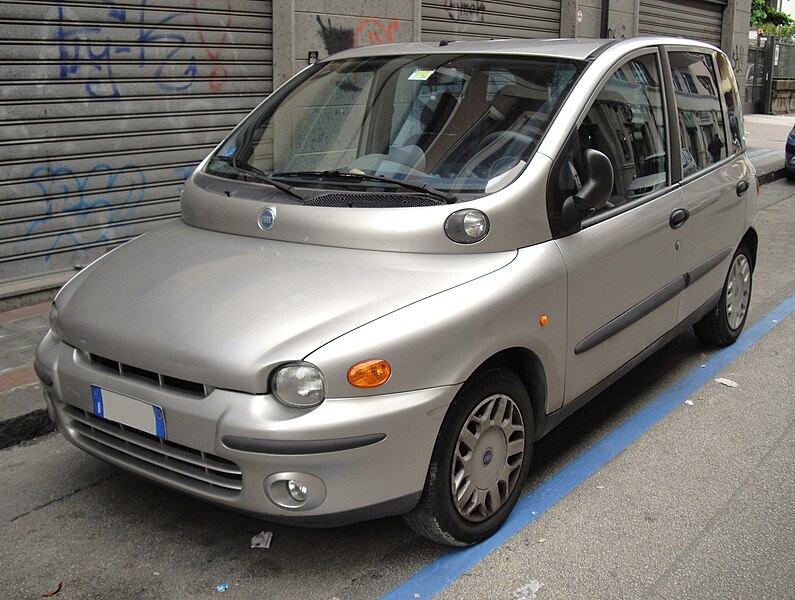
The London 2012 logo deserved to be binned for being as bewilderingly ugly as the pre-facelift Fiat Mutipla without having the excuse of being useful in any way. Unfortunately, it's too late to replace it with something better now and, inexcusably horrible though it looks, I suppose anything that infuriates Ahmadinejad and Iran's Mad Mullahs can't be all bad.


 * London 2012 logo photograph © copyright Nigel Chadwick and licensed for reuse under this Creative Commons Licence.

Thursday, 9 December 2010

Public service announcement

I've just had an e-mail forwarded to me by a person who (IMHO) is pretty intelligent and well-meaning. It purported to alert people to an alleged scam involving unscrupulous cashiers adding unauthorised cash-back requests to card sales and pocketing the cash from customers who hadn't checked their receipts. The style of the message made me suspicious, so I spent a minute (literally a minute) googling it before discovering that the "warning" was a hoax.

These sort of hoax chain messages have a generic, easily-recognisable style - THE USE OF CAPITALS (generally in the message and the subject line), multiple exclamation marks and an urgent plea to 'pass this on to your friends / family / loved ones'. It always surprises me that even quite bright people do forward them - I'm guessing that the appeal to the welfare of your loved ones, combined with a lack of time for fact checking  is what triggers otherwise rational people to hit the "send" button and propagate the hoax.

I know nothing about the sort of people who start these rumours and don't know whether there's any motivation beyond the rather odd satisfaction of having created an inaccurate meme and watching it replicate. But I'd like to make a small plea to anybody reading this who receives a warning e-mail with lots of caps and exclamation marks, warning about some scam or danger to which you can alert your friends and family by forwarding the warning to everyone in your address book. If it looks like a hoax, it probably is, so please don't spread it. If you still think it might conceivably be true, it's probably serious enough to be worth a couple of minutes of your own time, spent either googling, or going straight to a site like Hoax-Slayer, before clogging up the in-boxes of your friends, family and colleagues.

Together, one e-mail at a time, we could create a world with a just little more head space for thinking about what's real and important, rather than fretting about unreal threats, or cursing the rising tide of disinformation.

Thursday, 18 November 2010

Christmas time

With the annual Christmas shopathon just around the corner, here are some tips for a saner kind of Christmas:

Yes, it’s the thought that counts.  But if it’s the thought that counts, then it is perfectly acceptable for people to exchange the kind of gift that cannot be purchased in a store, namely, the gift of time.  Tell the adults on your Christmas list that this year you’re giving them the gift of free time; you are releasing them from the obligation to buy for you a gift, and you are encouraging them to spend in some other way the time they would otherwise spend at the mall purchasing a material gift for you.  Offer to make time in January for a long and relaxed lunch date (and then make good on the offer).  For friends with children, offer to babysit so that they may have time for themselves or for each other.  For far-away friends and relatives, resolve to write letters; real letters, with details and thoughts just for them, with questions and occasions for beginning ongoing conversation.

From 3 Quarks Daily. The British Retail Consortium has not approved this message.