Showing posts with label PHILOSOPHY. Show all posts

Saturday, 12 May 2018

The last straw?

Whoever's idea this was, it sounds like a good one:
The European Commission has hinted the EU could ban single-use plastics after Michael Gove said there was “some concern” Europe may prevent the UK from outlawing plastic straws.

Frans Timmermans, vice president of the EU’s executive cabinet, told Mr Gove on Twitter: “One step ahead of you. EU legislation on single-use plastics coming before the summer. Maybe you can align with us?”
The Devil, as always, is in the detail. For example, would the wording of any ban include these?


I see a lot of these little plastic straws littering spaces where children get together. But they're not drinking straws.
Other brands are available

Yes, the straws aren't used for drinking, but for delivering a microdose of fizzy sherbet, before being thrown away.

I can see how these pocket money novelties would appeal to kids. I can also see that they don't meet the functional definition of a straw. Unless things like this are specifically mentioned in any legislation, these might be the "straws" that survive the great cull.

Debating the essential nature of the sherbet straw could keep the lawyers and philosophers as busy as the great Jaffa cake controversy of yore.


Monday, 27 February 2017

"...they may take our lives..."


"...but they'll never take our freedom (terms and conditions may apply)..."
I once had a conversation with a Libertarian friend who insisted that freedom was the answer to everything — ironic since he was getting married the following week.
“Freedom to have sex with others while married?” I asked.
“Of course not,” he said.
“Freedom for your children to do whatever they want?”
“No, that’s different,” he said.
“Freedom for everyone to have a nuclear bomb?”
“No, that wouldn’t be good.”
“Freedom for people to steal?”
“No, that has to be controlled.”
“You don’t really think that freedom is the answer to everything,” I said. “The real question is what to constrain and what to let go free. The question in social engineering is the question in all engineering. It’s a question of tolerances: What to constrain with tight tolerances and what to let run free with loose tolerances. That question is built right into the paradoxical declarations that we should all, “be intolerant of all intolerance,” or “tolerate all intolerance.”
Jeremy Sherman, writing for AlterNet.

If you stop to think about if for any longer than it takes to slap on half a face-full of anachronistic woad, it turns out that "Freedom!" as a rallying cry is as problematic in the 21st Century as it was back in the feudal 13th Century.

Sunday, 5 February 2017

Meaning of life not as simple as people think

We are all here on earth to help others; what on earth the others are here for, I don’t know.
John Foster Hall (and others).

Tuesday, 3 May 2016

Death, where is thy sting?

It's later than you think. In the regrettably sexist, but still magnificent, words of the Book of Common Prayer:
MAN, that is born of a woman, hath but a short time to live, and is full of misery. He cometh up, and is cut down, like a flower; he fleeth as it were a shadow, and never continueth in one stay.
But is time really short? What if, as Bob Berman and Robert Lanza argue, all those fleeting moments are, in fact, eternal?
Of course, as you’re reading this, you’re experiencing a ‘now’. But consider: from your great-grandmother’s perspective, your nows exist in her future and her great-grandmother’s nows exist in her past. The words ‘past’ and ‘future’ are just ideas relative to each individual observer.

So what happened to your great-grandmother after she died? To start with – since time doesn’t exist – there is no ‘after death’, except the death of her physical body in your now. Since everything is just nows, there is no absolute space/time matrix for her energy to dissipate – it’s simply impossible for her to have ‘gone’ anywhere.

Think of it like one of those old phonographs. The information on the record is turned into a three-dimensional reality that we can experience a moment at a time. All the other information on the record exists as potential. Any causal history leading up to the ‘now’ being experienced can be thought of as the ‘past’ (ie, the songs that played before wherever the needle is), and any events that follow occur in the ‘future’; these parallel nows are said to be in superposition. Likewise, the before-death state, including your current life with its memories, goes back into superposition, into the part of the record that represents just information.

In short, death does not actually exist. 
It's a startling theory - or rather it would be to anybody who's never read Vonnegut's Slaughterhouse Five:
The most important thing I learned on Tralfamadore was that when a person dies he only appears to die. He is still very much alive in the past, so it is very silly for people to cry at his funeral. All moments, past, present and future, always have existed, always will exist. The Tralfamadorians can look at all the different moments just that way we can look at a stretch of the Rocky Mountains, for instance. They can see how permanent all the moments are, and they can look at any moment that interests them. It is just an illusion we have here on Earth that one moment follows another one, like beads on a string, and that once a moment is gone it is gone forever.When a Tralfamadorian sees a corpse, all he thinks is that the dead person is in bad condition in that particular moment, but that the same person is just fine in plenty of other moments. Now, when I myself hear that somebody is dead, I simply shrug and say what the Tralfamadorians say about dead people, which is "So it goes." 
That was science fiction, not science, and there are plenty of physicists who'd argue with Berman and Lanza's view of the nature of time and reality, but it's an interesting idea. Even if it is true, I wouldn't necessarily go along with Berman and Lanza's cheery assertion that their view of time and mortality is less troubling than the idea of past time just disappearing and oblivion being real:
...let’s recap the scientific view of death: essentially, you drop dead and that’s the end of everything. This is the view favoured by intellectuals who pride themselves on being stoic and realistic enough to avoid cowardly refuge in Karl Marx’s spiritual ‘opium’ – the belief in an afterlife. This modern view is not a cheerful one. 
But the fact that moments are eternal might be irrelevant if it's only the ordering of events by the passage of time that makes us conscious that anything's happening at all. The moments might be eternal, but our consciousness might only exist in time, leaving us as unaware of the "eternal" moments of our lives as if we'd been snuffed out. And even if events are permanent in some way that makes a difference to us, it might still take a lot of stoicism to face the fact that every moment of our lives is eternal - the worst moment of your life as much as the best, and every point in between. Eternal joy and eternal suffering.

When it comes down to the most fundamental level of reality, nobody (yet) knows what's true. And, since there's no particular reason to expect the Universe to be constructed in accordance with our fondest wishes, that might be just as well. But, whatever the truth, reality is whatever it is, so you might as well roll with it. Or, to quote another Sci Fi classic "Time is an illusion. Lunchtime doubly so" and, more importantly, "DON'T PANIC!"

Friday, 22 April 2016

Good ruminations


Beyond the reflection that I must be getting old, because the majority of the famous people I've heard of now seem to be dead, Prince's death did prompt another rumination - this time about about a trait shared by a subset of our recently-deceased high achievers:
[Publicist Martin] Keller said Prince was a “severe introvert” who grew from barely getting words out early in his career to becoming more articulate and media-friendly as he got older...
...[Long-time north Minneapolis resident Robin] Crockett had known Prince since she was 10. She and others often huddled in the home’s basement to watch him practice. “He’d sit without his guitar plugged in,” she said. “Just him and his guitar.”
Minneapolis Star Tribune

This, just after we'd adjusted to the death of Victoria Wood who, famously, had an isolated childhood, largely spent in one of the many rooms of the house her eccentric mother had partitioned up with sheets of reclaimed plywood, alone, save for a telly, a piano and an active imagination.

And as for Bowie, who more or less kicked off Death's bumper 2016 talent harvest, here's the man in his own words:
As an adolescent, I was painfully shy, withdrawn. I didn’t really have the nerve to sing my songs onstage and nobody else was doing them. I decided to do them in disguise so that I didn’t have to actually go through the humiliation of going onstage and being myself. I continued designing characters with their own complete personalities and environments. I put them into interviews with me! Rather than be me — which must be incredibly boring to anyone — I’d take Ziggy in, or Aladdin Sane or The Thin White Duke. It was a very strange thing to do.
All three had an element of introversion written through them like a stick of rock and I'm guessing that several more of 2016's honoured dead shared something of this trait (the famously reclusive Harper Lee sounds like a dead cert), although not all of them (it's difficult to imagine the thrill-seeking Lemmy sitting on the introvert end of the spectrum, although even he seems to have had an comparatively isolated childhood with plenty of room for solitary rumination).

But whether or not the young Lemmy spent a lot of time ruminating, a lot of highly talented introverts certainly did. That's worth remembering, because there's a tendency to only see the bad side of rumination. For a lot of mental health professionals and counsellors, rumination is A Bad Thing, a pathology to be eliminated, so that people can mindfully live in the moment, free from useless anxiety and unprofitable introspection.

And they do have something of a point. There are obvious forms of rumination we'd be better off without. In ascending order of seriousness:
  • all those times you've over-thought a problem and can't see a solution, but then the answer pops into your head once you've stopped worrying about it
  • endlessly fretting over the things that have gone wrong in your life until you've thought yourself into a state of exhausted depression or self-pity
  • being so focused on a solitary train of thought that you ignore any reality checkpoints you might pass and end up in an insane world of David Icke-style monomania
  • the obsessive ruminations of the stalker, fixated on the object of his or her obsession
  • the stereotypical murderer who shocked neighbours insist "kept himself to himself" while presumably ruminating over the dark fantasies, or real or imagined slights and insults which would eventually bubble over in some act of horrific violence.
But we need some balance here. Insane murderers are, thankfully, rare. On the opposite end of the rumination spectrum there are exceptionally talented people - also rare - who ruminate more than average and come up with great ideas. The width of the spectrum is enormous, encompassing everything from the grim and  frightening ruminations of the serial killer, to Victoria Wood ruminating on which was the funniest type of biscuit to name-check in her sketch, song, or stand-up routine and all points in between. And I'm willing to bet that, beyond the high-profile world of showbiz, the world's most talented scientists, engineers, medics and other high-end problem-solvers do more than their fair share of rumination.

There's pathological rumination, but there's also inspired rumination, creative rumination, analytical rumination, imaginative rumination, playful rumination and sheer genius rumination. It's context-dependent, not necessarily always a good or a bad thing, but I get the impression that it's generally frowned on these days, by people who only see the pathological end of the spectrum, an overgeneralisation which leads to people coming out with crazy talk like "You think too much", as if this was a perfectly reasonable thing to say, when it's really like saying "You breathe too much",* or, for Descartes fans, "You exist too much."

It can be a bad thing to be too obsessed with celebrities, but in this case, looking at at the habits of exceptionally talented people can provide a useful counter-narrative to the fashionable idea that all rumination is a menace which should be stamped out.

Apart from anything else, rumination, can be fun - Socrates thought that the unexamined life wasn't worth living and I'm with the ugly old bugger on that one. But, then, I'm a bit of an introvert, so I would say that, wouldn't I?


*I guess you can hyperventilate but, in general, breathing isn't something you want to stop doing any sooner than you can possibly help it.

Tuesday, 18 March 2014

The uneven march of progress


Bob Seidensticker is annoyed with theists who give unhelpfully convoluted philosophical answers to empirical questions and concludes that nonscientific philosophy doesn't get anybody very far:
Alvin Plantinga argued that philosophy is relevant at the frontier of science when he said that philosophy is just thinking hard about something. By that definition, Werner Heisenberg (a physicist) was doing philosophy when he came up with his uncertainty principle, Kurt Gödel (a mathematician) was doing philosophy when he discovered his incompleteness theorems, and Alan Turing (a computer scientist) was doing philosophy when he developed the Turing Test. Maybe string theory or ideas on the multiverse are philosophy.

A broad definition of philosophy doesn’t bother me, but note that all these “philosophers” were first scientists or mathematicians. That’s why they were able to make their contributions. While a scientist can put on a philosopher’s hat and do great work, the reverse is not true...

...Lots of sites have Top Ten lists of scientific discoveries for 2013 ... We found new clues that Mars was once habitable, the Voyager 1 spacecraft left the solar system, DNA was sequenced from [a] 700,000 year old animal and 100,000 year old human remains, a meteor exploded over Russia, new gene therapies were found, life was found in a pristine Antarctic lake, and Jupiter’s Ganymede was mapped.

I couldn’t find a list of the Top Ten philosophical breakthroughs for 2013.
Cross Examined

This is a narrow point about scientifically unqualified 'philosophers putting on an imaginary lab coat and playing scientist like a child plays house.' Specifically, he objects to religious apologists muddying scientific enquiries about, say, the origin of the universe, with 'Complicated philosophical arguments' that 'simply try to paper over the glaring fact that evidence for God is negligible and that we have no justification for belief', (he calls these 'caltrop arguments').

But his criticism also opens up a far wider question. Is science the only field in which humans are making anything that we could sensibly call progress? In a very narrow sense, the answer could be 'no' - if you were to define technology as a separate discipline from science, you could also point to clear evidence of technological progress. But if by "science", you mean all the empirical disciplines of science, mathematics and technology, then there seems to be a case to be answered.

The positive side of  Seidensticker's case seems unarguable. Look at two examples of how far science and technology have come in one generation. In 1990, no astronomer in human history had ever observed a planet orbiting another star. In 1992 the first extrasolar planet (orbiting  a pulsar) was discovered. In 1995 the first planet orbiting an ordinary star (other than the sun) was discovered. Today, astronomers know of more than a thousand confirmed exoplanets, with many candidate observations awaiting confirmation and new observations taking place all the time.

Back to early '90s technology on planet earth - 'By Christmas 1990, Berners-Lee had built all the tools necessary for a working Web: the HyperText Transfer Protocol (HTTP) 0.9, the HyperText Markup Language (HTML), the first Web browser (named WorldWideWeb, which was also a Web editor), the first HTTP server software (later known as CERN httpd), the first web server (http://info.cern.ch), and the first Web pages that described the project itself.' It's obvious, even to a total non-expert, that there has been rather a lot of progress on the WWW front since then.

The apparent lack of noticeable progress in fields outside science and technology also seems to support the negative side of Seidensticker's thesis.

Starting with philosophy, never mind 'the the Top Ten philosophical breakthroughs for 2013', how many lay people could name a single philosophical breakthrough that's happened since the creation of the very first Web server, circa 1990? For that matter, how many philosophical breakthroughs of the last century could your averagely well informed non-expert name?

Science and technology can boast many well-known successes: Watson and Crick announcing the structure of DNA, the start of TV broadcasting, the discovery of penicillin and the introduction of antibiotics, the jet engine, insulin, nylon, the discovery of how our universe came into being, the Hubble space telescope, the Large Hadron Collider, the moon landings, the birth of the electronic computer and many more. People understand terms like "splitting the atom" and "rocket science" as metaphors for tasks that require intelligence, hard thinking and expertise. I'm not claiming that acceptance into the general lexicon necessarily validates a breakthrough (we still use 'mesmerise' and a lot of jargon from Freudian analysis in general speech, although Anton Mesmer was more of a charismatic stage magician than a scientist and Freud's theories were unscientific and, generally, plain wrong). But it's still an impressive list.

What have you got, philosophy? Not a lot. Two explanations come to mind:
  1. Philosphers' minds are so highly trained that the average person in the street is too stupid to understand the brain-bogglingly clever breakthroughs they've made.
  2. They just haven't made many/any.
I tend towards explanation 2. on the grounds that the general public are aware of some of the most intellectually difficult problems that the human mind has ever wrestled with. People like David Attenborough and Brian Cox pop up regularly on prime-time telly, explaining really hard stuff like evolution and the origin of the whole damn universe. If philosophy had such an exciting story of discovery to tell, where's the philosophical equivalent of Brian Cox, getting all enthusiastic, awe-struck and wistful about the amazing things philosophers have discovered in the the last few years in that new blockbuster series, Wonders of Philosophy? Alain de Botton, lovely man though he is, doesn't quite cut it in the astonishing discoveries stakes.

And how about progress in the arts? The arts certainly have a higher public profile than philosophy - who hasn't heard of Picasso, Andy Worhol, George Gershwin, Georgia O'Keeffe, The Beatles, Lady Gaga, Orson Welles, J K Rowling, John Steinbeck, Harper Lee or Brian Eno? But how far has art itself "progressed"? Here's the blurb for an exhibition of Ice Age art:
Discover masterpieces from the last Ice Age drawn from across Europe in this groundbreaking show. Created by artists with modern minds like our own, this is a unique opportunity to see the world's oldest known sculptures, drawings and portraits.

These exceptional pieces will be presented alongside modern works by Henry Moore, Mondrian and Matisse, illustrating the fundamental human desire to communicate and make art as a way of understanding ourselves and our place in the world.

Ice Age art was created between 40,000 and 10,000 years ago and many of the pieces are made of mammoth ivory and reindeer antler. They show skilful, practised artists experimenting with perspectives, scale, volumes, light and movement, as well as seeking knowledge through imagination, abstraction and illusion.

One of the most beautiful pieces in the exhibition is a 23,000-year-old sculpture of an abstract figure from Lespugue, France. Picasso was fascinated with this figure and it influenced his 1930s sculptural works.

Although an astonishing amount of time divides us from these Ice Age artists, such evocative pieces show that creativity and expression have remained remarkably similar across thousands of years.
Ice Age art: arrival of the modern mind, The British Museum, 2013.

There are great artists now and there were great artists in prehistory. It's by no means clear that the work of modern visual artists is 'better' in any meaningful way than that of their paleolithic ancestors. You might argue that humans have developed many different techniques and forms of art in the intervening millennia, both in the visual arts and in other domains of artistic expression. But stop to think about what has changed. While 'creativity and expression have remained remarkably similar across thousands of years', science and technology haven't, and advances in these empirical disciplines often seem to have been the drivers of artistic progress. For example:
  • abstract geometrical decoration in Islamic art - although originally inspired by a perceived religious prohibition of idolatry, these new forms were enabled by mathematical knowledge
  • the move towards abstraction and conceptualism in Twentieth Century Western art, driven at least in part by the widespread availability of the camera, which usurped the unique ability of the representative artist to create a convincing facsimile of nature
  • and while we're on the subject of photography, it's an art form that wouldn't exist without the technology coming first
  • ditto cinematography and video games (if you think the latter comes under the ambit of "art" - if not, why not?)
  • humans have had music and musicians since the stone age - what they lacked back then wasn't artistry, but the people who later invented fiddles, guitars, harpsichords, pianos, pipe organs, trombones, sitars, saxophones, synthesisers and musical notation
  • and talking of notation, information technology started with accounting symbols pressed into wet clay, which eventually developed into written language, the medium that transformed the oral storytelling tradition into the various forms of the thing we now call literature
And so on. In short, perhaps the "progress" part of "artistic progress" is down to science and technology, rather than to humans' native artistic drives and talents, which may have existed, virtually unchanged, since the stone age.

So, maybe "science", in its broadest sense is demonstrably progressing, while philosophy and the arts aren't. Is the human race making measurable progress in any field other than the empirical disciplines? I can think of one field where there seems to have been a measurable degree of progress - politics and society:
People sometimes do not realize how total has been the normative triumph of some of the ideas typically associated with democracy, even if one thinks that democracy itself has not succeeded quite as spectacularly. Take, for instance, the norm that rulers of states should be selected through some process that involves voting by all adults in society (I’m being deliberately vague here) rather than, say, inheriting their position by succeeding their fathers. In 1788 there were only a couple of countries in the world that could even claim to publicly recognize something remotely like this norm. Most people could not vote, and voting was not generally recognized as something that needed to happen before rulers could rule; rulers could and did claim to have authority to rule on other grounds. Norms of hereditary selection structured the symbolic universe in which political competition took place, and defined its ultimate boundaries for most people (at least those who lived in state spaces). Yet by 2008 there were only four or five countries in the world that did not publicly acknowledge universal voting rights. 
Even acknowledging the existence of other, less encouraging, developments, that's pretty impressive. We can actually pick out a few identifiable markers of progress (assuming that what "progressives" think of as progress is progress): the ending of apartheid in south Africa and of racial segregation in the southern sates of the USA, the reversal of a lot of anti-gay legal discrimination across most of the developed world a continuation in the general decline in levels of violence identified by Steven Pinker (OK, this one is contested, but as one critic put it, Pinker's vocal critics, like John Gray have provided 'reasons to doubt Pinker’s explanation of the decline of violence is correct, however he has not provided reasons to doubt that violence is declining'),

And this progress seems to have some public recognition - people who couldn't name a contemporary philosopher would recognise the names of Nelson Mandela, Emmeline Pankhurst, Martin Luther King, Rosa Parks, or Peter Tatchell.

Is this another separate domain of human progress, or is it also driven, in a more subtle way, by the relentless march of science and technology?

I'm not sure that there's always a direct link between scientific progress and social progress, but people have proposed all such links. For example, the idea that slave societies don't develop technology because they've already got slaves to do the work. I've heard it argued that the ancient Greeks, who invented the steam engine and astronomical computer could have had their own industrial revolution if only they hadn't been so addicted to enslaving people. A steampunk late classical world would make a good backdrop to an alt-history SF novel (I'm certain it already has, although I've not read one), but this thesis rather glosses over the coercive aspects of the actual Industrial Revolution, (the use of enclosure and eviction to destroy the self-sufficiency of the lower orders to create a class of biddable proletarian wage-slaves, dependent on selling their labour).

You could, more plausibly point to the defeat of the inefficient slave states of the American South by the industrialised North in the Civil War.

But then again, Nazi Germany wasn't known for its tolerance or liberalism, yet it had an atomic weapons programme, pioneered radar, jet engines and rocket propulsion - indeed the man responsible for designing slave-labour-built vengeance weapons for Hitler went on to head the team that put humans on the moon, while his Soviet rival in the space race, Sergei Korolev, was no product of a tolerant, enlightened society, but a former inmate of Stalin's gulags, only reprieved because his talents were needed for the war effort.

There's even the Orson Welles' "cuckoo clock" argument that, far from going hand in hand with technical progress, political progress - peace, justice, equity and so on - actually retards it:
You know what the fellow said – in Italy, for thirty years under the Borgias, they had warfare, terror, murder and bloodshed, but they produced Michelangelo, Leonardo da Vinci and the Renaissance. In Switzerland, they had brotherly love, they had five hundred years of democracy and peace – and what did that produce? The cuckoo clock.
The Third Man

Does social and political progress exist as a thing apart from scientific and technical progress? Ultimately it's hard to measure things like justice and an equitable distribution of power, so I wouldn't say this is a sure thing. But I like to think so.

Thursday, 27 February 2014

Faculty tour

And, moving down the corridor from the Department of Experimental Theology, we now come to the Department of Experimental Philosophy.
While some of the intrinsic “loopholes” in Bell’s Theorem have been sealed up, one odd suggestion remains on the table: what if a quantum-induced absence of free will (i.e., hidden variables) is conspiring to affect how researchers calibrate their detectors and collect data, somehow steering them toward a conclusion biased against classical physics?

...So in order to clear the air of any possible predestination by entangled interlopers, Kaiser and MIT postdoc Andrew Friedman, along with Jason Gallicchio of the University of Chicago, propose to look into the distant, early Universe for sufficiently unprejudiced parties: ancient quasars that have never, ever been in contact...

...By using the light from objects that came into existence just shortly after the Big Bang to calibrate their detectors, the team hopes to remove any possibility of entanglement… and determine what’s really in charge of the Universe.
Just in case you were wondering, the "Big Bang" they're talking about was the event that supposedly brought our universe into being, not the sound of people's heads exploding as they try to understand what these guys are doing...

Thursday, 20 February 2014

Feed the hungry and kill the infidel, says God

Two pieces of faith news:

'Forty-three Christian leaders, including 27 Anglican bishops, have signed a letter urging David Cameron to ensure people get enough to eat'. Their hearts seem to be in the right place and so, up to a point, are their heads - as this piece in Ekklesia shows, the churches seem to be engaging with some actual facts and figures while, in a notable piece of role reversal, it's the Prime Minister who's sanctimoniously delivering vague, preachy boilerplate about his 'moral mission' and 'helping people to 'stand on their own two feet.'

Elsewhere, the hearts and heads of some believers aren't in such a good place:
Leading British-Asian politicians, academics, human rights campaigners and Islamic scholars are calling for a mentally ill Scottish pensioner sentenced to death for blasphemy in Pakistan to be released from prison on humanitarian grounds.
The people who are trying to relieve the plight of Britain's food bank generation and the ones trying to get a vulnerable old man killed are all ostensibly believers in one God (although I'd personally describe the non-fanatical ones as functional deists).* But if we do accept the self-descriptions of both liberal believers and fanatics as followers of God, who are trying to do God's will, then the general concept of  God seems so elastic and contradictory as to be almost meaningless. It turns out there's a word that covers this specific type of objection to religion - "ignosticism":
Ignosticism is the view that any religious term or theological concept presented must be accompanied by a coherent definition. Without a clear definition such terms cannot be meaningfully discussed. Such terms or concepts must also be falsifiable. Lacking this an ignostic takes the theological noncognitivist position that the existence or nature of the terms presented (and all matters of debate) is meaningless. For example, the term "God" does not refer to anything reasonably defined nor is there any conceivable method to test against the existence of god. Therefore the term "God" has no literal significance and need not be debated or discussed.
I'm not sure that I'm a strict ignostic - I don't think it impossible, in principle, that somebody might come up with a meaningful, coherent, possibly even testable, definition of God that could be rationally debated. But I reckon that I'm close to being a functional ignostic, given that there seem to be almost as many idiosyncratic definitions of the word "God" as there are believers. As the philosopher of religion, Theodore Drange put it:
Since the word "God" has many different meanings, it is possible for the sentence "God exists" to express many different propositions. What we need to do is to focus on each proposition separately. … For each different sense of the term "God," there will be theists, atheists, and agnostics relative to that concept of God.
In other words, the debate about the existence or non-existence of a deity could go on for ever, without ever reaching a conclusion, because there's no commonly-accepted definition of the entity whose existence is being debated. So I'm a functional ignostic, in the sense that I don't see any particular reason to believe in a deity and don't have the time or patience to debate every possible variation on the proposition that "God exists" in an endless game of theological whack-a-mole. I'm just happy that the more reasonable people on the believer side of the fence seem to be spending more time engaging with real facts and social problems than in trying to convince people like me of the existence of an entity without any fixed, coherent definition.


*I don't, by the way, subscribe to the idea that Christians are necessarily more liberal, or followers of Islam are necessarily more fanatical. Clearly there are wide variations of attitudes and behaviour within both religions. At this historical moment, Islam has more actually existing fanatics and intolerant theocracies, but there have been times when the balance of fanaticism and tolerance was reversed (the crusades, the Inquisition, the expulsion of religious minorities, forced conversion, the Thirty Years' War, yada, yada).


Via this guy (about whom I'm rather conflicted - on the one hand, he's formidably intelligent, curious and open-minded enough to question his own beliefs, but on the other hand he says 'I still consider Ayn Rand to be the strongest influence on my philosophical views' *shudder*).


Friday, 28 June 2013

The department of experimental theology

OK, so the "fine-tuned universe" is the closest thing to a plausible argument for the existence of God that I know of. I've already looked at what a modern metaphysico-theologo-cosmolonigologist makes of this one (and he's more original, if not more convincing, than you'd expect).

But what does a proper physicist think? It's worth listen to Sean Carroll's excellent talk on the subject. Like Keith Ward, there's no doubt where he's coming from (Ward's book is called Why there is Almost Certainly a God, Carroll's talk is entitled God is not a Good Theory), but for my money Carroll is a lot more lucid and convincing. His talk lasts nearly an hour, but if you've got an hour to spare, this is a fascinating way to spend it:


via

Thursday, 14 February 2013

Moderate religious extremists

A while ago, I was listening to the In Our Time programme about Epicureanism when this quote (which I've shared before) popped back into my head:
I contend that we are both atheists. I just believe in one fewer god than you do. When you understand why you dismiss all the other possible gods, you will understand why I dismiss yours.
Stephen Roberts

The Epicureans accepted the notion of gods. They were cool with the contemporary pantheon of divinities, but they had some radical ideas about the nature of those gods. Their ideas show how 'other possible gods' can be almost completely unlike the single, all-powerful, all-wise, loving, interventionist, moralistic creator/saviour God worshipped by the vast majority of today's believers.

Here's a taste of how wildly different 'possible gods' can be:

Monotheistic God Epicurean gods
He created the universe They didn't create the universe
He is made of some sort of spiritual essence that's different from the matter we know about They are made of atoms (like everything else in the atomist universe posited by philosophers like Democritus)
He is all powerful Their powers are finite
He cares about humanity, rewarding and punishing individuals according to merit They are non-interventionist beings, blissfully indifferent to human affairs

He can offer eternal life to humans

They are immortal, but are unable and unwilling to bestow eternal life on humans

The relevant Wikipedia entries on Epicurean views of religion and philosophy are a good place to start, if you want to put a bit more meat on the bare bones of my summary.

The Epicureans, with their do-nothing small gods, occupied one extreme of the theistic spectrum. Today's most successful and influential religions have staked out their theological position at the other extreme, with a Big God who created everything, can do anything and cares about everybody.

Because the Epicureans' gods lived in their own distant, blissful realm, neither blessing or punishing humans in this life or in the hereafter (which the Epicureans didn't believe in, anyway), Epicurean philosophy concentrated on the here and now, in maximising pleasure and minimising pain in this life.

Hostile writers from the big monotheisms later misrepresented this 'hedonism' as a weak-willed, mindless chase after fleeting sensual pleasures. Epicurean writings, though, didn't recommend the endless pursuit of such instant gratification. The real Epicurean philosophy of life stressed avoiding excess and the proliferation of unnecessary and artificially produced desires,* whilst cultivating moderation, friendship, mental tranquillity and the mental discipline needed to banish fear and pain.

The caricature hedonist might sound like Peter Stringfellow, but the real deal probably had more in common with a Buddhist monk (Epicureans were, according to some scholars, vegetarians and Epicurus himself was celibate, although he didn't impose this particular form of self-denial on his followers).

The two extremes of the theistic spectrum have fared very differently over the last millennium and a half.  It'd be hard (although worth the effort) to ignore the three and a half billion-odd Christians and Muslim believers on the planet today, but you'd have to search hard to find a single Epicurean these days. In fact, you'd have to search pretty damn hard to find somebody who could actually define Epicureanism properly - if pressed, a lot of people would tell you that it had something to do with a love of fine dining and vintage champagne (no wonder people get confused when "Epicurious" is the name of a foodie site and "Epicure" a brand name for deli products).

Part of this is down to the suppression of Epicureanism, which was seen as heretical by the dominant monotheistic religions, along with the deliberate misrepresentation of Epicurean ideas by various spin doctors of divinity. But that still leaves the question of why the 'possible gods' at one extreme of the theistic spectrum gained so few adherents, whilst the all-powerful monotheistic conception of God attracted so many followers.

Well, having the ear of the powerful can't have done monotheism any harm, but I think that the underlying reason why Big God decisively beat the Epicureans' small gods is even more obvious. Big God (allegedly) does far more stuff for His followers.

The small gods do sod all for believers. It's pointless praying to them, because they never answer your prayers. If you want to master the troubles of this life, you're on your own with whatever strength of mind and philosophical attitude you can get together. And when this life is over, well, there may nothing to fear because your consciousness will be gone, but that's less attractive to creatures with a hard-wired survival instinct than the inducement of eternal life in a state of bliss.

You can't accuse the small gods of is over-promising and under performing - they're never going to do anything for you, and that's made perfectly clear from the start.

Contrast this with the promises of eternal joy and infallible justice held out by Big God and you can see who's got the more compelling election manifesto.
And God shall wipe away all tears from their eyes; and there shall be no more death, neither sorrow, nor crying, neither shall there be any more pain: for the former things are passed away.
And he that sat upon the throne said, Behold, I make all things new. And he said unto me, Write: for these words are true and faithful.
And he said unto me, It is done. I am Alpha and Omega, the beginning and the end. I will give unto him that is athirst of the fountain of the water of life freely.
Revelation 21:4-6

Of course, the things people promise in order to get elected aren't always precisely the same as the things they actually deliver once your vote's in the bag, although it's hard to check whether an ineffable entity who moves in a mysterious way, His wonders to perform, has actually delivered, especially when one of His key deliverables can only be verified once you're dead.

Of all the possible gods, people of faith seem to overwhelmingly favour the one who (via His representatives on earth) promises to do the most for them. Who'd have thought it?

Call me a nasty old cynic if you like, but this seems to sit rather uncomfortably with the idea that Big God's followers are selflessly displaying 'submission to the will of God.'  After all, Big God makes big promises, promises that - if true - would fulfil humans' deepest existential desires. Would humans really love Him for Himself and submit to his will if He didn't? Maybe the faithful have gradually dismissed all the possible gods who wouldn't deliver the things that humans most want to be true and retained only the one who faithfully submits to the will of humankind.

It'd be ironic if the unpopular, limited gods of Epicurus actually exist and Big God, with His huge fan base, doesn't. I've no reason to believe in gods, but I'm agnostic about the idea of intelligent aliens existing somewhere else in the universe. Entities belonging to a civilisation millions of years in advance of our own might seem like gods - like the limited gods of the Epicureans, anyway. Intelligence may be mind-bogglingly rare, but space is mind-bogglingly big, so who knows?  Real aliens might resemble the Epicurean gods in another way.

The Fermi paradox asks, 'if there are many planets in the galaxy capable of supporting life, and a few intelligent species who've had millions of years' head start to explore the galaxy, then how come they're not here already?' There are plenty of possible answers to that question - for example, that it's wrong to posit more than one intelligent species (intelligent life was such an unlikely freak accident that, even in a galaxy of billion of stars, we're the only example). But, just maybe, they are out there, living what we earthlings would consider a blessed existence, with powers we can only dream of, capable of contacting us, but, like the Epicurean gods, pretty much indifferent to our boring little Type I-minus civilisation.


*One of the less attractive aspects of the Epicureans' otherwise moderate and civilised philosophy of life (IMHO) was a mistrust of learning, culture and social and political engagement, on the grounds that these things would give rise to desires that would be hard to satisfy and therefore disturb a person's peace of mind (see the Athenian definition of an idiot).

Wednesday, 24 October 2012

A scab worth picking

I promise I'll move on from Francis Spufford's challenge to the New Atheists, (at least until his book, Unapologetic, comes out in paperback), but there's still a bit of arguable stuff left that I can't let alone (okay, it's a scab I can't help picking). Take it away, Francis:
I don't know if there's a God. (And neither do you, and neither does Professor Dawkins, and neither does anybody. It isn't the kind of thing you can know. It isn't a knowable item.) 
Agreed -  if by not 'knowable' you mean 'not disprovable.' Presumably if God unambiguously revealed His existence tomorrow, His existence would become a knowable item. Failing such a revelation, the list of people who don’t know for sure whether or not there’s a God would include you, me and Richard Dawkins. Not to mention the Archbishop of Canterbury, the Pope, Ayatollah Ali Khamenei, the Patriarch of Moscow, the Grand Mufti of Pakistan and the world’s most learned theologians. And, for the sake of completeness, we mustn't forget the ignorance on this point of non-theistic spiritual experts like the Dalai Lama.

Because neither set of people can resolve this problem this makes experts in spirituality just as authoritative or otherwise as experts in the natural sciences, right?

In a sense, it does, but that’s not very impressive if you’re coming to the question without a prior belief in God (or some spiritual reality). Even a non-expert can see trees of green, red roses too, and will be happy that the stuff being studied by a botanist or biologist actually exists. Your non-expert can also see clouds and stars, touch rocks, smell summer rain, or feel the force of wind or water. So, natural scientists study things that practically everybody agrees actually exist. They have a body of knowledge, however imperfect, about something real.

The natural world isn’t in question. If God or some spiritual realm exists, unbelievers wouldn’t have to junk their everyday perceptions about the world around them, or reject the expertise and authority of people who study various aspects of empirical reality, although the infidels would have to expand their minds to accommodate additional, hidden realms of reality.

If there’s no God or supernatural realm, the Archbishop of Canterbury, the Pope, Ayatollah Ali Khamenei, the Patriarch of Moscow, the Grand Mufti of Pakistan, the Dalai Lama and the world’s most learned theologians are just world authorities on something that doesn’t exist.

This asymmetry highlights the relevance of one central question: is it reasonable to assume that the specific beliefs of Christians  (or Moslems, or Buddhists, or whoever) are literally true? And don’t go telling me that my crude insistence in knowing whether something’s likely to be literally true or not is beside the point:
The point is that from outside, belief looks like a series of ideas about the nature of the universe for which a truth-claim is being made, a set of propositions that you sign up to; and when actual believers don't talk about their belief in this way, it looks like slipperiness, like a maddening evasion of the issue.
No, just don’t. Yes, it really is maddening. I’m neither completely stupid, nor somewhere on the extreme end of the autistic spectrum. I already know that there are things in this world which don’t correspond to literal truth, but which make emotional sense; metaphor, fiction, drama, art. And I know that elements of religion can move believers and non-believers for the same reasons that the arts can. In fact a lot of religion is art. Think of the poetry of some holy texts, gospel music, the Saint Matthew Passion, the Sistine Chapel Ceiling or the breathtaking beauty of some ecclesiastical architecture (Lector, si monumentum requiris, circumspice).

If the claim being made for religion was that it was a form of art or metaphor that speaks to us without having to correspond to reality, then I'd be happy to listen to the explanation that religion makes deep emotional sense. But it's the truth-claim that makes religion more than just another branch of the arts. I know it's deeply moving. But a well-crafted fiction about imaginary characters can be deeply moving, too. I'm interested in what, if anything, makes the gospels, or any other religious text different from, say, this:
 She was fast asleep.

Gabriel, leaning on his elbow, looked for a few moments unresentfully on her tangled hair and half-open mouth, listening to her deep-drawn breath. So she had had that romance in her life: a man had died for her sake. It hardly pained him now to think how poor a part he, her husband, had played in her life. He watched her while she slept, as though he and she had never lived together as man and wife. His curious eyes rested long upon her face and on her hair: and, as he thought of what she must have been then, in that time of her first girlish beauty, a strange, friendly pity for her entered his soul. He did not like to say even to himself that her face was no longer beautiful, but he knew that it was no longer the face for which Michael Furey had braved death.

Perhaps she had not told him all the story. His eyes moved to the chair over which she had thrown some of her clothes. A petticoat string dangled to the floor. One boot stood upright, its limp upper fallen down: the fellow of it lay upon its side. He wondered at his riot of emotions of an hour before. From what had it proceeded? From his aunt's supper, from his own foolish speech, from the wine and dancing, the merry-making when saying good-night in the hall, the pleasure of the walk along the river in the snow. Poor Aunt Julia! She, too, would soon be a shade with the shade of Patrick Morkan and his horse. He had caught that haggard look upon her face for a moment when she was singing Arrayed for the Bridal. Soon, perhaps, he would be sitting in that same drawing-room, dressed in black, his silk hat on his knees. The blinds would be drawn down and Aunt Kate would be sitting beside him, crying and blowing her nose and telling him how Julia had died. He would cast about in his mind for some words that might console her, and would find only lame and useless ones. Yes, yes: that would happen very soon.

The air of the room chilled his shoulders. He stretched himself cautiously along under the sheets and lay down beside his wife. One by one, they were all becoming shades. Better pass boldly into that other world, in the full glory of some passion, than fade and wither dismally with age. He thought of how she who lay beside him had locked in her heart for so many years that image of her lover's eyes when he had told her that he did not wish to live.

Generous tears filled Gabriel's eyes. He had never felt like that himself towards any woman, but he knew that such a feeling must be love. The tears gathered more thickly in his eyes and in the partial darkness he imagined he saw the form of a young man standing under a dripping tree. Other forms were near. His soul had approached that region where dwell the vast hosts of the dead. He was conscious of, but could not apprehend, their wayward and flickering existence. His own identity was fading out into a grey impalpable world: the solid world itself, which these dead had one time reared and lived in, was dissolving and dwindling.

A few light taps upon the pane made him turn to the window. It had begun to snow again. He watched sleepily the flakes, silver and dark, falling obliquely against the lamplight. The time had come for him to set out on his journey westward. Yes, the newspapers were right: snow was general all over Ireland. It was falling on every part of the dark central plain, on the treeless hills, falling softly upon the Bog of Allen and, farther westward, softly falling into the dark mutinous Shannon waves. It was falling, too, upon every part of the lonely churchyard on the hill where Michael Furey lay buried. It lay thickly drifted on the crooked crosses and headstones, on the spears of the little gate, on the barren thorns. His soul swooned slowly as he heard the snow falling faintly through the universe and faintly falling, like the descent of their last end, upon all the living and the dead.
The end of Joyce's The Dead. This passage touches profound, difficult emotions like sorrow, loss, shame and reconciliation, looks at the hard fact of our mortality and ponders the mystery and meaning of life, but it doesn't claim to be anything but a beautifully-crafted story about invented characters. Something may make emotional sense, yet still be fiction in the readily-understood sense of the word. Where's a convincing argument that faith is more than a beautiful fiction?

Which brings us back to what is a knowable. Yes, we can't be sure whether God exists or not. You might conclude that believing on God or not believing in God is like flipping a coin – a fifty-fifty bet on something unknowable, with belief and non-belief being equally weighted, equally likely to yield the predicted (or randomly guessed-at) result. You might decide to take Pascal’s Wager, or you might take The Atheist’s Wager, because there’s nothing in it one way or another.

I don't think the arguments are so evenly balanced. Bertrand Russell's metaphor of the celestial teapot is more than a ridiculous example dreamt up by horrid atheists for the purpose of holding religion up to mockery and derision. It makes a relevant point - all unknowable possibilities aren’t equally plausible. If so, belief and unbelief don’t look so equally weighted.

Unbelievers aren’t making detailed, specific claims about something that's complex enough to require a special explanation, yet unmeasurable and beyond disproof. Believers are. Christianity, for example, claims to be more than some vague, deist feeling that there must be some deeper meaning to the universe, something that might reflect underlying laws of nature that we're too ignorant to fully grasp, a bit like Stephen Hawking's conception of a Theory of Everything:
If we do discover a complete theory, it should in time be understandable in broad principle by everyone, not just a few scientists. Then we shall all, philosophers, scientists, and just ordinary people, be able to take part in the discussion of the question of why it is that we and the universe exist. If we find the answer to that, it would be the ultimate triumph of human reason — for then we would know the mind of God.
No, Christianity claims far more specific knowledge about God (AKA the entity whose existence or otherwise 'isn't the kind of thing you can know'). For example Christians assert, in a way that makes me assume that they believe it, that there is a God, who created everything (not just us, or the earth, or part of the universe). He is, apparently, eternal and uncreated, so didn't come from anything else. He is also sentient - in fact He's way more than just sentient, He knows everything. He is good, as opposed to being, bad, indifferent, or capricious. He loves humanity (although some of His followers think that He also tortures sinful humans for all eternity). He is omnipotent, as opposed to being limited in any way. He had a son who came down to earth to redeem us all, was seemingly killed, but is, in fact immortal and who, by his apparent death has taken away our sins, (even the ones we couldn't help committing). He's male. He doesn't want us to worship idols, or alleged deities who don't share his characteristics, or to refrain from worshipping Him. And so on.

I don't need convincing that Christianity, or any other currently existing religion 'makes emotional sense.' The ancient Egyptians' complex pantheon, including a sun god, a jackal-headed god of the underworld and a bipedal hippo-crocodile hybrid goddesses of fertility and childbirth presumably made emotional sense to countless generations of Egyptians over thousands of years. I'm sure they found deep solace in the tale of Isis, faithfully gathering together the scattered remains of her murdered husband, Osiris, and lovingly bringing him back from the dead. I'm sure that their religious rituals felt profound and moving and provided comfort in times of trouble, and that that the sense of community felt real and powerful. But who's praying to Isis and Osiris now? Nobody (OK, there might be the odd New Age pantheist with a little shrine to Isis in the bedroom, but to a reasonable order of approximation, nobody).

I do need convincing that the supernatural beliefs of Christians are based on something that might be factual, rather than myth. I want to know why Christians are able to confidently dismiss the superseded beliefs of the ancient Egyptians as myths and confidently proclaim their their own beliefs to be more than poetic myths. If Unapologetic can shed some light on that, I'll be wiser for having read it.

Tuesday, 17 April 2012

Special pleading

I went to a church service service on Sunday. Don't worry, I haven't accepted Jesus into my life or anything like that. I'm just due to be married in this parish and went along to hear the banns being read out (nobody spoke up to declare any cause or just impediment why these persons shouldn't be joined together in Holy Matrimony, which was both a relief and, simultaneously, strangely disappointing - apparently objections hardly ever happen these days). Listening to the sermon was moderately interesting, but also reminded me of just how unconvincing and unnecessarily convoluted organised religion sounds to an outsider.

The sermon was based on a question that had apparently come up in a recent Bible study group; namely why did the resurrected Jesus only appear to a small group of followers, rather than making a high-profile comeback in  a public place, which would have left nobody in any doubt that he definitely had risen from the dead? I thought that the rhetorical answer would be the usual explanation about how much better it is to have unquestioning faith than to demand empirical proof.

In fact, the rector took a slightly different angle and suggested that Jesus' enemies were so determined to discredit him that there would have been no point in him appearing to a multitude. The authorities would have simply declared him an impostor and used spin and propaganda to discredit the story of his return from the dead. Obviously, he said all of this at greater length, but I've tried to reproduce the gist of his argument without distortion.

I suppose it's a slightly more original theory than I'd expected, but it's hardly a satisfying explanation. Quite apart from begging the central question of whether Jesus really did die and rise again (if this unlikely event didn't really happen, then Jesus' post-mortem actions require no explanation), I'd have thought that this interpretation seriously underestimates the power and influence of the Son of God as described in the Bible.

The standard explanation - that God and his offspring could do absolutely anything, but they simply choose not to go around manifesting themselves and performing miracles most of the time, in order to test our faith - is unsatisfying in its own way, but it's at least got some sort of internal logic.

The idea that Jesus decided not to advertise his resurrection except to a small band of followers, because he feared that a few establishment spin doctors might convince everybody else to disbelieve the evidence of their own eyes and ears, sounds even more dodgy to me.

God can do absolutely anything, remember? If the Romans, or the Pharisees, or the Sadducees, or whoever, wanted to deny Him, that shouldn't have presented any problem at all for the influential partnership of Deity and Son. Surely, it would take more than a denial from Pilate or the Sanhedrin to stop God from being heard, assuming that He wanted humankind to sit up and listen? And Jesus is supposed to be God's son. Seriously, his dad is way tougher than your dad. With family connections like that, if He really wanted to make something happen, it would have happened.

Imagine that Jesus had reappeared to lots of people, because He wanted them to see and believe, but a few Very Important People started shouting 'imposter!' The deniers would have looked pretty stupid when the creator of the universe (who can do absolutely anything), trumped them by (for example) burning a message into the sky, in fiery letters a mile high, that scrolled across the heavens and read thusly:

People of Earth, your attention please. This is your Creator speaking. That guy down there really is my son, the one you just had killed. Now - just when you thought it was safe to go back to the Temple - He's back! You didn't expect that, did you?  But don't worry - He's a good boy and He's prepared to let bygones be bygones and give you all another chance. Listen carefully to what He tells you and do your best to follow His instructions, then you, too, could enjoy eternal life in paradise. The alternative is more unpleasant than you could possibly imagine (and also lasts for ever).

Now, is there anybody out there who STILL doesn't believe me? I would advise you all to think very carefully before replying.

An audio version of this message will follow, for people with reading difficulties, (the visually impaired should be able to read this for themselves, now that I've miraculously restored their sight).

If that doesn't impress you, He could have pulled off any other kind of astounding, utterly convincing miracle you care to imagine, just to put the matter beyond doubt. Because He can do absolutely anything, remember? Or are we now supposed to fall back on the old default explanation for God's failure to perform independently verifiable miracles (neatly summed up in that concise theological handbook, The Hitchhikers' Guide to the Galaxy, as 'I refuse to prove that I exist, for proof denies faith, and without faith I am nothing')?

I think it's the complex, laboured and far-fetched explanations for, and interpretations of, events that probably never happened in the first place that irritate me most about religion. I'm reminded of the time somebody lent me a book by some ex-copper who was convinced that the world was in the grip of a massive international conspiracy to cover up the fact that extraterrestrial UFOs were visiting our planet on a regular basis (which would, admittedly, be way cool, if true). One of the early chapters focused on the "Kalahari UFO crash," (the alleged shooting down of an alien spacecraft by a South African Air Force jet, back in 1989).

What intrigued me was that the author acknowledged that the account of the crash he'd read was riddled with errors and inconsistencies. At this point, when most reasonable people would have concluded that it was an entertaining yarn, but also clearly a load of old cobblers, he did something quite interesting. He asked a rhetorical question. Why was his source so unreliable? The answer, he concluded, was that his source must have introduced deliberate errors and inconsistencies into his account of a real event because he was covering something up - probably the full extent of his knowledge of the conspiracy. The simple, obvious conclusion, that such errors and inconsistencies would be exactly what you'd expect from a made up story about a wildly improbable event, was dismissed in a line or so.

This mode of thinking is strikingly similar to the sort of exegesis and commentary you get in the popular mainstream religions. There's an important difference, though; UFO believers are generally dismissed as cranky anoraks with a weird obsession, whereas we're supposed to "respect" religious beliefs, however improbable, treat their adherents and spokespeople as serious authorities with something profound to teach the rest of us and allow their views to influence public policy. We see faith-based pressure groups and institutions all over the place, something that must irritate the hell out of devout UFOlogists who must be wondering why there's no Tony Blair UFO Foundation, or sectarian schools set up to promote and defend the faith and values of UFOlogy (although, given the fashionable proliferation of educational "choice" as represented by "Academy" and "Free" schools, maybe it's only a matter of time).

Contrast the obscure, circular reasoning behind all those professions of faith, and of belief in incredible things, with the simple, lucid sanity of this short declaration of impiety:

Live a good life. If there are gods and they are just, then they will not care how devout you have been, but will welcome you based on the virtues you have lived by. If there are gods, but unjust, then you should not want to worship them. If there are no gods, then you will be gone, but will have lived a noble life that will live on in the memories of your loved ones.

The quote is of uncertain origin, but is often attributed to Marcus Aurelius.* Thomas Jefferson put it almost as well:


Question with boldness even the existence of God; because, if there be one, he must more approve of the homage of reason than that of blindfolded fear. 

If its message was just about living a good life, I'd have no problem with Christianity. Unfortunately the God of Abraham and his boy Jesus also demand that their followers believe as many as six impossible things before breakfast, live in fear of their loving father's capricious whims and respect Deity and Son's exclusive monopoly of salvation rights:

Thou shalt not bow down thyself to them, nor serve them: for I the LORD thy God am a jealous God, visiting the iniquity of the fathers upon the children unto the third and fourth generation of them that hate me

Exodus 20:5

Jesus saith unto him, I am the way, the truth, and the life: no man cometh unto the Father, but by me.

John 14:6

I don't know about you, but that sort of belligerent defensiveness makes me suspicious. It's the same reaction I have if I question something that sounds unlikely and get an aggressive 'are you calling me a liar?' for an answer, as opposed to a reasonable explanation of why the unlikely-sounding thing in question really is the case.

I'm beginning to think that if more people actually paid close attention to what they were being told in church, congregations would be even smaller - to paraphrase somebody or other, any sufficiently devout faith is indistinguishable from inattention.


* Hat tip to the Holy Blasphemy site, which uses this quotation for a strap line

Wednesday, 11 April 2012

Proof For the Existence of God

In which the Clangers refute the Celestial Teapot argument, thus:


They may only be knitted children's space toys, but they're still way more theologically convincing than this guy.

Having seen off Bertrand Russell, the Clangers then proceed to call Carl Sagan's bluff by producing their very own dragon.

If I had the guile and ambition of an L. Ron Hubbard, I'd be founding the Universal Church of Clangerism right now.

Friday, 2 December 2011

Without the bare necessities

So Mowgli went away and hunted with the four cubs in the jungle from that day on. But he was not always alone, because, years afterward, he became a man and married.

But that is a story for grown-ups.

Rudyard Kipling The Jungle Book

My first introduction to the mythical archetype of children raised by wild animals was probably a showing of Disney's 1967 version of The Jungle Book at the Scarborough Odeon* but the idea goes even further back than those distant days when I were a lad.  Right back to some of civilisation's founding legends, in fact, and the tales of Enkidu, Atalanta  and Romulus and Remus.

Did these legends have any basis in reality? I find it hard to believe. Human babies at the suckling stage are so vulnerable, helpless, immobile and relatively big that I can't imagine any wolf or boar being capable of keeping them alive, even making the massive assumption that such a wild animal might be so awash with maternal hormones that it would categorise a human infant as "offspring" rather than "snack". Toddlers aren't much more self-sufficient and I'd have thought that to have the tiniest hope of survival in the wild, a human child would have to be at the very least four years old or so and remarkably self-sufficient and lucky (by which stage some humans must have been involved in keeping the child alive through infancy, so this wouldn't be a true "wild child").

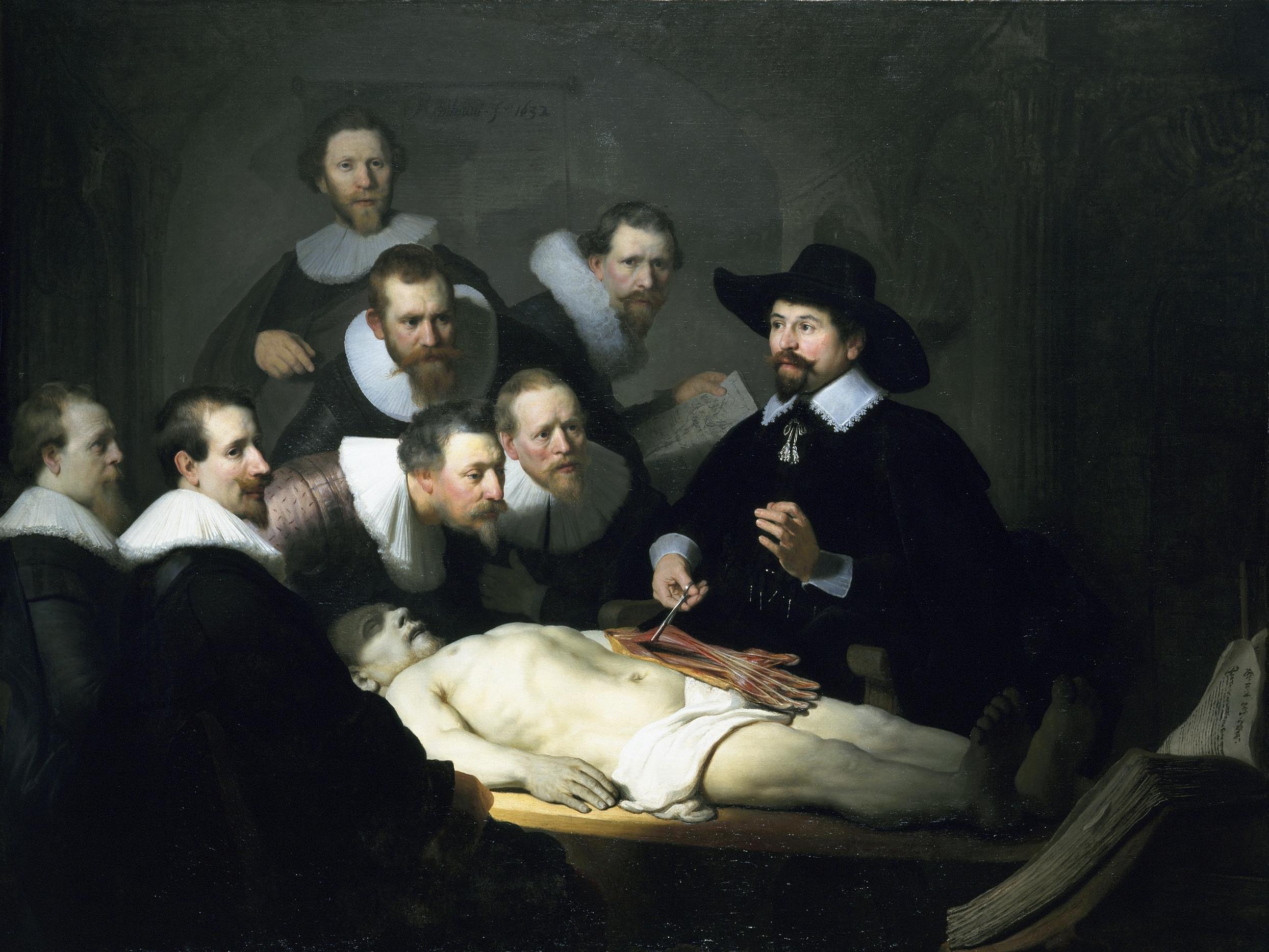
Real life-examples of children raised by animals have been claimed, from an Irish boy allegedly brought up by sheep, cited by Dr. Tulp, the star** of Rembrandt's painting The Anatomy Lesson of Dr. Nicolaes Tulp, to "Mowgli's Sisters", Amala and Kamala, two wild children allegedly raised by wolves in Midnapore, India and discovered by a missionary in the 1920s. In the absence of much surviving evidence, I'm happy to put Sheep Boy down to somebody puckering up to the Blarney Stone, whilst the more recent and better-documented tale of Amala and Kamala looks pretty dodgy under examination.

There are more credible stories of feral children who have lived wild after presumably being abandoned or losing parents or guardians at a later stage (some, but not all, of these stories involve the child allegedly being raised by animals, or living with them in the wild). Most of these children appeared to have no language; possibly because they were been abandoned before having leaned to speak, or, more probably, so early in their language development that they lost the ability to speak.

As we move from legend to better-documented facts, the story gets bleaker (although the fate of Amala and Kamala was itself pretty bleak, whatever the children's true story was):

Feral children have long fascinated scientists. Apart from the sheer pathos of their stories, they raise some gut issues: how do we become human? If we fail to learn critical skills as children, is it impossible to do so later?

Most feral children have been severely stunted and remained so all their lives, suggesting that early human contact is essential to normal development... Being a wild child may conjure up visions of some Blue Lagoon-type idyll, but the reality is unspeakably cruel.
Cecil, The Straight Dopes's ĂĽber-polymath

 For obvious reasons, nobody today is prepared to perform a controlled experiment on the effect of withdrawing human contact and interaction from small children. According to Herodotus, the Egyptian Pharaoh Psammetichus had no such ethical worries and ordered two children to be raised without anybody speaking to them, in order to settle a hot debate about whether Egyptian or Phrygian was the world's most ancient language. The idea was that the first sounds the children produced without prompting would represent humankind's primordial tongue.

Herodotus wrote that the children were heard to make a sound that resembled "becos", the Phrygian word for bread, so Psammetichus' researchers concluded that Phrygian was the more ancient language.

In modern times, children aren't deliberately withdrawn from human contact in the name of academic research, but a lot of academics have spent a lot of time studying the effect of isolation on children who have been raised without human contact due to abuse or neglect, like "Genie", the pseudonymously famous victim of horrific childhood incarceration and abuse from the 1970's. A common theme is that language skills, emotional development and the capacity for independent living are stunted, usually irreversibly, by lack of human contact in the early years.

It's a tragic reversal of the archetype of the heroic child of nature, freed from the stifling, artificial straitjacket of human society, flowering into an independent, emotionally unconstrained free spirit.

Spinoza 1 - Rousseau 0


* Scarborough's Odeon closed over twenty years ago, which makes me feel very old. More happily, the 1930s art deco building escaped the usual destiny of old cinemas - demolition or a shabby afterlife as a bingo hall - and still survives as the well-maintained home of the Stephen Joseph Theatre.

** Or maybe just the impresario. The real star real of the show is the pallid cadaver of just-hanged ex-robber Aris Kindt, laid out on the slab for our instruction.


Wednesday, 2 November 2011

Engage warp drive, Dr. Dan!

Simpletons with a little spare money and a vague sense of unease about life may wish to try one out of the many new-agey spiritual entrepreneurs who specialise in lightening clients' spirits, and wallets. I don't recommend it myself, but if you really must give all your spare cash to a self-appointed guru, you could do worse than Dr. Dan Mathews, whose web site I stumbled upon by accident the other day. This guy is quality. Hell, you could tick every box on a New Age Bullshit Bingo card before reaching the end of his awesome first paragraph:

Dr. Dan Mathews had a near death experience in August of 1992. On the other side of the veil he was ordained into the priesthood of Melchizedek and was given specific information about the “paradigms” which are defined as the level of consciousness that exists on earth. He was told that since the original downfall of man only three paradigms or realities had existed: one which began at the dawn of time, the second beginning with Abraham and the third emerged during the life of Jesus. Dr. Dan was told that beginning in 2003 humanity would enter into a warp-speed evolution of consciousness by moving through another twelve new paradigms of consciousness.

After Dr. Dan was given this information he was gifted with HOLY DIVINE HEALING. He was instructed to return to his body and use this gift by helping people reconnect to the parts of their soul which have been fragmented since the dawn of time and move gracefully through shifting paradigms with a complete connection to the God Presence within. Since this experience in 1992 Dr. Dan has assisted many people in their transitions through one-on –one sessions completed in person or by phone, group healings and lectures...

Dr. Dan’s private appointments are dedicated to your personal situation and are approximately 30 minutes each. The pricing is a sliding scale $85 -$148 and payment is reflective of your feeling toward the service. Cash is preferred. 

Bargain! Sign up here. Dr. Dan also does group sessions (subject to a minimum 'love offering' of $35). I wonder if he does spiritual development courses, too?

Seriously, though, is this stuff any more bonkers than mainstream religion? Try to make sense of the doctrine of the Trinity. The BBC has tried to explain:

The idea that there is One God, who is Father, Son, and Holy Spirit means:
  • There is exactly one God
  • The Father is God
  • The Son is God
  • The Holy Spirit is God
  • The Father is not the Son
  • The Son is not the Holy Spirit
  • The Father is not the Holy Spirit
An alternate way of explaining it is:
  • There is exactly one God
  • There are three really distinct Persons - Father, Son, and Holy Spirit
  • Each of the Persons is God

Common mistakes

The Trinity is not
  • Three individuals who together make one God
  • Three Gods joined together
  • Three properties of God
What the hell's all that supposed to mean? Maybe a diagram would help:


No, it all still looks like complete balderdash to me (although it's considered rude to suggest that believing in a complex set of assertions without the benefit of any supporting evidence might just be a bit silly).

Whatever. Now if you'll excuse me, I'm off to connect with the God Presence within by moving gracefully through some shifting paradigms at warp factor 5. All love offerings gratefully recieved (cash or PayPal only, please).


Wednesday, 12 October 2011

Delusional bus advert of the week

I've always thought that the people who make the best case for Richard Dawkins and the "new atheists" are their critics, with their rather feeble counter-arguments. So there's some pretty stiff competition out there for the title of Worst Attempt to Refute Richard Dawkins. Ever. I think I've found a clear winner, though.

Step forward Premier Christian Radio. In 2009, you'll remember some atheists paid for a bus advert that read:

There’s probably no God. Now stop worrying and enjoy your life. 

Umbrage was taken by faith groups. But having had two years to think up a devastating reposte, Premier Christian Radio have stepped up to the plate with their own bus poster. This is what it says:

There’s probably no Dawkins. Now stop worrying and enjoy Oct 25th at the Sheldonian Theatre.


So, take that, Professor smarty-pants Dawkins. You think God doesn't exist. Well, we at Premier Christian Radio think you don't exist, so there. And you smell. There, that told him.

Well, if nothing else, it's fresh and original. I look forward to more crazy adverts from Premier Christian Radio, fearlessly challenging the reality of other people and things we'd previously thought it reasonable to accept as actually existing:

There's probably no Bill Gates. Rafael Nadal and Oprah Winfrey are just figments of your imagination. Only a fool would believe that Steven Spielberg is a real person. Giraffes, they're not real. Nobody seriously thinks that chickens exist. Cows ain't real. Gravity's just a fairy story and there's no such thing as aluminium. Now stop worrying and enjoy your life.
The event at the Sheldonian Theatre is an appearance by Christian philosopher William Lane Craig, who's touring the country on a debating tour, hoping to take on a few academic atheists (Dawkins was invited to attend but presumably decided he had better things to do, a decision validated by quality of the publicity for the event).

Monday, 10 January 2011

Always look on the bright side of life...

The decline of violence is a fractal phenomenon. You can see it over millennia, over centuries, over decades and over years, although there seems to have been a tipping point at the onset of the Age of Reason in the Sixteenth Century. One sees it all over the world, although not homogeneously. It’s especially evident in the West, beginning with England and Holland around the time of the Enlightenment. Let me take you on a journey [of] several powers of ten from the millennium scale to the year scale to try to persuade you of this….

Steven Pinker, with an arresting claim, via.

Here, by the way, is the Biblical passage Pinker refers to in his talk:

And the children of Israel took all the women of Mid'i-an captives, and their little ones, and took the spoil of all their cattle, and all their flocks, and all their goods.
And they burnt all their cities wherein they dwelt, and all their goodly castles, with fire.
And they took all the spoil, and all the prey, both of men and of beasts.
And they brought the captives, and the prey, and the spoil, unto Moses and Ele-a'zar the priest, and unto the congregation of the children of Israel, unto the camp at the plains of Moab, which are by Jordan near Jericho.
And Moses, and Ele-a'zar the priest, and all the princes of the congregation, went forth to meet them without the camp.
And Moses was wroth with the officers of the host, with the captains over thousands, and captains over hundreds, which came from the battle.
And Moses said unto them, Have ye saved all the women alive?
Behold, these caused the children of Israel, through the counsel of Ba'laam, to commit trespass against the LORD in the matter of Pe'or,  and there was a plague among the congregation of the LORD.
Now therefore kill every male among the little ones, and kill every woman that hath known man by lying with him.
But all the women children, that have not known a man by lying with him, keep alive for yourselves.
Numbers 31, Verses 9-18

Go back to what our founders and our founding documents meant -- they're quite clear -- that we would create law based on the God of the bible and the ten commandments.

Sarah Palin, interviewed by Fox News

Thursday, 3 December 2009

Beam 'me' up, Scotty?

I've just seen an excellent short film on YouTube. It's a variation on the old paradox that I first came across as "William the Conqueror's Axe" - the blade's been replaced twice and the handle three times, but it's still the same axe - or is it? Yes, it's the "Ship of Theseus" problem again.

Axes and ships, though, are just objects. What happens when we apply the "Ship of Thesesus" to a person? There's an interesting way to think about this, using a device common in science fiction. Many science fiction stories feature a "matter transmitter" or "teleporter" a device that can make a thing or person in one place disappear and then cause the same thing or person to reappear, practically instantaneously, elsewhere. Famous examples include the Star Trek "Transporter " and the device used by the unfortunate scientist in The Fly to transmit himself from one place to another. There are several explanations for how such a device might work, some involving unlikely concepts such as moving through a higher dimension or some sort of wormhole in space-time.

The earliest science fiction descriptions of matter transporters imagined them as some sort of scanner which would scan and analyse a thing or person before transmitting a facsimile rather like a telecommunications message. There are some serious difficulties with such an arrangement, but it's a useful way to imagine the "Ship of Theseus" problem applied to people. This type of imaginary matter transmitter would scan something - for our purposes, let's say a person - in exact detail, down to the last electron. Having scanned a an absolutely complete description of that person, it would then transmit that description to another place where, presumably with the aid of a receiver / reassembling unit, the person is recreated. Hey presto, instantaneous teleportation! You walk into the Transport-Me booth in your home town, press a button and reappear in another booth on the other side of the world, in the time that it would take a photo booth to snap your passport photo.

The idea of teleportation by technology in fiction is much older than Star Trek - a quick rummage in Wikipedia came up with an 1877 story about attempted human teleportation based on what was then cutting-edge communications technology:

Edward Page Mitchell's story The Man Without a Body details the efforts of a scientist who discovers a method to disassemble a cat's atoms, transmit them over a telegraph wire, and then reassemble them. When he tries this on himself, the telegraph's battery dies after only the man's head was transmitted.


Now for the "serious difficulties". Let's ignore flat telegraph batteries and Hollywood's problem with a fly in the transmitter causing a hideous human-fly mashup to emerge at the other end and take a brief layman's look at the problems with the engineering, physics and philosophy of the device.

In engineering terms, teleporting a human in this form is almost certainly impossible - the amount of information required to scan and record a complete description of a human body and mind, such that you could recreate an living, breathing, individual person with thoughts, memory and a sense of self at a given moment is so vast as to make such a thing impossible for all practical purposes.

It's worse than that, he's dead, Jim it's not just a practical impossibility but a theoretical one. A scan on the sub-atomic level could never achieve perfect fidelity because of the operation of Heisenberg's Uncertainty Principle. Not a problem if you're using the transmitter to move furniture, but billions of sub atomic copying errors wouldn't be good enough if you wanted to be sure that the person who stepped out of the receiver/assembler was the same one who stepped into the transmitter.

Which brings us on to the philosophical problem of identity. Because, even if it wasn't impossible, a matter transmitter working on this principle wouldn't be a form of transport. It would scan and reproduce. The person walking out of the receiver/assembler wouldn't be the person who'd walked into the transmitter, any more than a copy printed by a photocopier is the original document that was scanned. Of course, even if you'd achieved the impossible task of complete fidelity and the document or person copied was absolutely identical to the original scanned in every respect, you'd end up an original and a copy. The original wouldn't have gone anywhere.

To appear to transport people over distances, rather than creating clones of them somewhere else, the scan/transmit matter transporter would have to destroy the originals. If you were to be completely annihilated only for an exact copy of yourself, with all your thoughts, memories and feelings to reappear somewhere else in the blink of an eye, would you take the "trip"? Would that person be you? It's an interesting thought experiment.

As a thought experiment it may seem far fetched but in the real world, in a piecemeal way, we're constantly being destroyed and created. Consider this:


Every cell in the human body is replaced and renewed within a period of seven years, consecutively, for life. This is known as aging; it includes the brain. Not one cell a person is born with is still there when they reach seven, and again at fourteen, then again at twenty-one, etc. The cells are replaced, respectively, and you are a "brand new" person, however, with the same DNA structure and personality you were born with.

Memory cells can be "recycled" as some information is lost over time.

Sleep repairs and reorganizes the brain; as for new brain cell development, research shows that as one educates their mind new cells form as often as the mind is actively engaged.


Like the Ship of Theseus, we're constantly being repaired and replaced plank by plank, until there are no original parts left - the only difference between this process and being destroyed and recreated in an instant is time.

Which brings me to the short film. It's by John Weldon, it's called To Be and it's great. A word of warning - I originally found this on Overcoming Bias, with the comment:


A while back I saw it on YouTube, but couldn’t find it a few months later; it had violated copyright. I actually bought a $15 dvd of it from the National Film Board of Canada. But as Nathan Cook informs us, it is now on YouTube again, here.


So, if this link doesn't work, apologies, it must have been taken down again. If it does, "enjoy it while you can".