Showing posts with label AVIATION. Show all posts

Friday, 25 June 2021

The road to autonomous hell

A footnote to my last post about autonomous killer drones; they're not just worrying because they're (possibly) already here. There's also a compelling military logic to keep developing such things:

...when you talk about drone systems, about remotely-piloted systems, these systems are comparatively easy to detect. I mean, it's not that easy if you actually want to build a counter-drone system, but it's still comparatively easy, and that's because of the uplink and the downlink ... the control links that go to the drone and the information links that come back to the pilot. So if you want to fly an unmanned system in a way that's as stealth[y] as possible, you want to cut these links, which means you need to give the system more autonomy.

Dr Ulrike Franke, of the European Council on Foreign Relations, (about 2'30" into this video).

Communication links are a vulnerablity, and the technology exists to get rid of that vulnerability. So the incentive to make killbots autonomous exists.

The only upside, for those of us who don't like the idea of swarms of killing machines perpetrating algorithmic carnage, is that swarms of drones which communicate and coordinate with one another retain this weakness. Maybe the take out is that it's easier to make killbots as solitary assassins than terrifying swarms, at least if the defenders have the capability to detect the swarm's chatter and use countermeasures.

History suggests that, all other things being equal, these sorts of technological constraints, rather than moral debates, tend to guide how militaries use novel ways of waging war. An interesting book review by David Fedman and Cary Karacas highlights this. They're dissecting Malcolm Gladwell's The Bomber Mafia,* a book which suggests that the savage fire bombing of Japanese cities in World War Two was the result of a doctrinal battle being won by brutal area bombing advocate Curtis LeMay over the more restrained advocate of precision bombing, Haywood Hansell.

Fedman and Karacas aren't having this over-simplification of history, though. In reality, they write, the dividing line between area and precision bombing had already become blurred over Europe and the path chosen owed more to pragmatism and contingency than to some moral and doctrinal face-off between two Great Men™:

It’s important to recognize that, by the time the COA [Committee of Operations Analysts] issued this report, the AAF [Army Air Force] was already engaged in the radar (or “blind”) bombing of German cities. While Gladwell devotes considerable ink to a frustrated Hansell contending with the challenges of the air war in Europe, he says little about the broader evolution of American bombing tactics. Hobbled by poor weather, the Eighth Air Force had come to accept that precision bombing was not achieving results. The use of radar, by contrast, appeared more efficacious, even if it meant accepting that bombs would fall haphazardly across urban areas. Under the pretext of destroying Germany’s railways, moreover, they had begun to bomb large swathes of entire cities. 

After a character from my favourite sci fi show in many years, The Expanse, kills the mad scientist who's been unleashing all sorts of horrors on the human race, he says "I didn't kill him because he was crazy. I killed him because he was making sense.

If you're building a drone to evade detection and countermeasures it makes sense to make it autonomous, which is a pretty scary perverse incentive.

*Disclosure - I haven't read it and, after that review, I don't feel inclined to.

Sunday, 11 April 2021

Props to the bros

Relative to the average YouTube vid, the one embedded below is a bit long (50 mins+), and it's quite a deep dive, but it's also worth your time for the way it unpacks an interesting tale of historical and technological contingency.

tl;dr*: the Wright brothers were the first to fly a heavier-than-air craft** and did so using an engine which was, by subsequent standards, pretty feeble (12-16hp). One innovation which helped them to translate this miserly amount of power into powered flight was figuring out how to build an efficient propeller.

On the other side of the Atlantic, aviation pioneers in France were struggling with stumpy, inefficient paddles for propellers, but building ever more powerful, efficient engines in an attempt to overcome this limitation and get their creations off the ground.

Then, in 1908, Wilbur Wright rocked up in France to demonstrate one of his aircraft. French customs unpacked the machine for some sort of check and managed to damage it in the process. Wright had to get his aircraft repaired and rebuilt with the help of locals, some of whom had been working with French aviation pioneers. This was the moment when the secret of the Wright's propeller technology stopped being a secret.

The fortuitous combination of Wright propellers and powerful French engines quickly became one of the main drivers of the aviation firsts of pioneers like Louis Blériot and Henri Farman, the early French dominance of the aviation industry and the swift evolution of the aeroplane from astonishing novelty to a useful device with practical applications.


It's an interesting tale, far more so than the abbreviated list of "firsts" in less detailed accounts and I like the way it both does justice to the Wrights' genius and the contribution of French engine makers who, in struggling to overcome the limitations of primitive propeller design turned a disadvantage into industry dominance.

*I guess the video equivalent should be tl;dw.

**Not Alberto Santos-Dumont - the video examines the claims that Santos-Dumont was the first to achieve powered flight and demolishes them pretty convincingly. What I particularly like about this video is that it treats Santos-Dumont's actual achievements with seriousness and respect, rather than dismissing him completely for not having achieved this world-changing first.

Thursday, 17 January 2019

Aircraft of the day

Oh hai. How time flies - you take a wee blog break & before you know it, a couple of months have passed. But, yes, this thing is still on.

It's been even longer - over eight years - since I did an Aircraft of the Day. And I only ever did two of 'em, anyway (here's the other). So here, by total absence of popular demand, is another, the aeroplane I've been obsessing about most recently, a 1930s design, the Mignet Pou-du-Ciel, better known to anglophones as the Flying Flea:
Mignet HM.14 Pou-du-Ciel
Henri Mignet's concept was simple. A small, basic home-built aircraft which could be constructed by anybody with a few craft skills and safely flown by a novice pilot. It was meant to bring aviation to the masses in the same way that Ford's Model T had brought motoring to the masses. Indeed, according to the Wikipedia article the name Pou-du-Ciel ("sky louse") was a nod to the Model T:
The odd name comes from the French nickname for the Ford Model T automobile, "Pou de la Route" or "Louse of the Road" because Henry Ford's economy car was so common and initially came only in black.
Which might be true, although my brief attempts to find a direct source confirming that the French ever called Model Ts "road lice" has drawn a blank so far (although a Belgian car site does seem to suggest that what looks like a post-war microcar, Hippolyte Delimal's Carabe was also nicknamed the "Pou de la Route" - presumably named after the Pou-du-Ciel, which isn't a lot of help, either entomologically or etymologically).

The Pou's unusal design, more like a two pairs of wings than a conventional wing and horizontal tailplane was intended to be a safety feature. The tandem-wing design was designed to be stall proof,* as explained here:
The wing enters a stall. But here, in tandem wing configuration, the front wing will stall. What happens now? Well, the nose drops a bit. The rear wing is still holding the airplane up a bit. But it cannot hold it completely, so the airplane will sink while its nose drops a bit. But, the nose that did drop makes the angle of the airplane (and its wings) less, so ...the wing lifts again once the angle of the airplane is good enough. The nose rises again. You get another change to react to the stall.

The result is that you enter a wave like movement, you sink while you have your nose going down and up again. You can keep on to this situation and even use it as a kind of hard controlled descent. Or you can get more time to react to this situation and give more power or lower your nose. Anyway, you are given a chance to live and tell.
Also, the controls for the all-moving front wing and rudder were simpler than those for a conventional aircraft (just a control stick, no rudder pedals), making life easier for a rookie pilot.

All great. Unfortunately, Mignet's HM.14, the original Pou, had an unsuspected design flaw which caused the aircraft to pitch nose downward when pilots attempted to recover from a shallow dive. A series of fatal accidents meant that, instead of becoming known as the safe, reliable "people's aeroplane" the Pou ended up with a reputation as a death trap - for example it makes 9th place on Hush Kit's list of the 10 Worst French Aircraft (just over 4 mins into this vid)

After these crashes all Pous were grounded by the authorities in France and the UK, pending investigations. The accident investigations were aided by the diminutive size of the Pou - small enough to fit inside wind tunnels which were usually only big enough to accommodate a scale model of the aircraft being tested. Testing revealed that, at certain angles "the front wing's downwash would accelerate the air over the rear wing and cause it to gain lift more quickly than the front wing, resulting in an ever-increasing nose pitch-down and flight directly into the ground."

The good news was that, once diagnosed, the problem was easy to fix, by simply moving the rear wing six inches backwards. But by the time modified, safe Pous were taking to the air again, it was 1939 and hobby fliers in France and the UK would soon have more pressing concerns on their minds than joy-riding in tiny home-built planes.

There's a bit of a "what if" hanging in the air here. What if the original Pou design flaw had been spotted before people started building and flying them? What if the war hadn't intervened when the design had been perfected?

I don't think we'd have seen huge swarms of Pous in the skies. It was only ever a one, or two seat pleasure craft, a really cool hobbyists' project, as opposed to a practical form of transport. Moving back from alternative history to real history, flight did eventually become more egalitarian, but not in the way Mignet anticipated. Instead of ordinary people taking to the skies en masse in tiny home-built machines they could construct or buy relatively cheaply, ordinary people got airborne once seats on huge, complex multi-million dollar jets became affordable to people outside what they used to call the "jet set."

The future doesn't always work out the way we expect. Although I do have a sort of yearning for Mignet's original vision - there's something about the simplicity, the minimalism and the do-it-yourself ethos that makes me wish for a Wallace and Gromit world where folk spend their weekends making their own aircraft or flying them around their neighbourhood. Although in an age where a mere radio-controlled drone, or possibly just the rumour of one, can shut a major international airport, that's probably more whimsical than wise.


*A concern shared by Juan de la Cierva, who had invented the autogyro in the previous decade in another successful attempt to devise a stall-proof aircraft. Some irony fans like to say that De la Cierva was killed when the conventional plane he was travelling in stalled in 1936, but a quick visit to Wikipedia debunks this neat story - it looks as if the aircraft drifted off course while taking off in foggy weather, accidentally flew into the chimney of a house on some high ground adjacent to the aerodrome and crashed.

Wednesday, 8 November 2017

Rocketman, the retrofuturist

"North Korea's Military Is Straight Out of A Sci-Fi Movie", screamed the clickbaity headline...

... right next to a picture of a 1950s-vintage MiG-15.

I guess the sci-fi movie they had in mind was Back to the Future.

Friday, 1 July 2016

These aren't the drones you're looking for

Just look at this ridiculous flying machine:

The Convair XFY Pogo tail-sitter was an experiment in vertical takeoff and landing. The Pogo had delta wings and three-bladed contra-rotating propellers powered by a ... turboprop engine. It was intended to be a high-performance fighter aircraft capable of operating from small warships.
Which seemed like a good idea at the time (the 1950s).

Unfortunately, "Landing the XFY-1 was difficult, as the pilot had to look over his shoulder while carefully working the throttle to land", so the project came to nothing.

But maybe the Pogo wasn't ridiculous - just ahead of its time.

Because there's a now a Pogo for the 21st Century. Called the TERN (Tactically Exploited Reconnaissance Node), it does away with the problem of tricky, neck ache-inducing landings by doing away with the neck, along with the rest of the pilot.

The company building the TERN prototype, Northrop, believe that "modern precision relative navigation and other technologies" can handle backwards landings that would overtax a human pilot and, given the sort of stuff we've seen drones doing in recent years, I wouldn't bet against the robot reboot.

No more complicated thrust vectoring or hauling the dead weight of a lift fan through the sky. No more over-complicated, compromised money-pit design abominations like the  F-35. Just thrust going in one fixed direction and you turn the whole ship round depending on whether you're going up, flying horizontally, or coming down.

Bur why the gratuitous Star Wars reference in the title? Well, if this idea works, somebody's going to want one of those stealthy, jet-powered, manta ray-shaped drones to take off and land this way. But a flat, triangular flying wing sitting on its tail isn't a stable shape. Maybe if the wings were split, they could hinge out into a sort of "x" shape for sitting on the ground, take off and landing. Remind you of anything?

Although what I'm picturing here would operate in exactly the opposite way to its fictional counterpart - in the Star Wars universe, the wings are folded flat on the ground and only open out in flight, in order to do whatever the hell they're supposed to be for (apart from making the rebel craft look distinctively different from the baddies' ones).

Monday, 13 June 2016

Queen drones on

Why are unpiloted flying machines called drones? The Online Etymology Dictionary explains, sort of:
drone (n.)
Old English dran, dræn "male honeybee," from Proto-Germanic *dran- (source also of Middle Dutch drane; Old High German treno; German Drohne, which is from Middle Low German drone), probably imitative; given a figurative sense of "idler, lazy worker" (male bees make no honey) 1520s. Meaning "pilotless aircraft" is from 1946.
OK, but where's the link between bees (whether of the striving or skiving variety) and uncrewed aerial vehicles? It's not obvious, but Wikipedia has a plausible explanation going right back to the 1930s, involving the famous Tiger Moth biplane:
A radio-controlled gunnery target version of Tiger Moth appeared in 1935 called the DH.82 Queen Bee; it used a wooden fuselage based on that of the DH.60 Gipsy Moth (with appropriate structural changes related to cabane strut placement) with the wings of the Tiger Moth II. There were nearly 300 in service at the start of the Second World War. It is believed the name "Drone" derived from "Queen Bee". These aircraft retained a normal front cockpit for test-flying or ferry flights, but had a radio-control system in the rear cockpit that operated the controls using pneumatically driven servos. Four-hundred were built by de Havilland at Hatfield, and a further 70 by Scottish Aviation.
Some Queen Bees, produced for the Fleet Air Arm, were mounted on floats for water operations - here's a picture of one being demonstrated to Mr Churchill:

Of course, this was long before the days when drone jockeys started flying via computer screen and joystick, or video game-style controller. As a contributor to The Aviation Forum explained:
Radio controlled, they were launched by catapult, then radio controlled using pulse signals from (honest) an old-style telephone dial.
Dialing nine or ......... gave you a dive.
Six or ...... gave you climb
Five or ..... left turn
Three or ... right turn
...which is wonderfully like playing a game using the keys of your mobile phone, only you get to control a real Tiger Moth, instead of a few pixels on a screen.

In other news, the Queen was 90 (again) yesterday and apparently said some stuff. Prince Harry looked unamused...

... although, to be fair, the photo probably puts those paternity doubts to rest or, if not, at least makes me think that nurture must trump genetics in some cases.

Saturday, 2 January 2016

Meatbox

Being a fighter pilot -- for that matter, simply taking off in a single-engine jet fighter of the Century series, such as an F-102, or any of the military's other marvelous bricks with fins on them -- presented a man, on a perfectly sunny day, with more ways to get himself killed than his wife and children could imagine in their wildest fears. 
Wrote Tom Wolf in The Right Stuff. But you didn't have to be an all-American hero to dice with death up in the burning blue. Look what Wikipedia has to say about the RAF's first jet fighter, the Gloster Meteor. When reading this paragraph, bear in mind that the total number of British service personnel who've died in the recent Afghan war is 456.
A total of 890 Meteors were lost in RAF service (145 of these crashes occurred in 1953 alone), resulting in the deaths of 450 pilots. Contributory factors in the number of crashes were the high fuel consumption and consequent short flight endurance (less than one hour), causing pilots to run out of fuel, and difficult handling with one engine out due to the widely set engines.
Almost as many deaths from just flying one type of plane as from a decade and a half of brutal fighting in a country already notorious for being the graveyard of invading armies. No wonder they called it the Meatbox.

Wednesday, 2 December 2015

Dogfights cost money

“No Turkish prime minister or president will apologize ... because of doing our duty,” [Turkish PM Ahmed] Davutoglu told reporters after meeting with NATO Secretary-General Jens Stoltenberg in Brussels.“Protection of Turkish airspace, Turkish borders is a national duty, and our army did their job to protect this airspace."
Because Turkey is governed by serious, level-headed people who take their responsibilities as part of the NATO alliance very seriously. By the way, did I mention how serious these guys are?

... According to statistics collected by Christos Kollias, a Greek defense economist at the University of Thessaly, last year Turkish military helicopters and planes violated Greek-claimed airspace 2,244 times. For this May, Kollias recorded 361 Turkish incursions into Greek airspace.
At the beginning of this decade, Turkish planes entered Greek airspace several hundred times per year, including a record-low 636 times in 2013. That, in turn, was a decline from higher figures in the preceding years, but even the 1,678 incursions in 2009 do not approach the current activity. The result is constant hostile buzzing in the Mediterranean skies as the Hellenic Air Force responds to the intrusions...

...Dogfights cost money
In its current weakened state Greece hardly poses much of a threat to Turkey. The Turkish General Staff has not given an official reason for its increased air activity, and its spokesman referred inquiries to a local defense attaché, who did not respond.

Greece’s disastrous finances may, however, have encouraged Turkey  to tease its long-time foe (and NATO ally) a bit more than usual, as every Hellenic Air Force scramble costs Greece precious euros...

Yeah, right.

Tuesday, 25 August 2015

Days of future past

Engineers at McDonnell Douglas have put forward ideas for a rocket-liner called Hyperion which they claim could carry passengers, 170 at a time, from one side of the globe to the other in just forty-five minutes by the 'eighties. A trip from Los Angeles to Honolulu would take eighteen minutes.
You don't believe it will ever happen? There was a time when wise men proclaimed that if God had intended men to fly He would have given them wings.
The concluding sentences of Aircraft, John W R Taylor's 1971 potted history of aviation. To the primary-school aged me, this sounded like a perfectly reasonable extrapolation of trends being forged in the white heat of Concorde-era techno-optimism. Which only goes to prove Neils Bohr's point that prediction is difficult, especially if it's about the future.

These days, there's still plenty of extrapolation going on, although sub-twenty minute flights from LA to Hawaii are mostly off the agenda, replaced by techno-utopian/dystopian futures in which the machines have either liberated humanity from toil and oppression, made their human hosts desire inexplicable products like Internet-connected fridges, trashed our jobs with automated obsolescence or terminated us in a swarm of rogue killer bots.

The only prediction I'm making is that most of these predicted futures will one day sound as quaintly retro as the term "rocket-liner" sounds today. As quaint, say, as this:
Fetch the howitzer! Some fool's armed the robot with a pistol!
Which sounds like a failed prophecy of some whimsical robopocalypse, although it's really a sentence from Schott's Miscellany, illustrating three words of Czech origin commonly used in English.

Friday, 10 October 2014

The flying canvases of Paul Klee

I've always liked Paul Klee's semi-abstract geometrical paintings, the ones that you could see as 2D impressions of architectural townscapes or just harmonious arrangements of pleasing blocks of colour. There's a sense of tranquility, rhythm and order that's both satisfying and very easy on the eye.
Red/Green Architecture (yellow/violet gradation), Paul Klee, 1922

I never knew much about Klee's biography, but in this Great War centenary year I've discovered something that suggests he got some of his inspiration from a less-than-tranquil source:
After finishing the military training course, which began on 11 March 1916, he was committed as a soldier behind the front. Klee moved on 20 August to the aircraft maintenance company in Oberschleissheim, executing skilled manual work, such as restoring aircraft camouflage, and accompanying aircraft transports. On 17 January 1917, he was transferred to the Royal Bavarian flying school in Gersthofen ... to work as a clerk for the treasurer till the end of the war. This allowed him to stay in a small room outside of the barrack block and continue painting.
To give you some idea of the connection I'm seeing, take a look at the patterns on the fabric covering this restored World War I German aircraft:


Fokker D VIII, covered in camouflage fabric featuring repeating irregular polygons, 1918.
Quite Klee-esque, don't you think? It's not a complete clincher, as Klee was camouflaging aircraft in 1916 and this sort of pattern above only became widespread in 1917-18, but if we take a nerdy look at the development of aircraft camouflage in the Great War, I think you'll agree that the connection still looks compelling.

In 1914, the air arms of the various belligerents were made up of mainly fabric-covered aircraft. The fabric, along with metal engine covers and visible wooden parts, was left unpainted. The fabric was stiffened with clear dope and the wooden bits were varnished. The first change came when the various other powers started to follow the French practice of applying national markings, in order to discourage friendly fire. Only when their aviators and aircraft were (relatively) safe from being shot by their own side, did  the various authorities turn their attention to using camouflage to protect them from the enemy.

The British took a minimalist, utilitarian approach, leaving the undersurfaces of their aircraft in unpainted fabric and painting the upper surfaces a uniform dull green or brown, which was probably reasonably effective, although the British colours were about as aesthetically appealing as a palette of ruminant dung samples from animals fed on varying amounts of fresh green grass.

The French moved from unpainted fabric, first to silver dope (this wasn't a really bad attempt at camouflage - the silver was there to counteract the degrading effect of the UV in sunlight on the fabric, not as a misguided attempt at concealment), then to various painted wavy, splotchy disruptive lines in the sort of greens and browns that we associate with military camouflage.

The Germans were more inventive and tried a number of paint schemes, from relatively conservative finishes (light greys and patches of greens and browns), to more interesting effects, like a streaky olive green finish over a turquoise base, or this rather pleasing purple and green combo, as seen on the wings of a blazing Albatros, in this painting by Airfix box art legend, Roy Cross:
'Take that, Red Baron!' (from "Biggles is Colour Blind")
Anyway, a lot of these sort of schemes were in use in 1916, when Klee was based in Oberschleissheim. But another, more complex, scheme was being developed, a pointillist-inspired pattern of coloured polygons. It would probably have been in the development stage at the time when Klee was serving as a skilled tradesman-cum-camoufleur, and would have been painstakingly hand-painted, but there is photographic evidence of this being done on an aircraft of the right vintage - an E IV monoplane produced by the Pfalz company, shown here, complete with hand-painted polygons.

As Wikipedia helpfully relates, those time-consuming early experiments with hand-painted  polygons eventually led to some bright spark realising that you could save time and weight by printing the complex pattern onto the fabric beforehand, like wallpaper or curtains, rather than painting it on later (if I'm reading this thread at The Aerodrome right, that bright spark was one 'artist working at Idflieg named Ltn. Reimschneider', although it may be that Reimschneider was just the originator of two particular types of flugzeug tarnstoff, known in English as five colour day and night lozenge patterns, not the concept of printing all such patterns). By 1918, Halberstädter Flugzeug Werke's textile mills were covering most of the Kaiser's military aircraft with pointillism-inspired camouflage fabric, printed with repeating abstract patterns, made up of irregular polygons or regular hexagons.

So I'd say that there's at least as much credibility in the notion that camouflage influenced Klee's art as there is in Picasso's anecdotal declaration that cubists invented camouflage:
I very well remember at the beginning of the war being with Picasso on the boulevard Raspail when the first camouflaged truck passed. It was at night, we had heard of camouflage but we had not seen it and Picasso amazed looked at it and then cried out, yes it is we who made it, that is cubism.
Gertrude Stein, Picasso

While we're (tangentially) on the subject, polygons eventually caught on with the Austro-Hungarians as well, as can be seen on this restored aircraft, formerly the property of the Austro-Hungarian Imperial and Royal Aviation Troops, currently in the Prague Technical Museum:
Knoller C II (photo by Alfvan Beem, Wikimedia Creative Commons)
According to my sources, though, the Austo-Hungarians never got round to producing printed polygons and were hand-painting these complex patterns on their aircraft right up to the bitter end of the war. If so, this is one case where that lazy cliché about German efficiency actually seems to be true. If the reserved occupations were tied up in labour-intensive processes like painting complicated honeycomb patterns onto aircraft and the conscripts were anything like the ones portrayed in The Good Soldier Švejk, it's no wonder the Ausro-Hungarians lost not only the war, but their whole country.
Hi Ho Hi Ho , It's Off To Work We Go!!  (partly-polygon-painted Berg D I fighters in a factory somewhere - photo lifted from a Czech language website)
Mind you, the process may not have been efficient, but the flamboyant end result looked great.
C'est magnifique, mais ce n'est pas la guerre...
But for something even less warlike, get a load of the one aircraft camouflage fabric that I know the Austro-Hungarians did get round to printing. And this time it's not polygons:
Swirly whirlys
And in colour:
Man, that's trippy!
Printed by Johann Backhausen und Söhne, manufacturer of tablecloths, rugs and suchlike, as applied to aircraft like the Austro-Hungarian manufactured version of the Abatros D III, seen here in model form. From the art of war to the soft furnishings of war...


Wednesday, 15 January 2014

Droning on

Augustine's Law no. 16 states that defence budgets grow linearly but the unit cost of a new military aircraft grows exponentially, therfore:
In the year 2054, the entire defense budget will purchase just one tactical aircraft. This aircraft will have to be shared by the Air Force and Navy 3½ days each per week except for leap year, when it will be made available to the Marines for the extra day.
Because I wibbled that cost and capability problems might get the F-35 do-anything combat aircraft project downgraded or cancelled which, in turn, might lead to air forces deploying a lot more drones a lot more quickly, in the certain knowledge that someone out there would have said some of it more wittly, with citations and a graph.

Others aren't convinced, although the scepticism seems to be directed towards the sort of high-end drones that might supplant something like an F-35, as opposed to the less capable types already operating in areas where local air defences are weak to nonexistent (or have been told to look the other way), a distinction missing from a lot of media drone punditry.


Graph created by Autopilot under this Creative Commons license.

Sunday, 19 February 2012

Per ardua ad astra

Here's a picture of one of the last generation of piston-engined airliners, Lockheed's stylishly elegant Constellation. Why? Just because it's gorgeous. I don't need any other excuse:
Those old piston-engined airliners would have fascinated me even had they never left the ground, but the thought of such beautiful mechanisms actually travelling through the sky was almost too much to take.

Clive James Flying Visits

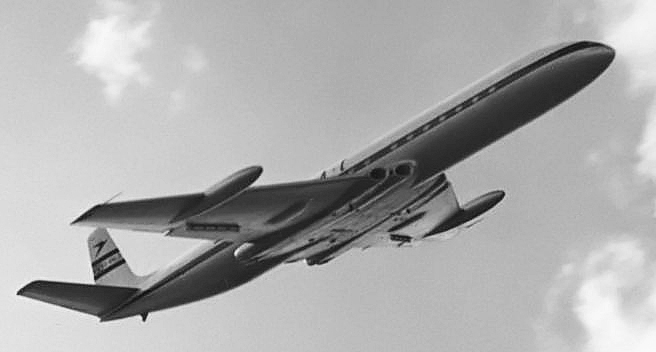
 Mind you, the first jet airliner was a thing of beauty, too. Check out this picture of a De Havilland Comet resplendent in its BOAC livery.*
 Photograph © RuthAS published under a Creative Commons Licence)

There are a couple of pictures in my dad's photograph album, showing a gleaming silver Comet undergoing trials in Cyprus (taken when he was doing his National Service, as an admin erk with the RAF). Back in Britain's last age of austerity, the Comet must have looked like the future. Not just some marketing bullshit about a brighter future, but something real, substantial, riveted together and ready to fly. The democratisation of air travel was still decades away, (first came the phase when "jet set" meant the globe-trotting elite) and the planes that would deliver it, on the far side of a series of those tragic Comet crashes, were mostly American, but a real future was being built, starting here and now. Dan Dare may have been fantasy, but a bit of the future promised by the Eagle Comic would be delivered.

Britain was further ahead in democratising health - the National Health Service was being built and starting to deliver for ordinary people. Educational opportunity was being widened in the wake of the 1944 Education Act. A million new homes were being built. In a nation exhausted, grieving and debt ridden after half a decade of total war. Of course there's a list of things as long as my arm of things that were deeply wrong with '50's Britain, things nobody in his or her right mind would want to go back to, but at least there was a workable vision of the future. The future contained both excitement and real improvements to the lives of ordinary people and a substantial portion of what was being promised would really happen, or was already happening.

Compare and contrast with the view form today's Austerity Britain, at the tired fag-end of the New Elizabethan Age. Never mind building anything, we're just looking on in mild bafflement as a succession of clueless, over-indulged ex-public schoolboys break the NHS up for whatever scrap value their cronies can squeeze out of it. Better education, housing, jobs the promise of a brighter tomorrow? Sorry, we can't afford any of that. Not because we've just made unimaginable sacrifices to help defeat an existential threat of pure evil. No, just because a few influential people believed that a muddled mess of mergers and takeovers, trading in obscure financial instruments and people selling property to each other at ever more inflated prices was the future. And gambled our future on this sorry excuse for a vision and lost big, and presented the rest of us with the bill, and convinced us that it was all our own fault for selfishly wanting hospitals, schools and libraries and stuff.

But don't worry folks; we may not have a future, but we can still party like it's 1952, to celebrate the fact that a random member of the population has spent the last fifty years living in several gigantic houses, wearing hats and waving. We can't top the ascent of Everest, but we can all enjoy watching Andrew Marr trying to out-toady Gyles Brandreth. And why not come along to our national sports day - we've even designed a special logo that looks like it came from a pound shop, but actually cost the best part of half a million quid? Good grief.

Britain was less prosperous then, but it did have one thing we lack today - 'change you can believe in', as the saying goes. I'm sure there's a brighter future out there somewhere, but it's damn near impossible to see it from here.


Anyway, back to the Constellation and the Comet. They represent a surprisingly small subset of aircraft - ones named after heavenly bodies. You'd think that celestial objects would be a popular choice for machines aspiring to break the surly bonds of earth, but it doesn't seem to be so. If we strip out the workaday nomenclature of letters and numbers (Boeing 737, Airbus A340, etc), the most popular aircraft names seem to come from birds and winds (fair enough). Names with a night sky theme don't seem to stand out very far above the background noise of more random, idiosyncratic names (and they do get pretty idiosyncratic - what were they thinking when they came up with "Vickers Wildebeest"?). You've got the Gloster Meteor, the Martin Mars the Canadair North Star and not many others. 

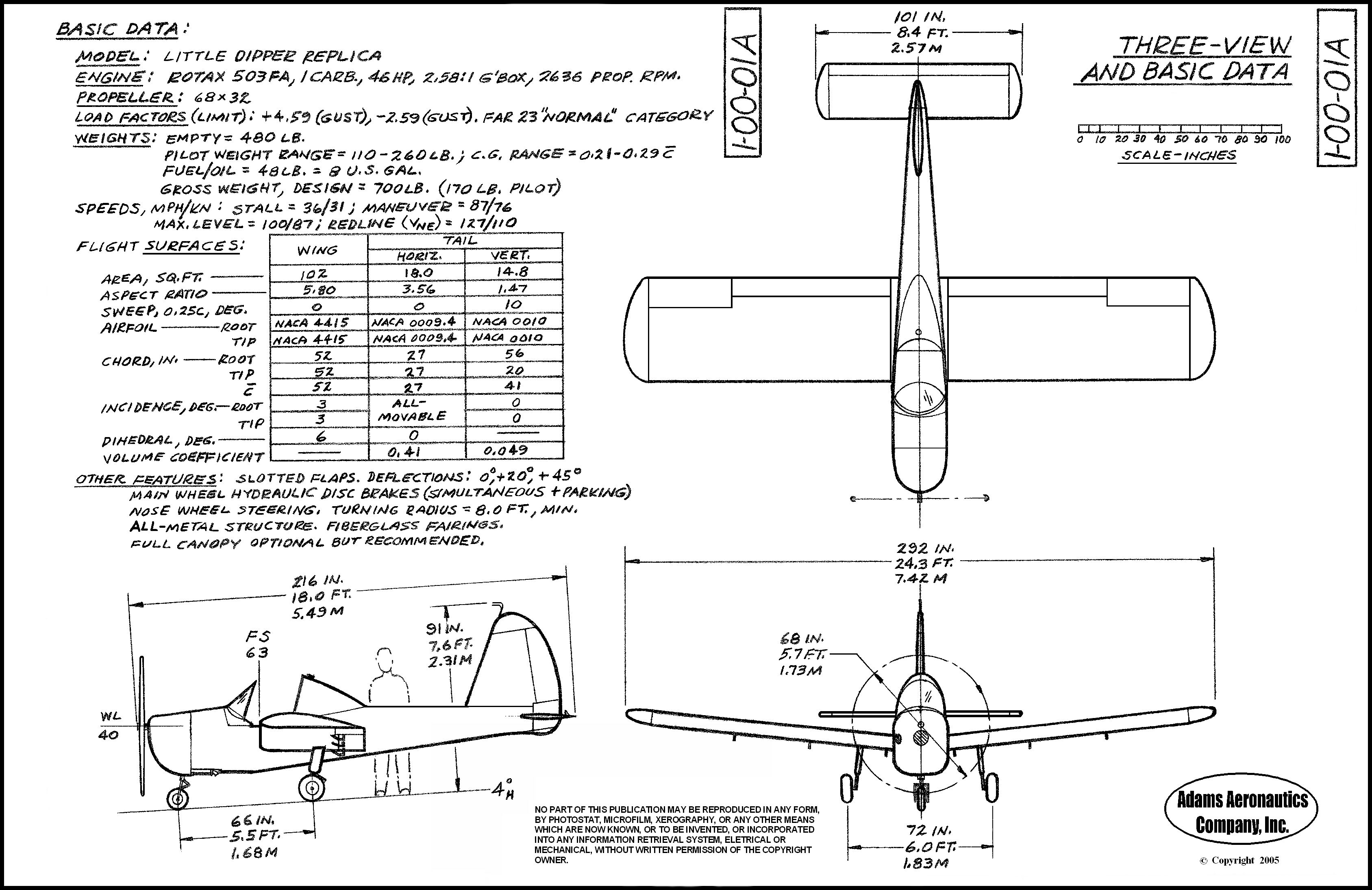
However there's one notable cluster (or constellation) of astronomically-themed aircraft names. Lockeed, makers of the Constellation kept their starry night thing going for years. Not even counting starry names that don't refer to actual celestial bodies (Tristar, Starfighter, Starliner, Starfire, JetStar, Quiet Star), Lockheed have given us the Vega, the Orion, (so good they used it twice) the Sirius, the Altair, the Lodestar, the Neptune,** the Little Dipper, the Big Dipper, the Shooting Star, the Saturn, the Hercules (a constellation as well as a Greek tough guy) and (as Lockheed Martin) the Galaxy


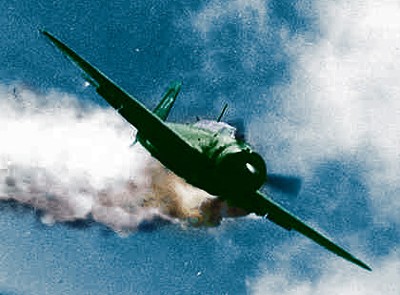
They didn't do a Comet, though. Which might be just as well, given how unlucky the British Comet was. I'm not superstitious or anything, but after the Brits had called their jetliner after a star of ill omen, they had to literally pick up the pieces when it started to demonstrate the effects of metal fatigue in the middle of scheduled flights. A few years earlier the Nazis built themselves a rocket-propelled wunderwaffe called the Messerschmidt 163 Komet, which proved as hazardous to its pilots as it did to the allies. The Japanese had a dive bomber called the Yokosuka Suisei ("Comet"). There's quite a famous photo of one of these, pressed into kamikaze duty, trailing smoke in its last, doomed, dive.


 Superstition thrives on such unfortunate coincidences.

*Bonus points for the livery, by the way - doesn't the speedbird symbol on the tail look so much crisper, more purposeful and altogether better than the post-privatisation Union Flag tailfin currently adorining British Airways aircraft? BA have used a couple of fuselage logos related to the original speedbird, the "speedwing" and the "speedmarque", but neither of them look anything like as good.

** OK, this may have referred to the sea god, rather than the planet.

Sunday, 13 November 2011

Don't panic! Don't Panic!

We have a plan … there's a lot of scenario planning, thinking about all possible outcomes. We have to deal with the world as it is... I don't think we should be panicking...

Said Baldrick  Lance-Corporal Jones  Vince Cable this week, discussing the Eurozone crisis, before reassuring us all by dropping that phrase about a potential 'Armageddon narrative' into the interview.

Thant's what he says, anyway. I've got a little theory that what the managers* of UK PLC, Deutschland GmbH, et al. actually want is to spread a few warning doses of fear and panic, in the hope that we'll stop thinking, not get too uppity and keep on voting to maintain the status quo, for fear of something worse. Margaret Thatcher's tireless old cheerleader TINA (There Is No Alternative) is still doing her stuff.

Sound advice at the moment would be to really not panic, switch off the noise machine, remember that Britain's not facing a real Armageddon and hold onto the thought that there is always an alternative.

If you want to know what Britain seriously preparing for a real Armageddon looked like, take yourself back to the Cold War and sit yourself down in the driving seat of a Vulcan V-Bomber. With the nuclear doomsday clock at a few minutes to midnight, this is where some lucky soul might have been sitting, poised between being shot out of the Russian skies by a SAM missile** and unleashing the plane's own Blue Steel nuclear missile to incinerate a few hundred thousand souls in the blink of an eye.

Claustrophobic, cramped and functional, this was your office if your job was convincing the other power bloc that we were really serious about Mutually Assured Destruction (MAD). Real-life Dr Strangelove hardware and quite chilling. I've got a feeling that with a bit more awkward questioning, thought and flexibility and a bit less raah-raah-ing from TINA we could muddle through the Eurozone "Apocalypse" rather better than we'd have survived a nuclear holocaust.

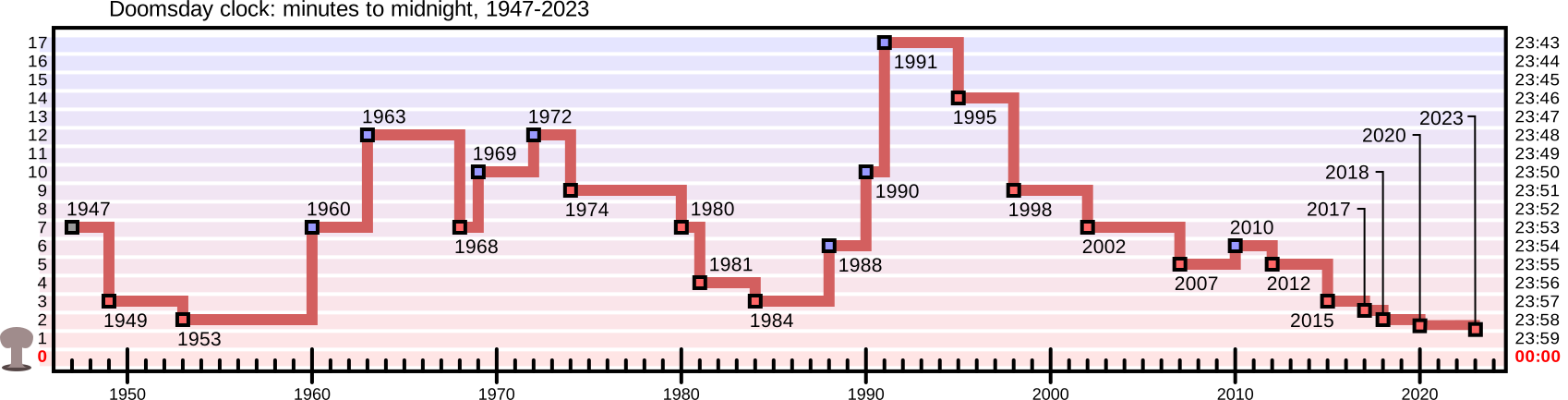
Mind you, have you seen where the Doomsday Clock is at the moment? We're not out of the woods yet, are we? Maybe we should all be having a little panic - just not about the things the political class want us to panic about.


*They're getting to look a little less like politicians with some connection to voters and more like members of a managerial overclass every day.

** Redundant Acronym Syndrome syndrome strikes again

Friday, 26 August 2011

Jive talkin'

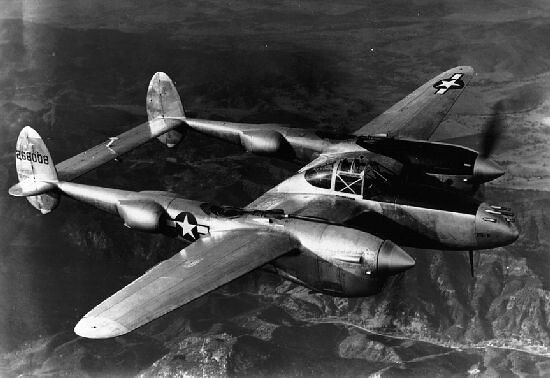
I'm assuming that the term "P-38" meaning "a neat chick" refers to the spectacular-looking Lockheed P-38 Lightning, the mount of America's most successful fighter ace, the last 'plane ever flown by author and aviator Antoine de Saint-Exupéry and the inspiration behind the tailfins adorning Cadillac's chrome-laden gas-guzzlers.
Unfortunately, (or not, depending on your point of view), when you google the terms "P-38" and "neat chick", most of the search results that come back are for videos of unclad young ladies being pleasured in a variety of creative ways, so I may have to outsource my etymological research to the good folk at the QI Talk Forum. In the meanwhile, I can't end any discussion of airplane-related jive talk wthout posting this classic:
Alternative link here.

Watch and learn, Dr Starkey, watch and learn.

Via

Saturday, 20 August 2011

Retro-futurist artifact

If this was a prop from an old science fiction movie, I'd want to see the film. In fact, it's a real piece of hardware, called the Convair F2Y Sea Dart, a machine that wouldn't have looked out of place in an episode of Stingray or Thunderbirds.

In the early years of the jet age, the US Navy wasn't certain that those new-fangled supersonic jets would ever be able to land on one of their aircraft carriers. The result of this uncertainty was the Sea Dart, an experimental waterborne jet fighter. The Sea Dart took off and landed on retractable skis that tucked into the bottom of the watertight fuselage (you can see the extended skis at the bottom of the picture).

Like most experimental high-performance aircraft, the Sea Dart had its teething troubles and these hadn't been solved before it became clear that it was possible to land fast jets on flat tops and the project was cancelled, although not before the Sea Dart had become the only seaplane ever to break the sound barrier.

Video footage of the Sea Dart here.

Photo from the archives of the San Diego Air and Space Museum.

Saturday, 6 August 2011

Jaws

And he shows them pearly white


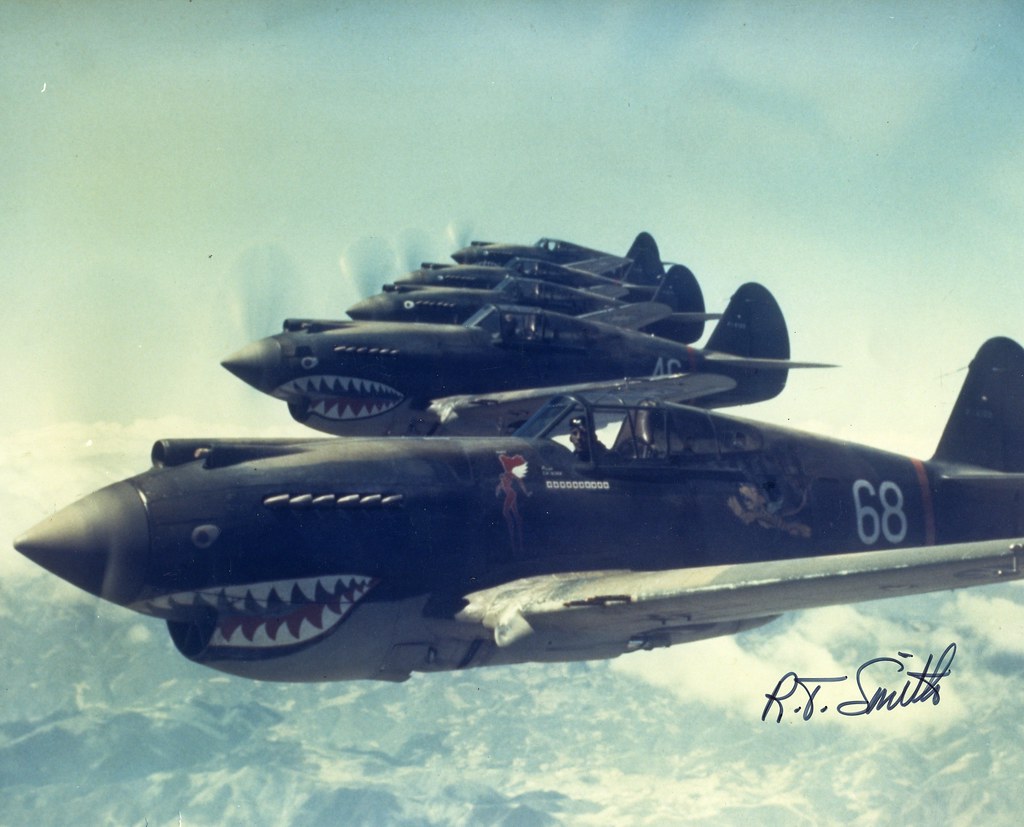
During July 1941, [112 squadron, Royal Air Force] was one of the first in the world to become operational with the P-40 Tomahawk, which it used in both the fighter and ground attack role, with the Air Headquarters, Western Desert. Inspired by the unusually large air inlet on the P-40, the squadron began to emulate the "shark mouth" logo used on some German Messerschmitt Bf 110s of Zerstörer Geschwader 76 earlier in the war. This practice was later followed by P-40 units in other parts of the world (including the Flying Tigers, American volunteers serving with the Chinese Air Force). In December, the Tomahawks were replaced by the updated P-40 Kittyhawk, which the squadron used for the remainder of its time in North Africa, often as a fighter 

Wikipedia

Friday, 29 July 2011

Tuesday, 15 February 2011

Apart from that, how did you enjoy your flight?

Father Mick Murphy looks on the bright side of the recent Cork Airport crash.
And what I was thinking this morning was that it’s an awful day for relatives – we don’t want it to happen, none of us want it to happen – but God willing, for those who are gone, God willing, it is a wonderful day for them.

Here's the best response so far:

I’d suggest just stop interviewing priests. Unless you’re a Garda of course.

Via