Yes, it's a picture of a satellite dish. Screwed to a tree. It sort of captures the spirit of a certain place. Let me explain.
We recently spent a long weekend camping. We decided to head for Christchurch, on the grounds of relative accessibility and the area's reputation for having a generally warm, sunny micro climate. Weather-wise, we more or less hit the jackpot and enjoyed weather as sunny and temperate as you'd have got anywhere in the UK in late September.
The camp site we rolled up at was pretty exceptional, too, although not necessarily in a good way. We picked a secluded-looking site off a forested road. It had its good points - a very clean shower / toilet block (the showers, at 20p a pop were feeble but adequate). An on-site shop and decent facilities, too. What we didn't notice until after we'd parted with our money at reception (no refunds, natch) was that, screened by the surrounding trees, but only about half a kilometer up the road, was the main runway of Bournemouth International Airport. Also hidden by the trees on the other side of the site was the thundering traffic of the A338.
Almost undaunted, we pitched up (we recently moved up from a tent to a folding camper, an inelegant-looking trailer tent-style affair that goes up a lot more quickly than a tent, is reasonably spacious and has the option of an electric hook-up facility for those little luxuries like kettles, toasters and such). We're used to jolly, informal camp sites with tents or a mixture of tents, caravans, camper vans and in-between contraptions like the one we were using, but this place seemed to be exclusively used by people with huge caravans and recreational vehicles, most of them accompanied by new and expensive-looking vehicles, packed together like sardines in a tin.
It became clear from quite early on that, although the management welcomed our money, our actual presence in our down-market folding contraption was rather less welcome. We asked for a double pitch, as we had friends arriving the next day. No, nothing was available (except for an exceptionally gloomy patch of ground at the thundering traffic end of the site). When our friends, who have a rather smart camper van, eventually turned up, they were greeted with considerably more enthusiasm and a bit of obsequious fluttering ("yes, of course we can find room for your [insert name of up-market recreational vehicle here]"). Old memories of Basil Fawlty falling over himself to attend to a guest who signed in as "Lord Melbury" bubbled to the surface at this point.
When it became clear that our friends had actually come to meet the people in the rather common camper van, the warmth of their reception cooled, reaching close to absolute zero by the end of our stay. Just before we went home, several bottles of milk were delivered to the site's reception and, apparently one went missing. The management recounted the story to our friends in a frosty tone that implied that the low life in the folding camper or their associates were prime suspects in the case of The Great Milk Theft. 'Of course, we'll have it all on CCTV' they announced, with the triumphant menace of a TV detective revealing a damning piece of evidence.
We didn't enjoy the gentle background noises of wind and birdsong that make camping a relaxing experience, but the traffic rumble was more or less bearable. The aircraft noise was something else. Aircraft of all sizes from light planes to Ryanair passenger jets buzzed us day and night. Boeing 737 screaming a few hundred metres over your head at 2am? We got it...
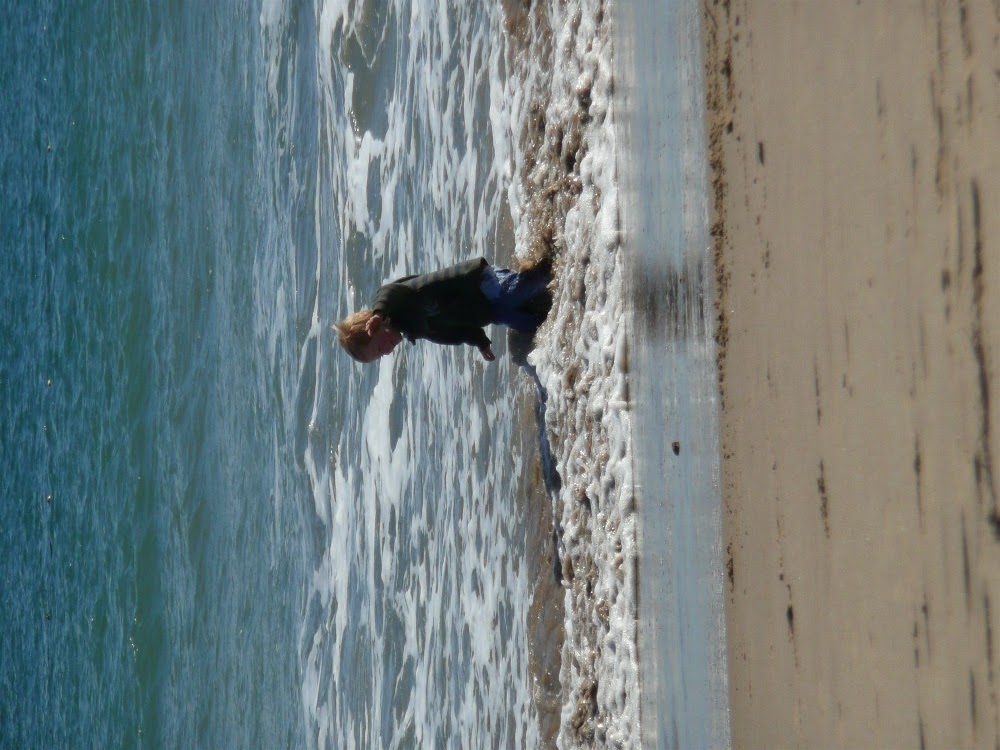
Despite the campsite, we had quite an enjoyable time, making the most of the sunny days on or near the beach at Mudeford, Swange and Boscombe. Paddling, picnicking and taking the boy on a steam train. It could have been far worse.


And even being in a rather snooty, below-the-flight-path camp site, overshadowed by ranks of vast, tightly-packed caravans, couldn't take away the pleasure of early morning bacon and eggs cooked over a camping stove in the open air. Even if the morning air did smell faintly of aviation fuel. I love the smell of unleaded paraffin oil (Jet A-1) in the morning...
Being on a site that primarily catered for touring caravans was a novel experience. I was particularly impressed by the quirky names they give to caravan brands, which give an interesting window into the minds of customers, marketers and manufacturers.
There's the frankly aspirational "Sterling Elite". I'm guessing that the "Elite" is rather higher up the mobile home pecking order than some of the company's other products, such as the entertainingly named "Sterling Eccles". The conflation of the of the aspirational and the homely seems to be a bit of a recurring theme - the "Magnum Mendip" is another minor branding classic. The romance of the open road goes slightly further afield with the "Senator Oklahoma" and boldly goes where only a few men have gone before with the space-age "Lunar Lexon". Closer to home you can relax to the soothing sound of the "Fleetwood Sonata".
A must for the more assertive caravanner is the impressively named "Swift Conqueror", which sounds less like a mobile home than the personification of a vanquishing hero from some martial panegyric ('All hail thee, Swift Conqueror...'). Mind you, the defining characteristic of poetic license is stretching the truth, as any driver who's been stuck behind a caravan on a long, winding single carriageway road will tell you.
My personal favourite, though is the "Buccaneer Cruiser". It might look like a fibreglass box on wheels, featuring a satellite dish, a middle-aged couple and a porta-potty, but it's really a pirate ship! Crewed by the most desperate cut-throats ever to sail the Spanish Main! Yaaar!
And, nestling among the mighty Swift Conquerors and Buccaneer Cruisers, sat our plucky little folding camper. It's called a "Pennine Apollo", by the way, a name almost as silly as "Medip Magnum" or "Sterling Eccles", but it's one I can live with. It sounds like a name Wallace and Gromit might have given their built-in-the-garden-shed moon rocket. As an added bonus, the former owners decorated it with a piratical skull and crossbones sticker, which we haven't removed. All hands on deck, ye scurvy swabs and stand by to board the Buccaneer Cruiser!