Thursday, 15 December 2011

War (what is it good for?)


Here's a  dramatic1940's colour photo of some workers helping to build a Liberator bomber. I love the tight composition and the old-master-style chiaroscuro effect (photo courtesy of The Library of Congress).

It's a small reminder of the vast amount of material and labour diverted from productively satisfying everyday human needs and desires into the destructive business of war. Writing in post-war austerity Britain, George Orwell lamented the waste in his fictionalised account of a nation inured to total war:
The essential act of war is destruction, not necessarily of human lives, but of the products of human labour. War is a way of shattering to pieces, or pouring into the stratosphere, or sinking in the depths of the sea, materials which might otherwise be used to make the masses too comfortable, and hence, in the long run, too intelligent.

1984

There are contrasting views, and they don't come more contrasting than this:
But it was not until government spending soared in preparation for global war that America started to emerge from the Depression. It is important to grasp this simple truth: it was government spending—a Keynesian stimulus, not any correction of monetary policy or any revival of the banking system—that brought about recovery.

Joseph Stiglitz, in an essay for Vanity Fair

 I know it's supposed to be a text-book example of Keynsian economics, but still find it quite mind-boggling that such a vast material effort, diverted to ends that weren't just unproductive,* but were actively destructive, could apparently bring about economic recovery. It makes me realise that I need to find a clear economic history of the period that explains what was going on in language accessible to a non-economist.** Such a book ought (assuming Stiglitz and other kindred economic historians are right about cause and effect) to be required reading for policymakers in these post-bust times.

Maybe what the world needs now is war, sweet war (preferably a toned-down version, with none of that unpleasant killing people business).

*I'm talking in purely economic terms here, without any reference to the morality of the conflict.

** Any suggestions gratefully received

Tuesday, 13 December 2011

Occupy your bank account (UK)

There's an overriding problem with the Occupy movement. The majority of people have responsibilities that mean they can't put their lives on hold to sit in a tent and protest for weeks on end. And the fact that there are people who can do this leaves the movement open to the charge that the people doing the protesting are just an unrepresentative, pampered or workshy minority (as I've mentioned before).

It's a bit of a Catch-22 situation. Most of the political class seem either unable to comprehend the seriousness of the situation, or are unable to stand up to those lobbying on behalf of a broken system that's dragging the rest of us down, yet the people with the time and commitment to press for change are marginalised.

The best way forward I can see for the Occupy movement is to become a catalyst for the sort of mass activism that involves the majority of people who can't just take a month off to man the barricades. There's already something along these lines, an idea that, I think deserves some support. The Move Your Money project in the US 'aims to empower individuals and institutions to divest from the nation's largest Wall Street banks and move to local financial institutions'.

I'm no great fan of consumer activism when there's any other alternative, being old-fashioned enough to believe in one person, one vote, regardless of that person's spending power, but the call to "Occupy Your Bank Account" is at least something a lot of ordinary people could get involved in and something that could potentially make a difference, if enough people could be persuaded to take their money out of 'Too Big To Fail' banks and put it somewhere else - Move Your Money suggests community banks and credit unions.

Could this work, either in the US or here in the UK? Inertia sticks most people to their existing bank accounts - the faff of changing, (especially if you've got a few direct debits) is enough to put people off moving their money. On the practical side, a lot of people also stick because of the convenience of having a local branch of Whatever Megabank Plc in their area, with gives them access to a network of ATMs more or less wherever they are.

On the ideological side, there's also evidence that a lot of people just don't care or, even more depressingly are venting their anger and frustration on the victims of the financial chaos, rather than on the perpetrators.

There is hope, though. If I google the slogan "occupy your bank account", I find quite a few bank web sites popping up among the activist Facebook groups and so on. NatWest tops the list and, hilariously, that embarrassingly ungrateful state-subsidised amalgam of arrogance, greed and failure, the Royal Bank of Scotland, comes second. Maybe they're just a little bit scared.


If the megabanks have been tweaking their Search Engine Optimisation to assimilate anti-megabank slogans (You will be assimilated. Resistance is futile), it might be a signal that they're a little bit worried that people might get angry enough to empty their accounts.

The Credit Unions suggested by Move Your Money might be a good place for a savings account, should you be lucky enough to have savings but, as far as I know, they don't offer a full range of services, such as, for example, a debit card you can stick into a Link ATM (although it looks as if there are some Credit Union Debit Cards out there). Still, you can find out if there's a Credit Union you could join here.

But if you want to punish the big boys and still be with a big(ish) name on the high street, with Internet banking and a usable debit/cashpoint card and all the other services the average account holder wants, you could always bank with the Co-op:

The Co-operative Bank is still the only UK high street bank with an Ethical Policy voted on by its customers. So, as a customer, it's you who has the final say about where your money goes and where it doesn't...

Being owned by a co-operative, we're accountable to our members and customers, not stock markets and speculators. Also, because we don't have shareholders to consider, we can aim to deliver stable and sustainable growth and whenever possible avoid taking excessive risks.

From the Co-operative Bank's web site. Things aren't quite as ethically perfect as the blurb on the web site makes out - the Co-op Bank still has substantial investments in Imperial Tobacco and British American Tobacco - but I reckon you can keep a clearer conscience banking with the Co-op still than with your average high street bank and, if you join, you have a vote and a voice to change things. They may not have many local branches, but they've got Link cash machines.

I like to think that the Co-op appear third in the search results for "occupy your bank account" because their ethical principles genuinely set them apart from the other banks who just seem to be trying to cynically co-opt the phrase to airbrush their image (the most cynical being the executives at the disgraceful Royal Bank of Scotland, who should hang their collective heads in shame for trying to appropriate an ethical finance slogan whilst having gone further than any other bank in denying 1.1 million of its basic bank account customers access to the majority of free cash machines). Fred the Shred may be gone, but the foul stench of his spirit lingers.

Or you could join the Nationwide, the world's largest building society and the largest UK building society not to be swept away in the suicidal wave of demutualisations of the '80s and '90s (despite the carpetbaggers' attempts to take them down). Remember when the bits of the of the last demutualised society, Bradford and Bingley, had to be nationalised or sold off to Santander?

For the past decade the banks, building societies and other specialist lenders have all taken part in the biggest house price, and mortgage lending, boom in the UK's history.

One thing that has helped the banks in particular has been their ability to borrow money from other financial institutions, rather than just from savers, to fund their mortgage lending.

Building societies are restricted by law to funding just 50% of their lending this way and the average among societies is much less, at about 30%.

It is this borrowing, and the current difficulty in repaying it, that lies at the heart of the problems that have been experienced by the Northern Rock, Halifax and now the B&B.
Noted the BBC at the time. A responsible organisation that didn't participate in the speculative, bubble-inflating madness that the rest of us are still paying for seems like a pretty good place to put your pennies, especially when it gives you access to Link cash machines, Internet banking and possibly even a branch near you.

I'm not sure that any movement can arouse the necessary levels of political engagement and solidarity needed for a mass closure of accounts in the big banks, given current levels of cynicism and scapegoating (if the big banks had attracted the same level of vitriolic abuse as their victims, like the unemployed, the disabled and public sector workers, the buggers really would be running scared).

Maybe the message needs to include an appeal to self-interest, too - after all, come the next, or next-but-one, crash the country might run out of money to bail out reckless banks and then where will you be if you trusted one of them with your life's savings? I'm sure of one thing, though - the current political parties and their leaders aren't up for delivering any real change in the balance of power.

If the politicians had the desire or the ability to deliver real change and sustainable finance, we might have seen it when the time came to dispose of the failed Northern Rock bank. But they weren't able to do anything bold, like breaking it up and selling the bits to responsible mutual building societies, (partly due to European Commission rules putting a time limit on how long the Rock could stay in public ownership). The resulting deal saw the big financial institutions partying like the global financial crisis never happened:

To sum up: the Virgin deal guarantees big losses for the taxpayer, uses exotic financial techniques analogous to those which caused the Rock to collapse in the first place, and leaves us with a bank which is measurably less safe.

And, as we've just seen, the City of London has only to whistle for its toy bulldog, Cameron to come trotting obediently to heel, so it's not too difficult to work out that you've got a better chance of seeing magic unicorns floating down from the clouds to make everything better than you have of seeing the current generation of politicians putting the interests of the people who elected them before those of massive financial institutions. If change doesn't come from below, it's not coming at all.

Emptying bank accounts might work, as might other forms of activism; targeting political parties and their events and conferences, exposing the lobbying and PR industry that trumps democratic mandates, maybe even putting up parliamentary candidates in the style of Martin Bell, the "anti-sleaze" candidate in the 1997 UK general elections. Putting up some tents and making a lot of noise is absolutely necessary to keep the issue at the top of the news, where it belongs, but I don't think it's sufficient any more.

Sunday, 11 December 2011

Choice cuts

Too lazy to post tonight, but here are a few things that caught my eye recently. First up, a bizarre slice of hot, steaming 'Obama's a Muslim' teapottery from my all time favourite Internet loon.

Next, Cameron's euro-tantrum on behalf of his City paymasters inspired my favourite blog post title of the week; The Bulldog Flaps its Jowls (second prize goes to From Chamberlain to Churchill to Blimp).

There's an interesting piece on our current age of austerity and historical parallels at Flip Chart Fairytales. The killer quote is from Will Hutton, but don't let that put you off:

[T]he last time Britain endured such an extended period of depression and falling living standards – the 1870s and 1880s – saw the mushrooming of the co-operative movement and the emergence of the Labour party as the more moderate expressions of anger that wanted to challenge the very basis of capitalism.

I've always thought it was a good idea to keep religion out of politics, on the grounds that I've never found 'because God says so' to be a convincing argument for doing or not doing anything. Unity at The Ministry of Truth, has come to a similar conclusion, but after applying a bit more intellectual rigour and a lot more research:

So, the moral of the story is that if you’re after a fig leaf for some of the nastier aspects of human prejudice, then nothing comes close to a hefty dose of That Old Time Religion, but if its civil right and liberties and a robust, fully-functional democracy you’re after then its best to keep all the god-bothering to a minimum and at a safe distance from government.

'If you can keep your head when all around you have lost theirs, then you probably haven't understood the seriousness of the situation' - Nick Cohen takes a peek through the scary door:

Observer journalists are embarrassed because we thought in 2008 that the world would have to change. Naive fools that we were, we imagined that the severity of the crisis would make reform of the banking system inevitable. We believed that we would no longer live in a country where the media greeted roaring house price inflation as a cause for celebration and where ministers could get away with leaving the unemployed to fester on the dole...

...With leaders providing no guide to the future, the public has decided to keep their heads down and plough their own furrows. The suffering of others, the hundreds of thousands whose hopes are falling faster than Icarus from the heavens, no longer concern them. Support for tax increases to improve public services is diving, according to the British Social Attitudes Survey. Half the public thinks that unemployment benefits are too high – presumably the half that has never been forced to live on them. Many more say that if children are poor that is because their parents do not want to work, not because they cannot find work.

Give up and stop pretending that electorates and prime ministers can control the world, they mutter to themselves. Bolt the doors, lock the windows, yank the curtains shut and hope that when disaster comes it will hit your neighbours and leave you and yours alone.

Read the rest here, if you don't freak out too easily. Sweet dreams.

Wednesday, 7 December 2011

Christmas Carols, Doris and Cleopatra

Some not particualrly original festive thoughts on our Christmas traditions and the only two canonical gospels that mention Christ's childhood (Matthew and Luke):

 We three kings of orient are

Matthew writes about wise men, but doesn't directly say that there were three of them,* or that they were kings. Luke doesn't mention them at all.

Once in royal David's city / Stood a lowly cattle shed and Away in a manger, no crib for a bed

Really? Matthew doesn't mention Mary and Joseph having to travel to Bethlehem to be counted for any census, or getting turned away from any inns and ending up in a stable. He just writes 'Jesus was born in Bethlehem of Judaea in the days of Herod the king'. When the wise men arrive in Bethlehem they see the star standing over where the child was and go into the house. Just a house - no mention of an inn, or a stable and no indication that Joseph and Mary are away from home. If Matthew was your only source, the whole back story about the prospective parents wandering around far from home and ending up in a stable would be lost and you'd conclude that Joseph and Mary lived in Bethlehem and had a home birth.

But it's in Luke, isn't it?

And she brought forth her firstborn son, and wrapped him in swaddling clothes, and laid him in a manger; because there was no room for them in the inn.

Well, it's there in the King James version, but the word 'inn' is apparently a very loose translation of the Septuagint's katalemna, which means something more like "temporary shelter". Innkeepers have been getting a lousy rep for countless generations on account of this one.

As for the manger, the word used in  was thaten. Depending on context this word could mean an animal's feeding trough, but it could also mean a child's crib. Given the context, it's far more likely that the child was laid in a crib rather than a trough, and that the translator has probably just used the wrong sense of  thaten.

All those carols, all that art, all those nativity plays, all those children's crib scenes, all those jokes about Joseph and Mary being in a stable relationship, down to a simple translation error.


Herod, the king, in his raging / Charged he hath this day / His men of might, in his own sight / All young children to slay

At last, something that's definitely in one of the gospels, Matthew. Luke makes no mention of the massacre of the innocents. Some scholars have pointed out that, not only is this story omitted from Luke, but there are no independent records of this atrocity, (for example in Josephus). There is a relatively reasonable counter argument, often used by Christian apologists. These were brutal times and there were probably many atrocities that would seem shocking to us today that contemporaries wouldn't have thought extraordinary enough to mention, (also, history is usually written by the winners, who don't tend to advertise their misdeeds, and countless documents haven't survived the passage of two thousand years).

I could just about buy that, but it's the discrepancy between the two gospels themselves that makes me suspicious. Say you're a a Roman historian and you decide not to record that a paranoid puppet ruler in one of the provinces killed a few local kids.  Or maybe you mention it in passing, but the last copy of your account is lost five hundred years later. Both scenarios are quite plausible.

Now imagine that you're Luke, writing an account of Christ's childhood. Your story isn't a general history of Caesars and other  celebrities, it's a biography of Jesus. Don't you think that if the king, no less, tried to have the baby Jesus killed, slaughtering innocent children in the process, forcing Jesus' parents to flee and live abroad as refugees, it might be worth a mention? Especially as you've found time to mention unremarkable details like the infant Jesus being circumcised.

You just wouldn't hold the front page to report that Jesus had the snip like any other Jewish kid, but not think it newsworthy that his parents also smuggled the baby hundreds of miles to a foreign country to escape an attempted high-level assassination attempt that resulted in numerous collateral casualties. It sounds as if either the massacre didn't happen, or Luke was the kind of guy you wouldn't want editing a newspaper. No Pulitzer Prize for you, Lukey boy.

The missing massacre underlines the fact that we're being told two separate and incompatible stories. In Matthew, Jesus is born in Bethlehem, then his parents get a tip-off from the wise men and flee to Egypt to keep Jesus safe from Herod. Eventually, an angel appears to Joseph in a dream and tells him that Herod's dead and it's safe to go back home. Joseph and Mary have trust in God, so they head back home. But not that much trust, because when they find out that Herod's son is now on the throne in Jueda, they decide not to return to Bethlehem, but divert to Nazareth, just to be on the safe side.

In Luke, Joseph and Mary start off in Nazareth, then we have that odd story about Caesar Augustus telling everybody in the Empire to up sticks and return to their ancestral homes to be counted and taxed (if the Romans really had faffed about like that, ordering everybody to return to their birthplace every time they wanted to raise a few sisterces, their empire would have fallen a damn sight sooner). As a result, they wind up in Bethlehem when the baby's due. From Bethlehem, the couple take Jesus to Jerusalem 'to present him to the Lord'. After that, they go home to Nazareth.

Both versions of Jesus fulfil earlier prophecies by being born in Bethlehem and by being a Nazarene, but there are two conflicting back stories. Matthew's inclusion of the flight to Egypt gives him a chance to throw in another authoritative prophecy, but means that his account and Luke's are irreconcilable,

Lo, he abhors not the Virgin's womb

The virgin birth is there in both accounts, but it's very well-known that the idea of a virgin birth might plausibly just be another simple translation error. In the authoritative Hebrew text, Isiah uses the Hebrew word "almah", which could mean "maiden," "young woman," or "virgin," which was translated into the Greek "parthenos" in the Septuagint. It may well be that Matthew and Luke decided that Jesus had to be born of a virgin, to fulfil Isiah's prophecy, but Isiah never had a virgin birth in mind in the first place. The argument isn't a clincher, but taken together with the other discrepancies, it makes the whole tinsel-covered edifice look a bit wobbly.

At this time of year we're used to hearing clerics telling us to pause and think about the real meaning of Christmas, but it seems to me that if more people looked clearly at what was written in the gospels, rather than the familiar, cosy, soft-focus, fuzzy amalgam of two different accounts that now passes for the Christmas story, their reflections might lead to more sceptical conclusions than the clergy would like. Be careful what you wish for, guys - after all, there are plenty more discrepancies where these came from.

But what's with Doris and Cleopatra?  Nothing significant, just a quite interesting factoid I stumbled across when reading round the subject. King Herod the Great , I discovered, was an even more enthusiastic proponent of serial matrimony than Henry VIII. Herod wasn't content with a mere six wives, but seems to have got through nine in his infamous career. According to Wikipedia (and why would anyone lie about it?) his first wife was called Doris and wife number five was called Cleopatra. There's even a rumour that Herod's wife Cleopatra was that Cleopatra, in which case the old girl certainly got around a bit, (sounds more like a case of mistaken identity to me, as it's as hard to reconcile with the other accounts of her life as the two gospels are to reconcile with each other).

I can't help regretting that there's no place for Doris and Cleopatra in the Christmas story. After all, we know to next to nothing about the wise men, not even whether or not they were real, but they've traditionally been given names - Melchior Caspar and Balthasar -and assigned a starring role, which is a tad unfair on some of the other people who were around at the time who unambiguously did exist.

Anyway, however flaky the Christian stuff tacked on to the pagan midwinter festival is, it's still as good an excuse as any to take some time out, get together with friends and family and pop open a bottle of your favourite tipple, so I'll happily drink to that bit:


*As the unspecified number of wise men gave three gifts, or three types of gift, gold frankincense and myrrh, it's not surprising that the tradition of three wise men emerged, but it ain't necessarily so.

Sunday, 4 December 2011

All I want for Christmas

This season's must-have boy's* toy is a tank. None of your puny radio-controlled 1/24th scale rubbish, mind, but a full-sized kick-ass 60 ton steel killing machine. Finance? No problem...

* or tank girl's

via

Releasing a powerful dose of austerity

A lovely little advert for the quack medicine du jour. Just becaus it's your fault doesn't mean others can't suffer for you. Video embedded or here:
via

Friday, 2 December 2011

Without the bare necessities

So Mowgli went away and hunted with the four cubs in the jungle from that day on. But he was not always alone, because, years afterward, he became a man and married.

But that is a story for grown-ups.

Rudyard Kipling The Jungle Book

My first introduction to the mythical archetype of children raised by wild animals was probably a showing of Disney's 1967 version of The Jungle Book at the Scarborough Odeon* but the idea goes even further back than those distant days when I were a lad.  Right back to some of civilisation's founding legends, in fact, and the tales of Enkidu, Atalanta  and Romulus and Remus.

Did these legends have any basis in reality? I find it hard to believe. Human babies at the suckling stage are so vulnerable, helpless, immobile and relatively big that I can't imagine any wolf or boar being capable of keeping them alive, even making the massive assumption that such a wild animal might be so awash with maternal hormones that it would categorise a human infant as "offspring" rather than "snack". Toddlers aren't much more self-sufficient and I'd have thought that to have the tiniest hope of survival in the wild, a human child would have to be at the very least four years old or so and remarkably self-sufficient and lucky (by which stage some humans must have been involved in keeping the child alive through infancy, so this wouldn't be a true "wild child").

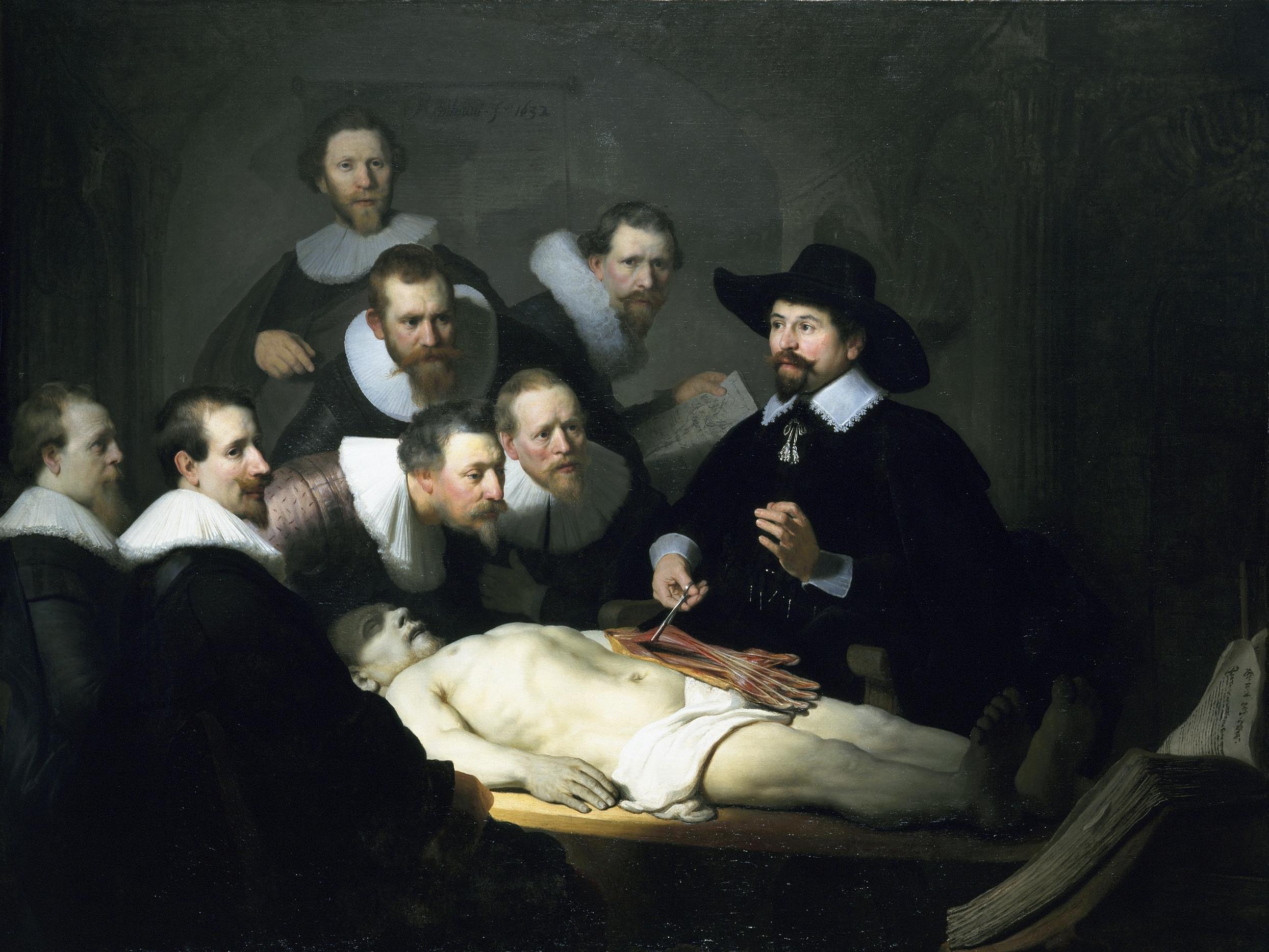
Real life-examples of children raised by animals have been claimed, from an Irish boy allegedly brought up by sheep, cited by Dr. Tulp, the star** of Rembrandt's painting The Anatomy Lesson of Dr. Nicolaes Tulp, to "Mowgli's Sisters", Amala and Kamala, two wild children allegedly raised by wolves in Midnapore, India and discovered by a missionary in the 1920s. In the absence of much surviving evidence, I'm happy to put Sheep Boy down to somebody puckering up to the Blarney Stone, whilst the more recent and better-documented tale of Amala and Kamala looks pretty dodgy under examination.

There are more credible stories of feral children who have lived wild after presumably being abandoned or losing parents or guardians at a later stage (some, but not all, of these stories involve the child allegedly being raised by animals, or living with them in the wild). Most of these children appeared to have no language; possibly because they were been abandoned before having leaned to speak, or, more probably, so early in their language development that they lost the ability to speak.

As we move from legend to better-documented facts, the story gets bleaker (although the fate of Amala and Kamala was itself pretty bleak, whatever the children's true story was):

Feral children have long fascinated scientists. Apart from the sheer pathos of their stories, they raise some gut issues: how do we become human? If we fail to learn critical skills as children, is it impossible to do so later?

Most feral children have been severely stunted and remained so all their lives, suggesting that early human contact is essential to normal development... Being a wild child may conjure up visions of some Blue Lagoon-type idyll, but the reality is unspeakably cruel.
Cecil, The Straight Dopes's über-polymath

 For obvious reasons, nobody today is prepared to perform a controlled experiment on the effect of withdrawing human contact and interaction from small children. According to Herodotus, the Egyptian Pharaoh Psammetichus had no such ethical worries and ordered two children to be raised without anybody speaking to them, in order to settle a hot debate about whether Egyptian or Phrygian was the world's most ancient language. The idea was that the first sounds the children produced without prompting would represent humankind's primordial tongue.

Herodotus wrote that the children were heard to make a sound that resembled "becos", the Phrygian word for bread, so Psammetichus' researchers concluded that Phrygian was the more ancient language.

In modern times, children aren't deliberately withdrawn from human contact in the name of academic research, but a lot of academics have spent a lot of time studying the effect of isolation on children who have been raised without human contact due to abuse or neglect, like "Genie", the pseudonymously famous victim of horrific childhood incarceration and abuse from the 1970's. A common theme is that language skills, emotional development and the capacity for independent living are stunted, usually irreversibly, by lack of human contact in the early years.

It's a tragic reversal of the archetype of the heroic child of nature, freed from the stifling, artificial straitjacket of human society, flowering into an independent, emotionally unconstrained free spirit.

Spinoza 1 - Rousseau 0


* Scarborough's Odeon closed over twenty years ago, which makes me feel very old. More happily, the 1930s art deco building escaped the usual destiny of old cinemas - demolition or a shabby afterlife as a bingo hall - and still survives as the well-maintained home of the Stephen Joseph Theatre.

** Or maybe just the impresario. The real star real of the show is the pallid cadaver of just-hanged ex-robber Aris Kindt, laid out on the slab for our instruction.